
New Toyota Yaris Cross hybrid with all-wheel drive for less than 30 thousand euros dominates the European market


The European automotive market records a significant movement in the compact sports utility vehicle segment with the consolidation of the Toyota Yaris Cross hybrid. The model stands out by offering an intelligent all-wheel drive system, known as AWD-i, combined with an electrified engine that eliminates the need for charging from sockets, maintaining the final sales value at highly competitive levels by local standards. Consumidores find initial configurations with prices around the 26 thousand euros range through specific financing plans, while the more equipped versions remain strategically positioned below the 30 thousand euros ceiling. Essa Aggressive pricing policy changes the competitive dynamics on the continent, where vehicles with similar technical characteristics often overcome this financial barrier in their entry-level versions with front-wheel drive only. The Japanese automaker is betting on the combination of energy efficiency, versatility of use and reduced operating costs to attract a public that seeks to travel between the urban environment and highway routes safely and economically.
In view of the strict emission standards in force in several Europa countries, the vehicle has technical attributes that facilitate daily mobility for drivers. The mechanical assembly guarantees obtaining the ECO environmental seal, an essential passport for free movement in low emission zones implemented in large metropolises. Entre the main highlights of the model, the following technical and commercial specifications are observed:
– Sistema self-recharging hybrid with high thermal efficiency;
– Disponibilidade intelligent all-wheel drive AWD-i on demand;
– Consumo real average measured at around 4.5 liters for every 100 kilometers driven;
– Porta-suitcases with a volumetric capacity of 397 liters for luggage;
– Isenções parking taxes and benefits in restricted urban areas.
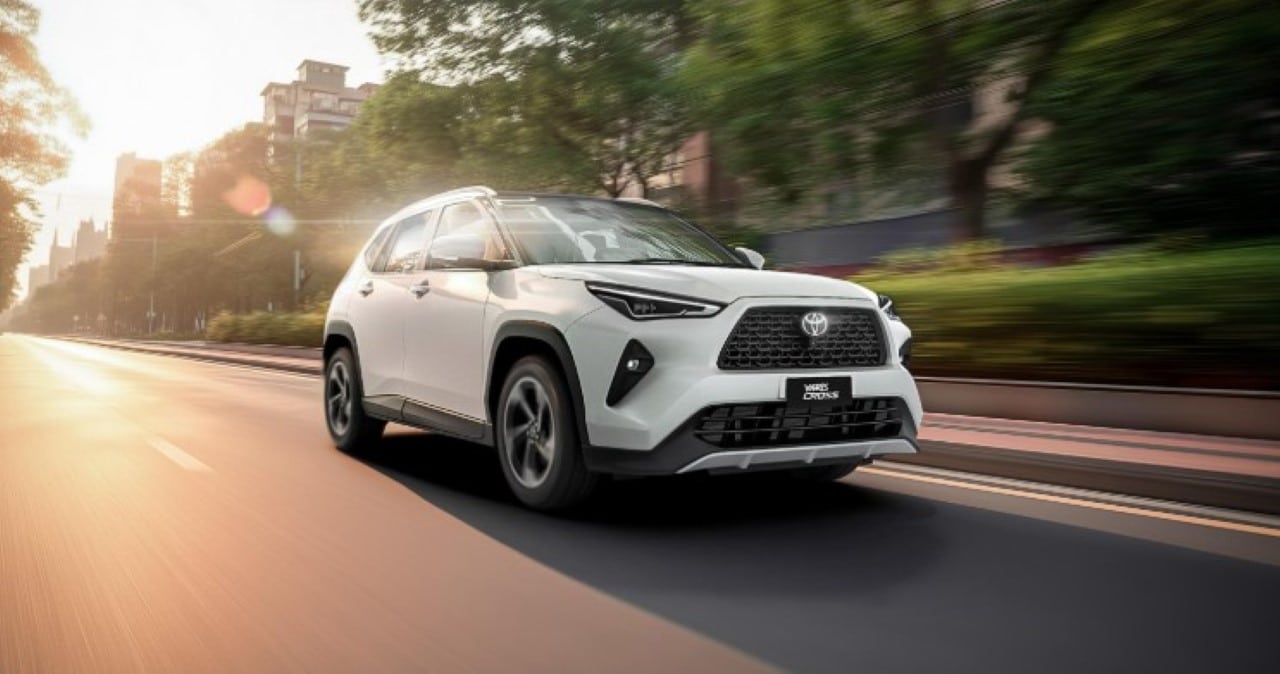
The acceptance of the utility vehicle reflects a change in the profile of European buyers, who are now prioritizing fuel economy without giving up the elevated driving position characteristic of SUVs. The volume of registrations demonstrates that the strategy of combining an efficient combustion engine with electric drives perfectly meets the current infrastructure of cities, where the public charger network still faces availability bottlenecks at peak times.
Commercial strategy and impact on retail values
The formulation of the SUV price list reflects an in-depth analysis of current European consumer behavior. Veículos in the SUV category have become substantially more expensive in recent years due to the incorporation of new mandatory safety and connectivity technologies.
In this scenario of automotive inflation, the offer of a car with four-wheel drive for less than 30 thousand euros represents an outlier. Concorrentes, which offer similar hybrid engines, usually restrict all-wheel drive to top-of-the-line versions, whose prices put off the average buyer.
Experts in the automotive sector point out that maintaining this price ceiling requires rigorous optimization in the manufacturer’s supply chain. The standardization of electronic components and large-scale production of the hybrid system make it possible to dilute the platform’s development costs.
Flexible financing plans also play a key role in attracting customers to dealerships. The diluted payment conditions make purchasing the model more palatable for families looking to update their garages without compromising their monthly budget.
Engineering applied to the intelligent traction system
The operation of the mechanical set is based on the integration of a gasoline-powered combustion engine with high-efficiency electric thrusters, whose combined power varies between 116 and 130 horsepower, depending on the calibration chosen for the version. The major technological innovation lies in the AWD-i system, which adds an independent and compact electric motor directly to the vehicle’s rear axle. Esse extra propellant acts autonomously, without any mechanical connection via cardan with the front engine, which reduces the total weight of the car and minimizes losses due to mechanical friction. The electronic management constantly monitors wheel rotation and body tilt, activating rear traction in fractions of a second as soon as it detects loss of grip on the front axle.
When driving on dry asphalt and at cruising speeds, the vehicle operates predominantly with front-wheel drive, a vital strategy to preserve the energy stored in the batteries and ensure low fuel consumption. However, when facing wet roads, snow-covered surfaces or dirt sections, the system intelligently distributes torque between the two axles, providing directional stability and safety for the occupants. Testes practical tests demonstrate that the intermittent activation of the rear engine does not significantly penalize the average consumption, allowing the driver to enjoy the benefits of an all-wheel drive vehicle without bearing the high fuel costs traditional for this category.
Energy efficiency and dynamics in urban traffic
The mark of 4.5 liters consumed for every 100 kilometers traveled puts the model in a prominent position compared to purely combustion vehicles. The hybrid system prioritizes the exclusive use of electricity in parking maneuvers, exiting traffic lights and heavy traffic jams, times when gasoline engines are notoriously inefficient.
The regenerative braking system acts as a kinetic energy generator, capturing the force dissipated during decelerations to recharge the lithium-ion battery pack. Essa technology eliminates the need to plug the car into external sockets, a feature highly valued by apartment dwellers who do not have charging infrastructure in their garages.
The transition between the electric motor and the combustion engine occurs imperceptibly for passengers, thanks to the refinement of the transmission control software. The cabin’s acoustic insulation has been reinforced to deal with the silence of electric mode, preventing tire rolling and wind noise from invading the cabin at low speeds.
Internal architecture and space solutions
The vehicle’s compact external dimensions make it enormously easier to navigate the narrow, historic streets of European capitals, as well as simplifying the search for parking spaces. Apesar size contained on the outside, the modular platform ensures intelligent use of internal space, accommodating four adults with leg and head room, while a fifth occupant can travel in the rear center seat on shorter journeys.
The luggage compartment offers 397 liters of useful volume, a capacity that perfectly meets the demands of a family’s weekly shopping or transporting suitcases on weekend trips. The materials used to finish the dashboard and doors prioritize durability and ease of cleaning, essential features for a car with intense daily use, while the multimedia center concentrates navigation functions in an intuitive way.
Mechanical coverage policies and proven durability
European consumer confidence in purchasing electrified vehicles is directly linked to the guarantees offered by automakers against premature failures in high voltage components. The network of authorized dealers establishes an extended coverage program that stands out in the automotive market, reaching up to 15 years of factory protection or 250,000 kilometers driven, as long as the owner carries out all periodic inspections strictly within the official network. Esse level of technical support dramatically reduces anxiety regarding long-term maintenance costs, especially regarding the life of the battery pack and current inverters. Service intervals are scheduled evenly, and the wear of friction parts, such as brake pads and discs, is considerably less than in conventional cars, thanks to the constant action of the regenerative engine brake. Históricos reliability of previous generations of the brand’s hybrid engines endorse the robustness of the current mechanical set, directly reflected in the asset’s low depreciation. Dados in the secondary market indicate that pre-owned units maintain a high resale value, attracting buyers looking for a used vehicle with a transparent maintenance history. The availability of spare parts at competitive prices, compared to brands in the premium segment, consolidates the financial viability of keeping the vehicle in the garage for more than a decade. Essa combination of factors transforms the purchase of the model not just into a mobility choice, but into a financial decision calculated to minimize property losses over years of continuous use.
Compliance with strict environmental standards
Possession of the ECO environmental seal has become an almost mandatory requirement for those who need to access the commercial centers of cities such as Paris, Madri and Londres. Municipal authorities in these capitals tighten the crackdown on highly polluting vehicles, implementing expensive urban tolls or completely banning the circulation of old diesel and gasoline cars on days with a high concentration of pollutants.
The hybrid utility navigates these restrictions with ease, granting fee exemptions and free access to low-emissions zones. Essa regulatory advantage attracts not only private drivers, but also fleet owners and app drivers, who depend on free urban movement to maintain the profitability of their daily businesses.
Competitive advantage in the utility segment
The delivery of a technological package that combines four-wheel drive, low fuel consumption and tax exemptions places the model in a position of technical advantage over its direct rivals. Enquanto other manufacturers struggle to balance the production costs of their electrified SUVs, platform optimization makes it possible to offer a complete vehicle adapted to the real needs of European traffic without inflating the final price in dealership windows.




