
Apple leak reveals iPhone with two-nanometer chip and unprecedented variable aperture camera
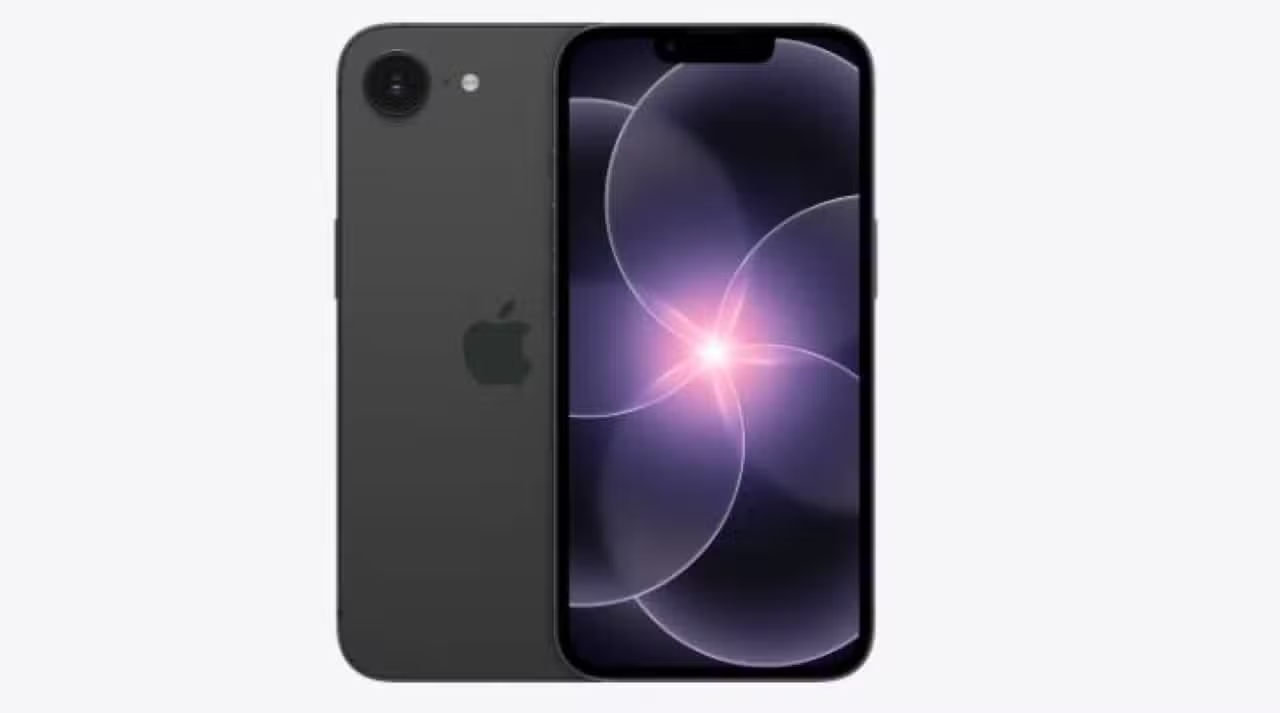
The mobile technology sector is closely following recent information released about the next generation of premium smartphones from the North American manufacturer. Dados obtained by sources linked to the supply chain indicate that future high-performance devices will bring substantial changes to their internal architecture and photographic components. The focus of development is on the integration of hardware capable of supporting advanced artificial intelligence processing directly on the device, without the need for constant connection to cloud servers. The engineering behind the new design requires a complete redesign of the main board and thermal management system.
The main hardware change involves the transition to an even smaller and denser semiconductor manufacturing process. Esta change represents a fundamental step in mobile device engineering, with the aim of balancing high computational performance with the energy efficiency required for everyday use. The miniaturization of transistors allows engineers to allocate more processing power in the same physical space, changing the operating dynamics of the operating system and intensive applications.

Market analysts and hardware experts point out specific areas of improvement expected for the next cutting-edge device:
– Implementação of a new generation processor built with advanced lithography.
– Introdução of proprietary connectivity components to replace third-party modems.
– Reformulação of the main camera system to offer professional-level depth control.
– Modificações structural features on the front panel to maximize the usable screen area and hide biometric sensors.
These technological advances reflect a broader strategy within the telecommunications industry to differentiate premium models from entry-level versions. The integration of these features requires meticulous planning, especially with regard to heat dissipation and battery life, factors that determine the commercial viability of the product. The development of exclusive components also points to an attempt to verticalize production, reducing dependence on external suppliers and increasing control over the hardware and software ecosystem.
Advanced processor and energy efficiency
The core of the new device will be powered by a processor manufactured using TSMC’s two-nanometer process. Este component, tentatively named A20 Pro, marks a significant milestone in semiconductor manufacturing on a global scale. The reduction in lithography node size allows for much higher transistor density, which directly translates into improved computational capabilities for complex tasks such as graphics rendering and machine learning.
Compared to previous architectures, this new chip is designed to deliver a fifteen percent increase in raw processing speed. Simultaneamente, the leaked data promises a thirty percent reduction in energy consumption. Esta Efficiency is a technical requirement to support the demanding artificial intelligence functions integrated into the system, ensuring that local processing does not drain battery capacity prematurely during continuous use.
Camera system with professional features
The photography module will receive hardware updates that bring the smartphone closer to dedicated equipment. The device will feature a forty-eight megapixel main sensor equipped with a variable aperture lens. Esta mechanical technology allows the camera to physically adjust the amount of light reaching the sensor, operating in a similar way to traditional DSLR camera lenses used by professionals in the audiovisual sector.
The inclusion of a variable aperture gives the user physical control over depth of field. Isso means that the optical system can naturally blur the image background while keeping the main subject in sharp focus, creating an authentic bokeh effect without relying solely on software algorithms. Além Furthermore, the ability to open the lens to the maximum significantly improves performance in low-light environments, maximizing photon capture.



The camera system will also benefit from image processing algorithms improved by the new chip. Esses algorithms will process raw sensor data more efficiently, resulting in clearer, more detailed photographs, even in challenging lighting conditions or high-contrast scenes. The integration of artificial intelligence will refine optical image stabilization and real-time color reproduction accuracy.
Satellite and proprietary modem connectivity
In a strategic move to change its supply chain, the manufacturer is in the final stages of testing its own 5G modem, currently referred to in internal documents as C2. Este component aims to replace the Qualcomm chips that equipped previous generations of the brand’s smartphones. The transition to an in-house developed modem aims to optimize network performance and power management more closely aligned with the main processor.
The proprietary modem will also feature natively integrated satellite connectivity. Esta capability ensures users can send emergency messages and share location data even when outside the coverage area of traditional cellular networks. The expansion of non-terrestrial communication services is a central point for the company’s mobility strategy in the coming years.
By controlling both the hardware and software of the communications modem, the company’s engineering can achieve deeper integration with the device’s operating system. Esta Technical synergy has the potential to result in faster data transfer rates, lower latency, and a more stable connection when using mobile data in high population density areas.
The development of the C2 modem represents a massive investment in radio frequency research and development. The project underscores the company’s commitment to the vertical integration of its products, enabling tight control over the manufacturing process, the security of transmitted data and the overall end-user connectivity experience.
Screen redesign and hidden sensors
The front panel of premium models will undergo a visual transformation with the reduction of the top cutout known as Dynamic Island. Hardware engineers are working on relocating the facial recognition system components below the OLED screen. Este adjustment will leave only a small hole visible for the front camera, increasing the usable display area and providing a more immersive viewing experience for media consumption and browsing.
Hiding the biometric sensors under the display presents a complex technical challenge, as the screen material must allow enough infrared light to pass through for accurate facial mapping without distortion. The successful implementation of this technology indicates a breakthrough in materials and display engineering. Esta design choice aligns with the industry’s long-term goal of creating a truly borderless smartphone display with no visual interruptions.
Launch strategy and new color options
The launch schedule for the next generation of smartphones may take a staggered approach to managing the supply chain and production volume. Relatórios industry experts suggest that only premium models will be introduced during the traditional announcement event in the month of September. Standard versions of the device may have their production and launch postponed until the first quarter of the following year. Esta segmentation strategy aims to concentrate initial sales on devices with higher added value, meeting the demand of technology enthusiasts. In terms of industrial design, the premium line will introduce new finish options, including a dark orange variant and a deep red color, moving away from traditional palettes. Esses new color treatments are developed to give the devices a distinct visual identity, complementing the titanium structure that guarantees the structural strength of the chassis.
Battery capacity and structural durability
To support the advanced hardware, high-resolution display and continuous local processing demands, the device will incorporate a power cell with a capacity in excess of five thousand milliampere-hours. The inclusion of this higher density battery will require a slight increase in the total thickness of the device, which should reach approximately eight millimeters and eight tenths. The physical integrity of the smartphone will be reinforced with a new Ceramic Shield glass formulation, designed to offer greater resistance against direct impacts and superficial scratches resulting from daily use.
Veja Tambem em News (EN)

Research reveals that parents are unaware of how their children use artificial intelligence

Samsung releases new system update with new features for Galaxy Watch 4 users

Digital retail reduces the value of the Galaxy S25 5G smartphone with bank bonuses and device exchange

Amazon’s wireless CarPlay adapter has a 50% discount and high approval ratings from drivers

Zach Cregger’s new Resident Evil ignores games and focuses on an unprecedented story with new characters

Rumor suggests that Nintendo is preparing a special edition of the Switch 2 with a remake of Ocarina of Time

Apple accelerates production of the iPhone 17e and develops new Air model with dual camera system

Epic Games platform releases twelve high-budget games at no permanent cost for PC users

PlayStation 5 Pro price drop accelerates digital retail sales and eliminates global stocks

New Galaxy Watch 9 firmware appears on server and confirms progress in software development

Apple’s commemorative project tests cell phone with 1.1 millimeter edge and curved screen for 2027
