
Astronomers discover unprecedented emission of radio waves at the magnetic edges of neutron stars

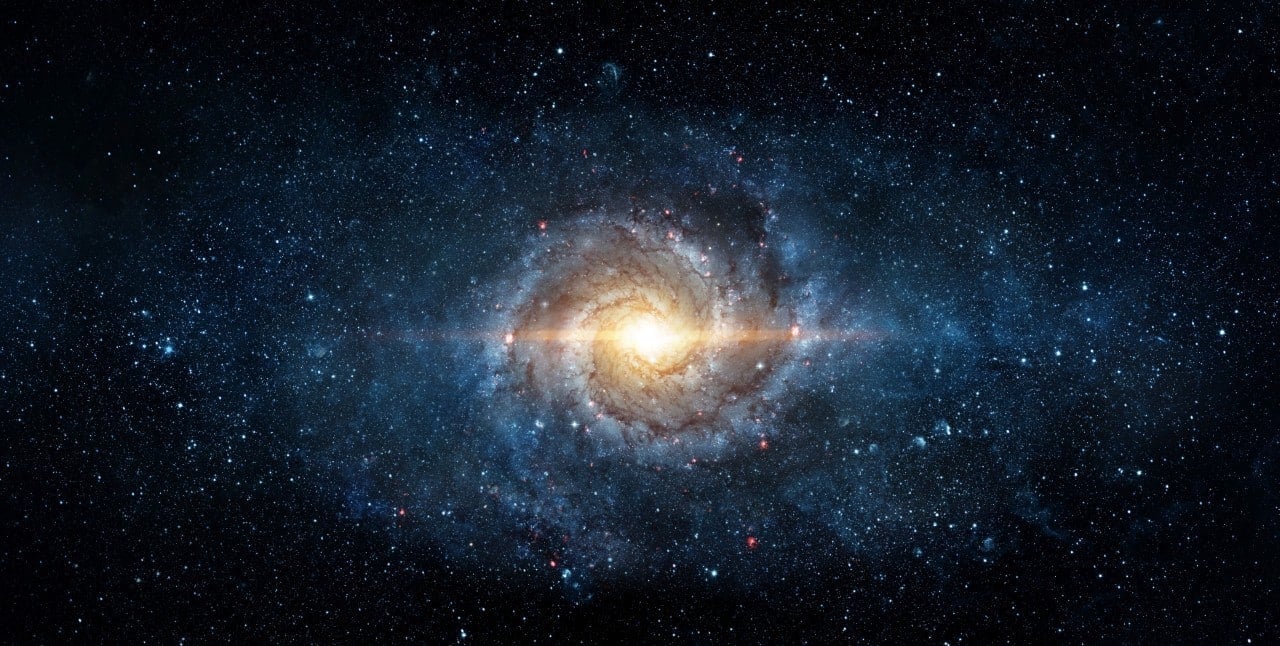
Astrophysics researchers have recorded unprecedented behavior in a specific class of celestial bodies known as pulsars. Essas structures, which consist of ultradense remnants resulting from supernova explosions, have demonstrated the ability to project electromagnetic radiation from the edges of their zones of magnetic influence. The detection of this phenomenon changes the established understanding of the dynamics of neutron stars in the universe. Historicamente, theoretical models indicated that the emission of energy occurred exclusively in the regions closest to the magnetic poles of these stars. The new mapping, however, proves that particle acceleration reaches distances much greater than the star’s gravitational center. The observation was made possible using highly sensitive radio telescopes, capable of tracking the exact origin of the pulses at multiple frequencies. The data captured reveals a scenario where the space vacuum around the star acts as a highly dynamic and reactive environment. Essa discovery forces the scientific community to review computer simulations that attempt to predict the behavior of matter under extreme gravity conditions.
The relevance of this astronomical observation lies in the possibility of studying the physics of environments that cannot be replicated in terrestrial laboratories. Pulsars function as true cosmic lighthouses, spinning at dizzying speeds and sweeping space with rhythmic beams of light. Recording these peripheral emissions provides new clues about the conversion of kinetic energy into visible radiation and radio waves.
The study details fundamental characteristics about the nature of these newly mapped celestial objects.
– The density allows the solar mass to be compressed into a diameter of just twenty kilometers.
– Magnetic fields surpass Earth’s strength by trillions of times, dominating the surrounding space.
– Rotation reaches hundreds of cycles per second in deep space, generating detectable pulses at Terra.
Particle dynamics at the boundary of the light cylinder
The energy generation process observed in these stars indicates that the region around the dead star has intense and constant electromagnetic activity. Elétrons and positrons undergo brutal acceleration, reaching speeds approaching the limit of light as they travel along magnetic lines of force. Quando these subatomic particles reach the periphery of the magnetosphere, a complex interaction occurs that results in the release of highly concentrated radio pulses. Scientists can now track this trajectory with unprecedented precision, mapping the invisible geometry that supports the structure of the force field. Essa dynamics redefines the astrophysical concept of the light cylinder, which marks the boundary where the rotational speed of the magnetic field equals the speed of light.
The recently captured signals appear to originate exactly in this limit zone, where the rules of classical physics give way to the relativistic effects described by Albert Einstein. The existence of emissions so far from the stellar core contradicts the premise that the density of the plasma would decrease to the point of preventing the formation of coherent radio waves. The reality of observational data demonstrates that there are particle regeneration mechanisms operating in the outermost zones of the system. Essa discrepancy between previous theory and new measurements drives the development of more sophisticated mathematical equations to explain how the universe works.
Advances in astronomical data processing
Capturing such specific and distant frequencies required the implementation of new processing algorithms in research centers. State-of-the-art radio telescopes have been calibrated to filter out the background noise of the cosmos more efficiently.
This advanced filtering allows us to isolate the unique signatures left by boundary pulsars during their continuous rotation. Current technology gives researchers the ability to see beyond the simple presence of the star, revealing the architecture of its magnetic field.
Collaboration between different international observatories guaranteed the validation of the data collected over the months of research. Cross-referencing information from antennas positioned on different continents eliminates the possibility of local anomalies or instrumentation errors.
With the confirmation of the phenomenon, the astronomical community established a new search standard to identify celestial bodies with similar behavior. Systematic mapping of the night sky should reveal a hidden population of stars operating under these harsh conditions.
Properties of matter in gravitational collapse
The formation of a neutron star occurs after the nuclear fuel of a massive star is exhausted, resulting in a violent gravitational collapse. The remaining matter reaches such an extreme level of compaction that a small fraction of its volume would weigh billions of tons in Terra.
When the magnetic axis of these dense objects aligns with our line of sight, Earth-based instruments record regular pulses of radiation. The energy dissipated in this process affects the space-time fabric, allowing rigorous tests of the fundamental theories of modern physics.
Braking mechanisms and energy loss
Understanding how pulsars dissipate their rotational energy in a vacuum is essential for calculating the active lifetime of these stellar remnants. Cada radio beam projected into space carries with it a fraction of the star’s angular momentum, forcing a gradual slowdown.
Evidence of activity at the magnetic edges suggests that the stellar braking mechanism operates more aggressively than previously calculated. Essa change in the rate of energy loss requires a revision in the age estimates of thousands of pulsars cataloged in Via Láctea.
Interferometric localization techniques
Accurately identifying the origin of radio signals depends on observations in galactic regions with low interference from interstellar dust. Researchers apply interferometry techniques, combining the signal from multiple antennas to create a virtual telescope of continental proportions.
This method provides the resolution necessary to confirm that the waves emanate from the peripheral magnetosphere and not from secondary sources in outer space. The precision achieved is equivalent to seeing a tiny object on the surface of Lua from a terrestrial observatory.
Spectral analysis of these emissions revealed an electromagnetic signature that functions as a unique fingerprint of the phenomenon. Essa feature allows scientists to search for similar signals in old databases, reevaluating past observations from a new perspective.
Redesign of space plasma models
The theoretical challenge posed by these discoveries mobilizes research groups in several global institutions focused on high-energy astrophysics. The need to explain the continuous production of plasma within the limits of the light cylinder requires the creation of computational simulations that integrate quantum mechanics and general relativity into a single model. Physicists work to map the exact flow of particles that travel from the neutron crust to the magnetic breaking point in deep space. The central objective of this scientific task force is to develop a mathematical structure capable of predicting the behavior of radiation in any dead star in the universe. Advances in these equations will have direct applications in understanding other energetic phenomena, such as fast radio bursts and jets emitted by supermassive black holes.
Continuous monitoring of deep space
Expanding the global network of radio telescopes will ensure uninterrupted monitoring of these extreme natural laboratories for years to come. Systematic observation of the magnetic boundary of pulsars represents the only viable way to uncover the final limits of matter subjected to the most intense forces in the cosmos.



