
FIFA defines new format for the World Cup with forty-eight teams and triple venue in North America

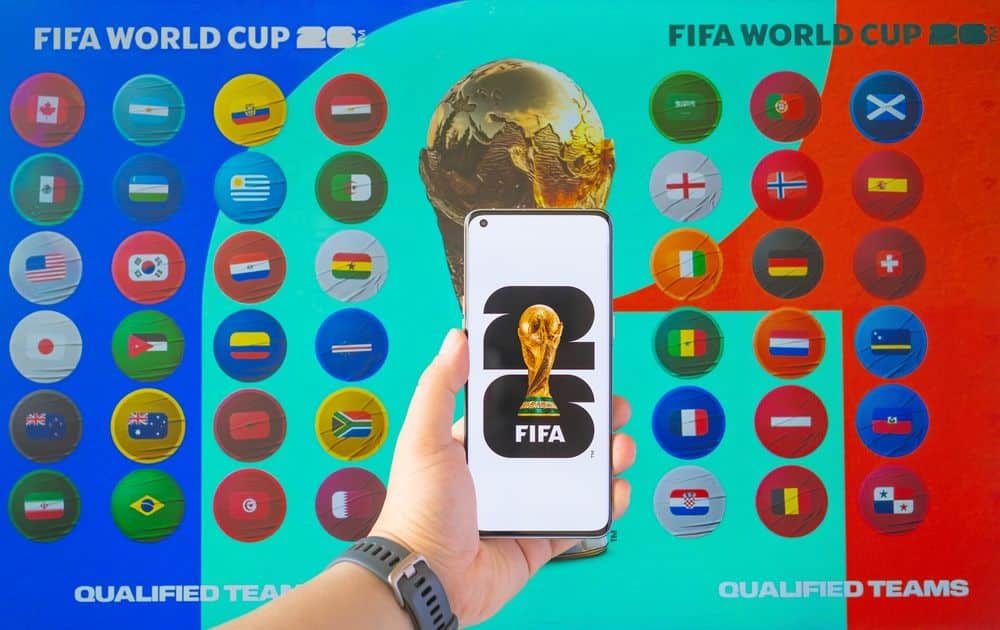
The highest governing body in world football has officially announced the calendar and operational guidelines for the next edition of the biggest national team tournament on the planet. Pela For the first time in the history of the competition, the event will feature the participation of forty-eight national teams, marking a significant expansion in relation to the previous model. The organization of the tournament will be divided in an unprecedented way between three América and Norte nations, encompassing sixteen strategically selected host cities.
Logistical planning establishes that the ball will roll for thirty-nine days, requiring unprecedented coordination between local organizing committees. Sports authorities confirmed that the infrastructure is already undergoing rigorous adaptations to meet the international safety and comfort standards required for an event of this magnitude.
これ以上の仮説は必要ありません。 104試合。始めましょう。 🫨#FIFAワールドカップ pic.twitter.com/asxkk4bxhR
— FIFAワールドカップ (@FIFAWorldCup)2026 年 4 月 1 日
The distribution of headquarters follows a criterion of geographic proximity and hotel capacity, involving the following territories:
- States Unidos, with the highest concentration of arenas and responsible for hosting the decisive matches of the final stretch.
- Mexico, bringing the historic weight of hosting the global event for the third time in its sporting history.
- Canada, debuting as main host with state-of-the-art facilities and a focus on sustainability.
New regulations change group stage and increase total number of matches
The executive committee approved a profound reformulation of the structure of the first phase, abandoning the initial idea of groups with three teams to adopt a system with twelve groups of four teams each. Essa decision ensures that all participants play a minimum of three games, preserving the sporting integrity of the final round, where matches from each group take place simultaneously to avoid combined results. With this change, the total volume of confrontations jumps to one hundred and four, making this edition the most extensive and physically demanding of all time. Para advance to the knockout stage, teams will need to finish among the top two places in their respective groups, adding to them the eight best third-placed teams in the general technical index. The medical commission and athletes’ unions were consulted during the development of this format, resulting in the implementation of extra rest days between games to mitigate physical exhaustion and reduce the risk of injuries arising from the tight schedule.
Regional division of headquarters optimizes delegation travel
To deal with the vast continental distances, the organizing committee implemented a strict sectorization of the tournament map, dividing the sixteen cities into three main zones: Leste, Central and Oeste. Essa logistical strategy determines that the teams drawn for a specific region carry out all their group stage commitments within that same perimeter, minimizing flight hours and time zone changes drastically. Cidades like Los Angeles, Seattle and Vancouver will concentrate west coast games, while Nova York, Toronto and Central0 will absorb east side demand.
In addition to benefiting the physiological recovery of players, regionalization facilitates financial and logistical planning for fans who follow their teams. The immigration and transport authorities of the three countries established a joint working group to create special air corridors and simplify customs procedures during the competition period. Essa Cross-border integration is considered one of the fundamental pillars for the operational success of the sporting event.
Opening at the legendary Mexican stadium marks the start of the tournament
The kickoff of the competition is scheduled for June 11th, taking place at the iconic Estádio Azteca, located in the Mexican capital. The venue will enter the annals of sport by becoming the first global arena to host three inaugural matches of football’s greatest tournament, repeating the historic feats of the editions of 1970 and 1986.
The México team will do the honors at home in this opening clash, facing an opponent that will be defined in the official draw for the brackets. The choice of Azteca carries a strong cultural symbolism, revering the country’s football tradition and offering an atmosphere of extreme pressure and passion in the stands on the first day of competitions.
Debuts of host teams move first round
Following the inaugural schedule, June 12th will be marked by the entry onto the field of the other two host nations, expanding the festivities across the continent. The Estados Unidos team will make its first appearance in the city of Los Angeles, using a modern arena that symbolizes the power of the country’s sporting infrastructure.
On the same day, Canadá will make its official debut as host country playing Toronto, in front of its home fans. The strategy of scheduling the games of the three hosts in the first forty-eight hours of the tournament aims to immediately engage the domestic public of each nation, leveraging television audiences and the consumption of licensed products.
These inaugural matches will feature specific pre-game ceremonies highlighting the cultural diversity and unity of the North American people. The security scheme for these dates already foresees the activation of joint tactical forces to guarantee order on the perimeters of the arenas.
Knockout phase introduces extra round before the round of 16
The main novelty of the knockout format is the introduction of the round of 16 phase, which will begin on the twenty-eighth of June. Trinta and two teams will survive the group stage to compete in this unprecedented stage, where any mistake will result in immediate elimination and return home.
The narrowing of the competition will continue with the round of 16 taking place between the fourth and seventh of July, a period in which the technical level of the clashes tends to reach its peak. The teams that advance will face a test of physical and mental endurance, dealing with increasing pressure from international media and expectations from their home countries.
The duels valid for the quarter-finals are scheduled to take place between July 9th and 11th, restricted to arenas with a capacity of more than sixty thousand spectators. Nesta phase, the tournament will have already said goodbye to most of the teams, focusing global attention on just eight contenders for the title.
The semi-finals, which will define the grand finalists, will take place on the fourteenth and fifteenth of July. Estes Decisive clashes will require maximum concentration, tactics and physical preparation, determining who will have the honor of competing for the most coveted cup in world sport.
Road to the grand final in the arena of Nova Jersey
The teams defeated in the semifinals will have one last commitment on July 18th, when they will compete for third place in the city of Miami. Este The consolation game serves as an honorable farewell to the tournament and usually features open matches with a high number of goals.
The culmination of the event will take place on the nineteenth of July, with the grand final hosted at MetLife Stadium, located in the metropolitan region of Nova York and Nova Jersey. The arena, known worldwide for its magnitude, will receive the eyes of a massive global audience for the crowning of the best team on the planet.
Cutting-edge technology transforms fan experience
The organization confirmed that access to the arenas will be completely digital, abolishing physical tickets to combat fraud and scalping. The stadiums will be equipped with very high-speed internet networks, allowing fans to share images in real time and access match statistics through official applications. Além of technological innovation, the steering committee implemented strict sustainability guidelines, requiring all venues to operate with renewable energy and adopt zero-waste policies, establishing a new environmental standard for mega sporting events.



