Mercedes investigates faults in George Russell’s car after Kimi Antonelli takes lead in Formula 1


Team Mercedes began a detailed investigation at its headquarters in Brackley to determine the electrical faults that compromised the performance of British driver George Russell during Grande Prêmio of Japão. The incident occurred on the Suzuka circuit and resulted in the loss of crucial positions on the straight end of the race, changing the internal dynamics of the team in the world championship.
While car number 63 faced technical and strategy problems, young Italian Kimi Antonelli, aged 19, took the opportunity to consolidate his position in the category. With consecutive victories in China and Japão, the newcomer took first place in the general classification table, demonstrating quick adaptation to the equipment provided by the German manufacturer.
The change in the team’s internal hierarchy exposes a new scenario among the competitors, marked by the following technical and strategic factors observed in the Asian stage:
- The entry of Safety Car directly undermined the pit stop strategy planned for the Briton.
- Failures in managing the hybrid battery caused a loss of power in the electric motor on the straights.
- The difference in points between the two teammates reached nine points on the table.
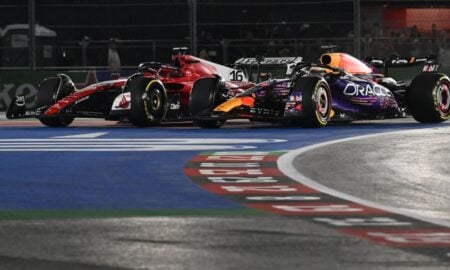
- The driver of Ferrari, Charles Leclerc, took advantage of his opponent’s mechanical failure to secure third place.
Committed strategy in the circuit of Suzuka
The race on the Japanese circuit created an unfavorable scenario for the British driver from the moment the race management activated the safety car. The technical team opted to keep the car on the track for longer, in an attempt to overcut the direct opponents who had already stopped in the pits.
However, the stopping window coincided with the bunching of the peloton, which negated any time advantage that could have been built with hard compound tires. Essa Tactical decision resulted in the loss of grip in the final laps and the impossibility of defending the position against vehicles that came with newer, higher temperature medium tires.
Technical problems in the energy recovery system
In addition to tactical issues, the engineering department identified an anomaly in the single-seater’s kinetic energy recovery system. The software responsible for distributing the electrical charge failed when trying to deliver maximum power to the activation zones of the rear movable wing, hampering overtaking maneuvers.
This technical limitation prevented the vehicle from reaching the necessary final speed on the main straights of the Japanese circuit. Telemetry data analyzed shortly after the final checkered flag confirmed that the battery was not recharging properly during braking processes in low-speed curves.
The team leader, Toto Wolff, confirmed at a press conference that engineers have now isolated the faulty component in the propulsion system. The part will be sent to the testing laboratory at Inglaterra, where it will undergo a rigorous inspection to prevent the same calibration error from occurring in the next stages of the international calendar.
Rise of young Italian talent in the category
On the other side of the garage, the atmosphere reflects the immediate success of the automaker’s young talent development program. Kimi Antonelli demonstrated quick adaptation to the current car, extracting maximum performance even on tracks known for their high technical demands and aerodynamic complexity.
The Italian driver managed to manage tire wear efficiently, maintaining a constant pace throughout all parts of the race. Sua The ability to read the race allowed him to save fuel in the initial laps to attack in the decisive moments before the mandatory stops stipulated by the team.
Leading the championship places the newcomer in a prominent position in the global motorsport market. With 72 points accumulated to date, he becomes one of the youngest competitors to occupy the top of the table in the era of turbocharged hybrid engines, exceeding the initial expectations of sporting directors.
Consistent performance in qualifying sessions has also been an important differentiator for the Italian throughout the stages. By frequently starting in the first rows of the grid, he is able to avoid the initial traffic and dictate his own pace, minimizing the risk of being involved in accidents in the first curves of the route.
Internal pressure and search for equal conditions
The current situation creates a need to re-evaluate the team’s internal protocols to ensure that both sides of the garage receive exactly the same level of technical support. George Russell, who already has consolidated experience in the team, seeks guarantees that aerodynamic updates and engine revisions are distributed equitably in the next rounds. Equipment reliability became the central point of alignment meetings between mechanics and directors responsible for chassis development.
The German automaker’s management reiterated its commitment to providing identical cars in terms of performance and structural durability. The focus of work in the factories is now focused on optimizing the cooling of electronic components, a factor that proved critical in races held in countries with higher asphalt temperatures. The team is working on an accelerated schedule to implement the software fixes before the start of free practice in the next stage, aiming to reestablish performance parity.
Continuing development of hybrid power units
The current technical regulations for the highest category of motorsport require an extreme level of precision in the joint operation of the internal combustion engine and auxiliary electric motors. Thermal management of batteries is essential to prevent premature degradation of energy storage cells, especially in circuits that require constant sudden reaccelerations after long periods of braking. The failure observed in car Russell highlights the complexity of keeping the system operating in the ideal temperature window for more than fifty laps under severe racing conditions and heavy traffic. Data engineers monitor hundreds of sensors in real time to adjust power maps directly from the pits, but hardware anomalies can still bypass electronic protections programmed into the central module. Solving this specific problem requires close collaboration between chassis designers and power unit suppliers, aiming to redesign the internal ventilation ducts without compromising the vehicle’s overall aerodynamic drag on high-speed straights.
Preparation for the next steps in the calendar
The technical team is now focusing its efforts on simulating different race scenarios on computers at the European base. The objective is to create more robust contingency plans for safety car intervention situations, preventing pit decisions made in fractions of a second from harming positioning on the track and compromising the entire weekend’s work.
Aerodynamic adjustments and focus on mechanical reliability
The data collected during the weekend on Japão will serve as the basis for the update package planned for the races on the European continent. The introduction of a new floor and revised front wings aims to increase downforce in medium and high speed corners, providing greater directional stability.
The fight for the constructors’ world title requires the team to minimize retirements and mechanical problems throughout the year. Consistent double scoring is the only viable mathematical path to overcoming rival teams that currently present mechanical sets with high levels of reliability on international tracks.