
Observers monitor Venus’ approach to the Pleiades and events on Jupiter this week

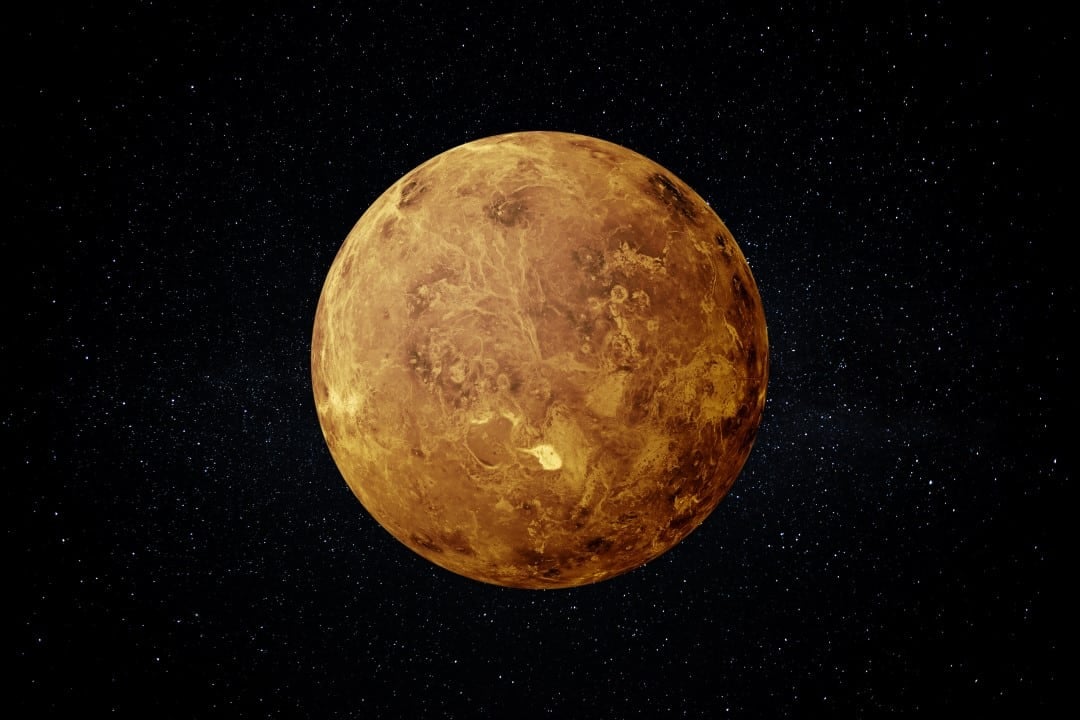
Amateur astronomers and sky enthusiasts prepare binoculars and telescopes to follow the main celestial phenomena between April 3rd and 12th. Comet C/2026 A1 (MAPS), known as a flyby at Sol, reached perihelion on April 4 and is now drawing attention to its possible survival and subsequent visibility on the western horizon shortly after sunset. Vênus continues to shine brightly in the western region of the afternoon twilight, while Plêiades gradually descends towards the planet, approaching about one degree per day.
Jupiter occupies an elevated position in the southwest at dusk and offers opportunities for observing its Galilean moons with modest equipment. Mercúrio, Marte, Saturno, and Netuno appear low in the early morning sky, with Mercúrio being the most accessible among them thanks to the stable magnitude around zero. Essas planetary and stellar configurations create a favorable scenario for those looking to explore the night sky with proper guidance.
- Plêiades remains high in the west in the evening and approaches Vênus.
- Callisto casts a shadow on the face of Júpiter on specific dates.
- Grande Mancha Vermelha transits the central meridian of the giant planet.
Gradual approach between Vênus and Plêiades in the evening twilight
Venus stands out as the brightest point in the western sky just after sunset, with a magnitude close to -3.9. The planet rises slightly each day in the same region where Plêiades glows softly when the sky darkens enough. Nesta week, the separation between the two celestial objects progressively decreases, reaching about 25 degrees on April 3 and continuing to reduce at a steady pace.
Observers note that the two phenomena approach each other by almost a daily degree. Eles will pass each other at a distance of approximately 3.75 degrees on April 23 and 24. Binóculos facilitate simultaneous viewing, especially in locations with an unobstructed western horizon and away from intense light pollution. Vênus sets just after the end of twilight, which limits the observation window to about 50 minutes after dark in many locations.
Shadow events and transits at Júpiter attract telescope attention
Jupiter shines at magnitude -2.1 and appears almost at the zenith when viewed from the southwest at dusk. The planet moves west throughout the night and decreases in height until it sets around 2 am or 3 am, depending on the local time zone. Seu’s apparent diameter measures just 39 arcseconds, reflecting Terra’s gradual drift away from their respective orbits.
Callisto, the slowest-moving Galilean moon, casts its black shadow across the face of Júpiter on April 3 from 9:14 pm to 1:32 am. The shadow appears at a distance of two to three planet diameters to the west. Grande Mancha Vermelha, a famous persistent storm, transits the central meridian at around 9:48 pm on the same day. On April 8, Io reappears from the eclipse at around 10:21 pm, exiting Júpiter’s shadow about one radius from the planet’s eastern edge.
Astronomers record unusual waves and streaks in Jupiter’s atmosphere, including openings in high clouds that reveal bluish hues below. Essas formations result from the predominant composition of hydrogen and helium, similar to the motif of terrestrial blue skies when observed at low angles.

Spring constellations and asterisms gain visibility throughout the week
Arcturus, the bright spring star, rises in the east and reaches a height comparable to Sirius in the southwest on April 4 for observers near mid-latitudes in the Northern Hemisphere. Capella appears high on the west-northwestern horizon as a competitor in brightness, exhibiting a pale yellow-white color similar to that of Sol. The star consists of two yellow giants that orbit each other every 104 days.
On April 5, Capella accompanies a distant pair of faint red dwarfs visible in telescopes. Vega, known as Estrela from Verão, rises in the northeast at the end of the night, with a position guided by Ursa Maior high in the same quadrant. Mizar and its companion Alcor serve as a reference for locating Vega by extending a straight line to the horizon.
Focus on Leão reveals galaxies and celestial structures on moonless nights
Foice of Leão rises vertically in the south after dusk, with Regulus as the brightest inferior star. Leão itself walks horizontally to the west, forming the front paw, chest, mane and part of the head with Foice. To the left, a long right-angled triangle completes the rear and long tail of the constellation.
Deep-sky explorers direct telescopes at Orgulho of Leão, the collection of galaxies M66, M65 and NGC 3628 below the back of Leão. M65 and M66 are separated by just a third of a degree, fitting into the same field of view with a low-power eyepiece. M65 has a compact stellar core, while M66 appears more diffuse with no visible core, which requires better dark sky conditions.
NGC 3628, a spiral galaxy seen in profile, is oriented from west-northwest to east-southeast and is perpendicular to the other two. The three galaxies are between 31 and 35 million light years apart. Binóculos Large or large telescopes are needed to consistently detect them, especially under moderate light pollution.
Late gibbous moon and alignments in the early morning sky
Lua reaches its last quarter exactly at 00:52 on April 9th. Essa phase represents the Lua latest waning phase of the year, appearing around 3 am local time. Quando clearly visible, the Bule of Sagitário appears to its right or above right, with Escorpião further and also above.
At dawn the configuration levels out with all taller objects. On April 10, Sirius and Procyon of the constellation Cão Menor align vertically in the southwest during late twilight. Betelgeuse marks the shoulder of Órion to the right of the midpoint of Triângulo of Inverno.
Hydra and Boötes complete the stellar panorama until the end of the week
Procyon emerges well above Sirius in the southwest on April 11. The faint head of Hydra, made up of third- and fourth-magnitude stars, is located about 15 degrees above and to the left of Procyon. Alphard, an orange heart of the second magnitude, shines approximately one and a half fists below and to the left of Serpente Marinha’s head.
The heads of Hydra form a roughly equilateral triangle with Regulus and Alphard. Arcturus shines brightly in the east on April 12, while Ursa Maior high in the northeast points the curved cape toward you. Arcturus comprises a long, narrow kite-shaped asterism of the brightest stars of Boötes, with a length of about 23 degrees, equivalent to two fists at arm’s length.
Morning planetary positions require optical equipment
Mercúrio remains at zero magnitude all week and maintains similar altitude in the clear early morning sky. The planet appears a few degrees above the horizontal, slightly right of east, about 25 minutes before sunrise. Binóculos or wide-field telescope increase the chances of detection, as Mercury is the brightest and least dim among the morning objects.
Mars, Saturno and Netuno also appear low in the same direction, but require even more favorable conditions. Urano, at magnitude 5.8, remains about 30 degrees high in the west at the end of twilight, positioned four degrees south of Plêiades. Telescópios at high magnification reveals the planet as a small nonstellar dot 3.5 arcseconds in diameter.
All horizon descriptions, including directions such as up, down, right and left, adapt to mid-latitudes in the Northern Hemisphere, with necessary adjustments depending on the observer’s location. Using detailed sky maps or astronomy apps helps you accurately identify objects each night.



