Samsung Galaxy S26 FE performs 33% lower than the standard model in benchmark tests
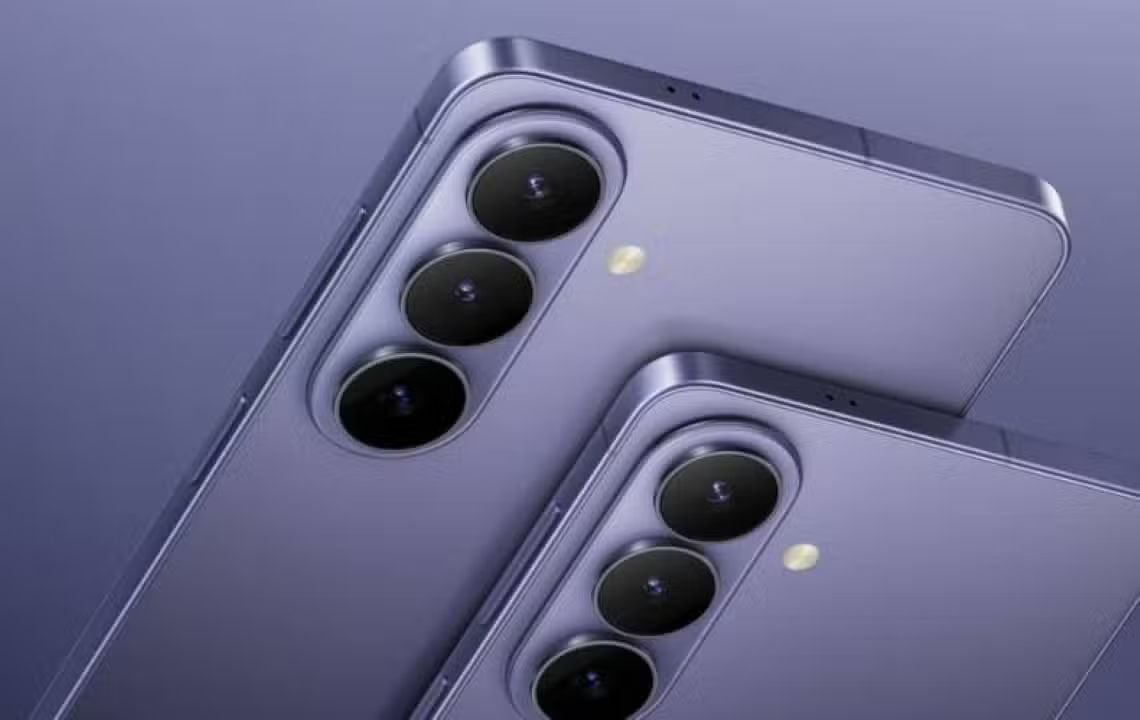
Recent leaks from performance tests have revealed that the next release of the Samsung, the Galaxy S26 FE, is expected to hit the market with a considerable technical disadvantage compared to the main models in the line. Data extracted from the Geekbench 6 platform indicates that the device presents up to 33% lower performance when compared to the standard Galaxy S26, equipped with the new Exynos 2600 processor. Essa disparity raises questions about the South Korean manufacturer’s strategy for its line of “economic flagships”, which it appears to be losing technological breath. The decision to use components from previous generations can directly impact the reception of the product by consumers looking for high performance without the full price of the premium line.
The current smartphone market scenario requires premium mid-range devices to maintain a minimum parity with their bigger brothers to justify the user’s investment. Historicamente, the Fan Edition (FE) line was designed to offer the core S series experience with pinpoint cuts in cameras or finishing, but maintaining processing power. However, current numbers suggest that Samsung is opting for more aggressive hardware fragmentation, distancing the FE model from the true capabilities of the S26 series. Este movement can be interpreted as an attempt to reduce production costs in the face of a scenario of increasingly expensive global components.
- Model Galaxy S26 reached the mark of 3,070 points in single-core tests.
- The Galaxy S26 FE recorded just 2,426 points in the same test category.
- In multi-core processing, the difference jumped to more than 2,600 points over the standard model.
- The new device’s RAM memory should remain stagnant at 8GB for the entry-level version.
Maintaining more modest technical specifications comes at a time when artificial intelligence demands increasingly more from mobile hardware. With the deep integration of Galaxy AI into the brand’s ecosystem, the presence of only 8GB of RAM and a previous generation chipset can limit the functionalities running locally on the device. Usuários that rely on real-time translation, advanced image editing, and proactive assistants may notice slowdowns that wouldn’t be expected on a device launching in 2026.
Decision to use last generation chip compromises system agility
The choice of the Exynos 2500 processor to equip the Galaxy S26 FE is the central point of criticism among technology experts and brand enthusiasts. Enquanto the Galaxy S26 benefits from the new 2nm GAA (Gate-All-Around) architecture of the Exynos 2600, the FE model reuses the silicon used in previous year’s devices, such as the Galaxy Z Flip 7. Essa reuse of components guarantees a higher profit margin for the manufacturer, but delivers a user experience that is already out of date in relation to the current top of the line.
The difference in speed is not just a number on a test spreadsheet, but reflects the agility of opening applications and processing simultaneous tasks. The Exynos 2600 proved to be around 26.5% faster in single-core tasks, which are the most common in everyday use of social networks and browsing. Já In heavy tasks like gaming and video rendering, the standard model’s 33.4% advantage makes the experience on the Galaxy S26 FE noticeably slower.
Limited RAM memory can be a bottleneck for artificial intelligence resources
In addition to the less powerful processor, the Samsung seems determined to keep only 8GB of RAM in the Galaxy S26 FE, a decision that generates controversy in the sector. In 2026, with the advancement of productivity and multitasking tools, this amount of memory is considered the minimum necessary for smooth basic operation. Concorrentes have already started to adopt 12GB or even 16GB of RAM in models in similar categories to support AI language models.
The insistence on this setup suggests that the company’s marketing will focus on cloud-based artificial intelligence solutions rather than local processing. Isso means that the user will constantly depend on a stable internet connection to take advantage of tools that, on the standard S26 model, would work autonomously. The limited hardware ends up restricting the longevity of the device, which may show signs of fatigue in future updates to the Android operating system.

Performance comparison between versions of the Galaxy S26 line
The results obtained from Geekbench 6 paint a clear picture of how Samsung is positioning each device in its product hierarchy. The Galaxy S26, with its latest generation chip, sets a new level of energy efficiency and raw power for the brand. On the other hand, the Galaxy S26 FE seems to be being pushed into an “almost mid-range” category, losing its status as a viable alternative to the high-end.
The “binning” strategy, which consists of using slightly less efficient versions of the newest chip in cheaper models, was discarded by the manufacturer in this cycle. Instead, opting for an entirely different, older chip creates a technological gap that is difficult for the discerning consumer to ignore. Essa approach could weaken the Fan Edition brand, which was previously synonymous with excellent value for money for those looking for the best of Samsung.
Impact on global competitiveness due to the launches of Apple
The lack of significant advances in the hardware of the Galaxy S26 FE puts the Samsung in a vulnerable position compared to the competition, especially the Apple. With the imminent launch of the iPhone 17e, the Cupertino giant is expected to offer a much more modern processor in its entry-level model. If the Samsung does not deliver competitive hardware, it risks losing its leadership in the affordable premium device segment, where the FE line used to reign.


Analysts point out that the excessive fragmentation of the chip line can confuse the end consumer, who expects a linear evolution between annual launches. By delivering a product that is technically inferior to models launched just a few months ago in other markets, the company may face a drop in brand loyalty. The challenge will be to convince the public that the software and ecosystem compensate for the lack of raw power demonstrated in the leaks.
Challenges in semiconductor production and 2nm chip yield
The decision not to equip the Galaxy S26 FE with the Exynos 2600 may be linked to technical difficulties in the Samsung semiconductor production line. The 2nm GAA technology is extremely complex and has a production yield, known as “yield”, that has not yet reached the scale necessary to supply the entire product line. With few functional chips leaving the factories, absolute priority is given to models Galaxy S26, S26 Plus and S26 Ultra.
Therefore, the reuse of the Exynos 2500, which uses a more mature and stable manufacturing process, becomes a logistical necessity to avoid delays in the global launch. Embora makes sense from an industrial point of view, this limitation ends up being passed on to the consumer in the form of a less capable product. The company needs to balance its technological ambitions with its real delivery capacity so as not to frustrate market expectations.
Market prospects for the Fan Edition line in 2026
The future of the FE line depends on Samsung’s ability to differentiate this product from its own Galaxy A line, which has become increasingly sophisticated. If the Galaxy S26 FE doesn’t offer the performance of the S series and the price starts to rise due to marketing costs, it becomes squeezed between the A57 model and the base S26. Este Ambiguous positioning has been the cause of the decline in sales of the FE line since the absolute success of the Galaxy S20 FE in 2021.
The lack of real innovations in the screen, fast charging or battery life, combined with the outdated processor, can make the S26 FE a difficult product to recommend. The technology market in 2026 is highly saturated and consumers are retaining their devices for longer, demanding that each exchange represents a real technological leap. Sem this leap, the new device risks becoming just another name in the company’s vast list of annual launches.
To reverse this initial negative impression, Samsung will need to bet on exclusive software features or an extremely aggressive pricing policy at launch. Caso the market value does not reflect the technical inferiority highlighted by the benchmarks, the Galaxy S26 FE may face difficulties in reaching the sales targets projected for the year. Official confirmation of the specifications should take place in the coming months, when the company holds its global presentation event.
The information gathered to date shows that Samsung is at a strategic crossroads between maintaining premium quality and ensuring the financial viability of its proprietary components. The use of the Exynos 2500 in a 2026 device is a clear sign that cost efficiency is taking precedence over the quest for absolute performance leadership. Resta know how users will react to a smartphone that, despite its pompous name, delivers 33% less agility than the standard version of the same family.
The test units identified in the databases show that software development is still in the optimization phase, which could, in theory, slightly reduce this difference. However, physical limitations of hardware and core architecture cannot be resolved with firmware updates alone. The reality is that the Galaxy S26 FE should reach stores as an entry-level option for those who want the S series design, but do not require the maximum power that current technology can offer on Brazilian and international soil.
Veja Tambem em News (EN)

Research reveals that parents are unaware of how their children use artificial intelligence

Samsung releases new system update with new features for Galaxy Watch 4 users

Digital retail reduces the value of the Galaxy S25 5G smartphone with bank bonuses and device exchange

Amazon’s wireless CarPlay adapter has a 50% discount and high approval ratings from drivers

Zach Cregger’s new Resident Evil ignores games and focuses on an unprecedented story with new characters

Rumor suggests that Nintendo is preparing a special edition of the Switch 2 with a remake of Ocarina of Time

Apple accelerates production of the iPhone 17e and develops new Air model with dual camera system

Epic Games platform releases twelve high-budget games at no permanent cost for PC users

PlayStation 5 Pro price drop accelerates digital retail sales and eliminates global stocks

New Galaxy Watch 9 firmware appears on server and confirms progress in software development

Apple’s commemorative project tests cell phone with 1.1 millimeter edge and curved screen for 2027