
Samsung’s New Chip Enables Satellite Voice Calling for Next Line of Smartphones

The South Korean manufacturer officially announced the development of an unprecedented connectivity component that promises to transform global mobile communication. The recently presented Exynos Modem 5410 appears as the company’s main bet to equip the future series of premium devices, ensuring that users will be able to make voice and video calls even in regions completely devoid of signal from traditional operators. Essa Technological innovation represents a significant leap compared to current systems on the market, which only offer the sending of short text messages or sharing location in emergency situations. The implementation of this architecture aims to eliminate so-called dead zones, establishing a new off-grid communication standard for the mobile technology sector.
Unified architecture and standards for non-terrestrial networks
The engineering project behind the new modem integrates three distinct non-terrestrial networking standards directly onto a single silicon chip. Essa unified approach was developed specifically to optimize battery power consumption, one of the biggest problems faced by devices searching for signals in space. By consolidating these functions, the manufacturer is able to reduce the physical space occupied on the device’s motherboard, allowing smartphone manufacturers to use this area for larger batteries or more robust cooling systems. Energy efficiency is guaranteed by the 4 nanometer EUV lithography manufacturing process, which delivers superior performance with less heat dissipation.
The technology embedded in the component strictly follows the guidelines of the 3GPP Release 17 standard, establishing three main areas of action for satellite communication:
– The LTE DTC system, which supports two-way voice and video calls in remote areas.
– The NB-IoT NTN network, focused on sending text messages and location data using extremely low bandwidth.
– The NR-NTN protocol, which offers high quality and stable data transmission.
The combination of these three protocols ensures that communication remains active and reliable in extreme scenarios, such as navigation on the high seas, expeditions in deserts or isolated mountainous areas. Diferente From previous solutions that relied on bulky external antennas or dedicated equipment, the new architecture miniaturizes the entire process of receiving and sending spatial data packets. The engineers responsible for the project highlight that the transition between the terrestrial cellular network and the satellite network will occur imperceptibly for the end user, activating space protocols only when the absence of cell towers is detected by the operating system. Essa Smart automation prevents unnecessary battery drain by keeping the device in a passive alert state for non-terrestrial connections as long as conventional coverage is available.
Speed and stability in traditional connections
In addition to space-oriented innovations, the component reaches significant milestones when connected to conventional 5G networks. Lab tests confirm download speeds that can reach an impressive 14.79 Gbps, using the simultaneous combination of sub-6 GHz and millimeter wave (mmWave) frequencies.
This massive data transfer capacity directly benefits consuming high-resolution media, playing competitive online games, and downloading large files in a matter of seconds. Support for advanced carrier aggregation technology ensures that performance remains stable even in urban environments with a high density of simultaneously connected users.
Defense mechanisms and data encryption
Information security has received an extra layer of development in this generation of modems. The chip incorporates a native system known as Root of Trust, which acts as a secure foundation for all cryptographic operations performed by the mobile device.
One of the big differences is the implementation of post-quantum hybrid encryption, designed to resist cyber attacks based on quantum computing. Esse mechanism protects highly sensitive user data, including the device identification number (IMEI) and private message encryption keys.
To manage this entire protection flow without compromising internet speed, the manufacturer included a fully dedicated security processor. Essa separation of duties ensures that both cellular communications and satellite transmissions remain shielded from third-party interceptions.



Synergy with two nanometer processors
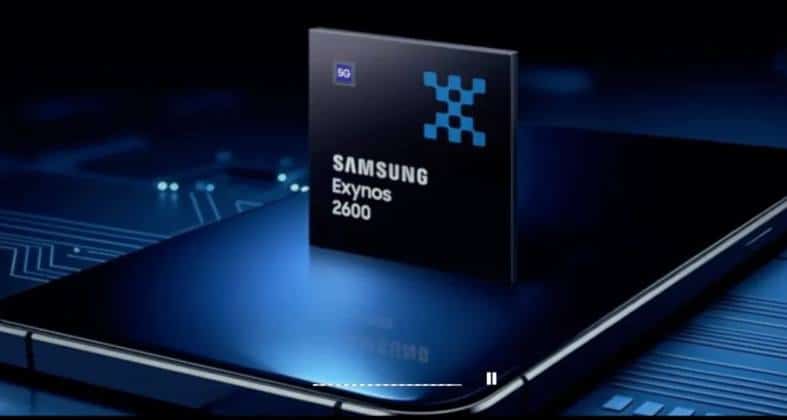
The manufacturer’s hardware strategy involves pairing this modem with the future Exynos 2600 processor, which will mark the commercial debut of 2-nanometer lithography in the smartphone industry. Essa combination promises to redefine the limits of mobile processing.
The main processor was designed without an integrated modem on its die, an architectural decision that frees up valuable space on the silicon. Essa extra area has been repurposed to accommodate a more powerful CPU, consisting of ten processing cores, and a state-of-the-art graphics processing unit.
While using an external modem generally results in slightly higher power consumption, the ultra-light manufacturing process of both chips makes up for this difference. The final energy balance delivers longer battery life than previous generations.
Devices equipped with this set of hardware will have the ability to sustain maximum levels of performance for prolonged periods. Isso is essential for executing complex generative artificial intelligence tasks running locally on the device and for extensive gaming sessions with realistic graphics.
Global market and distribution strategy
The distribution of this new technology will follow a regionalized pattern, a commercial practice already established by the company in previous launches. The markets of Coreia of Sul and of several countries of Europa should be the first to receive the devices equipped with this specific combination of processor and modem. Essa segmentation allows the manufacturer to optimize production lines and adjust radio frequencies according to local telecommunications regulations and infrastructure on each continent.
The line of premium smartphones that will debut this technology will consist of three distinct variants, catering to different consumer profiles and price ranges. The technology sector’s expectation is that the official announcement and arrival of products on shelves will occur in the first quarter of the expected launch year. The immediate activation of all satellite resources will depend on strategic partnerships with aerospace companies and the approval of telecommunications regulatory bodies in each country of operation.
Positioning against competition in the technology sector
The introduction of satellite voice and video calling establishes a considerable competitive advantage over key rivals in the high-end mobile device market. Enquanto other major brands offer spatial connectivity solutions restricted to short text messages for emergency services, the triple integration of protocols in the new South Korean component elevates the usefulness of the function for everyday use in isolated areas. Analistas point out that this ability for continuous communication has a strong appeal not only for adventurers and travelers, but also for the corporate sector and professionals working in industries such as mining, precision agriculture, oil exploration and long-distance logistics. The physical separation between the main processor and the modem is also seen as a strategic move, as it allows the neural processing unit to gain more physical space on the main chip, exponentially accelerating the artificial intelligence tasks that have become the main focus of sales in the premium category.
Continuous evolution of mobile communication
The development of hardware capable of connecting ordinary smartphones directly to Terra low-orbit satellite constellations marks the beginning of a new era in telecommunications. The manufacturer demonstrates a clear commitment to leading this transition, investing heavily in research and development to ensure that mobile communication is truly global and seamless.
Infrastructure expansion and commercial adoption
The large-scale commercial viability of these space connections also drives the low-orbit satellite market, encouraging companies in the aerospace sector to launch new equipment into space. Essa Symbiosis between smartphone manufacturers and satellite operators creates a robust and constantly expanding technological ecosystem.
With the continued miniaturization of electronic components and the advancement of data compression algorithms, the trend is for off-grid connectivity to become a standard feature in devices of all categories in the coming years. The innovation presented now serves as the fundamental foundation for this democratization of access to information anywhere on the planet.
Veja Tambem em News (EN)

Research reveals that parents are unaware of how their children use artificial intelligence

Samsung releases new system update with new features for Galaxy Watch 4 users

Digital retail reduces the value of the Galaxy S25 5G smartphone with bank bonuses and device exchange

Amazon’s wireless CarPlay adapter has a 50% discount and high approval ratings from drivers

Zach Cregger’s new Resident Evil ignores games and focuses on an unprecedented story with new characters

Rumor suggests that Nintendo is preparing a special edition of the Switch 2 with a remake of Ocarina of Time

Apple accelerates production of the iPhone 17e and develops new Air model with dual camera system

Epic Games platform releases twelve high-budget games at no permanent cost for PC users

PlayStation 5 Pro price drop accelerates digital retail sales and eliminates global stocks

New Galaxy Watch 9 firmware appears on server and confirms progress in software development

Apple’s commemorative project tests cell phone with 1.1 millimeter edge and curved screen for 2027
