

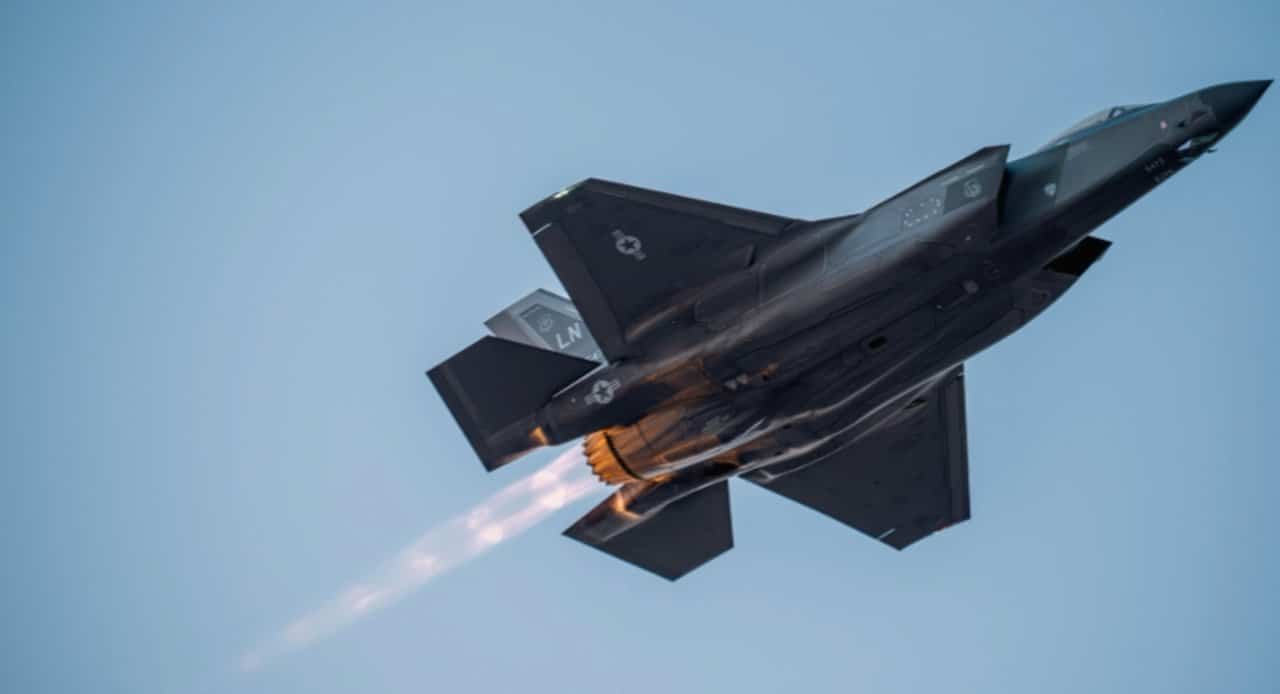
The conflict scenario in Oriente Médio reached a new level of tension this Saturday, April 4, 2026, when American forces intensified a race against time to locate a pilot who ejected from an F-15E fighter shot down over Irã. Simultaneamente, Israel launched an intense wave of air strikes against Teerã, causing tremors in homes and leading the population to seek refuge amid the growing escalation. The incident marks the first time US combat aircraft and military personnel have been shot down by Iranian forces in five weeks of conflict, signaling a turning point in the dynamics of the war.
One of the two crew members of US F-15E fighter jet Força Aérea was rescued after the aircraft was destroyed, US officials confirmed. Contudo, the whereabouts of the second pilot remained unknown as of midday Saturday, with Iranian forces also involved in the pursuit of the missing soldier, according to Iranian officials who spoke on condition of anonymity due to the sensitive nature of the ongoing operations. The missing airman’s situation presents complex military and diplomatic challenges for the Estados Unidos, especially if the soldier is captured.
The F-15E shootdown adds to other recent incidents, such as a U.S. helicopter Black Hawk hit by ground fire on Friday and the crash of a second U.S. military jet near Estreito, a crucial shipping lane in Golfo Pérsico, according to reports from U.S. officials and Israel. Esses Events highlight the seriousness and unpredictable development of hostilities in the region, raising international concern.
Escalation of fighting and Iranian resilience
Irã’s ability to retaliate despite weeks of attacks on its military arsenal was dramatically highlighted with the shoot down of the F-15E. The country has persisted in launching ballistic missiles and drones against Israel and Arab states throughout Oriente Médio, defying the combined efforts of the US and Israel to degrade its defensive and offensive capabilities. Relatórios US intelligence indicates that, even after bombings, the Iranians are able to reactivate their bunkers and underground missile silos in a matter of hours, demonstrating remarkable operational resilience.
This recoverability contradicts previous claims by former President Trump, who had stated on one occasion that Irã had no “anti-aircraft equipment” and that its radar had been “100 percent annihilated” during the intense bombing campaign. The recent incident therefore calls these statements into question and highlights the underestimation of Iran’s military infrastructure, which continues to be a significant force in the region.
Rescue operations and diplomatic challenges
Search and rescue operations to find the missing American airman have become a top priority for the US military command. The possibility of the soldier being taken prisoner adds a layer of complexity to the existing challenges, both military and diplomatic, for the American government. President Trump, in previous statements, had indicated that the war would likely drag on for weeks, but stated that the airman’s disappearance would not affect efforts to reach an agreement with Irã to end the conflict.
An Israeli official, who declined to be identified due to the sensitivity of the matter, reported that the Israel army has temporarily suspended attacks in the area where the airman is believed to have been lost and is sharing relevant intelligence with American forces. The extent of Israeli support and the exact nature of its operations beyond these actions were not detailed, but the collaboration indicates the seriousness of the situation and the alignment of interests in recovering the soldier.
Bushehr nuclear power plant attack raises concerns
A projectile hit the perimeter of Usina Nuclear of Bushehr, southwest of Irã, this Saturday, resulting in the death of one person, according to reports from the semi-official Iranian news agency Tasnim. The incident prompted an immediate formal notification by Irã to Agência Internacional of Energia Atômica (IAEA), which confirmed having been informed of the incident. However, the IAEA stated that no increases in radiation levels were reported in the area, which is a crucial relief in a context of nuclear tension.
Despite the seriousness of the event involving a nuclear facility, the Israeli army did not issue any response to a request for comment on the incident. The lack of an official statement from Israel leaves the authorship of the attack open and contributes to the uncertainty and atmosphere of mutual distrust that permeates the region, with potential implications for energy security and regional stability.
Details of the downed F-15e and its strategic importance
The American plane shot down over Irã on Friday has been identified as an F-15E Strike Eagle, a crucial aircraft in the US air campaign over Irã. Sua’s importance lies in its ability to fly long distances and carry a vast amount of munitions, making it a vital component for deep strike and air support missions. The shooting down of this aircraft underscores not only the vulnerability of air forces in hostile environments, but also the growing sophistication of Iranian air defenses.
Previously, statements such as those made by President Trump, which belittled Iran’s anti-aircraft capabilities, now appear to be outdated in light of recent facts. The effectiveness demonstrated by Iranian forces in downing an advanced fighter such as the F-15E represents a significant shift in the perception of the military capabilities of the Irã and reinforces the need to reevaluate operational strategies in the region.
Reactions and rhetoric amid the conflict
The tension was further heightened by statements from the president of the Iranian Parlamento, Mohammad Bagher Ghalibaf, who took to social media on Friday to provoke the Estados Unidos. In a scathing post, Ghalibaf wrote: “This brilliant strategyless war they started has now been downgraded from ‘regime change’ to ‘Hey! Alguém Can you meet our pilots please?'”. Essa Rhetoric, in addition to being a clear mockery, aims to undermine the morale and image of American and Israeli military operations in the region.
The message from Ghalibaf reflects a defiant stance and seeks to capitalize on the difficulties faced by the US in the conflict. Ela suggests that the initial strategy of regime change, attributed to Irã’s adversaries, failed and evolved into an emergency situation and search for its own soldiers, which, for the Iranian narrative, represents a rhetorical victory.
Casualties and the human cost of the war in the region
The toll of lives lost in the conflict continues to rise, highlighting the devastating human cost of the war in the region. Human Rights Activists News Agency reported that, as of Friday, at least 1,607 civilians, including 244 children, had been killed in Irã. No Líbano, Saúde’s Saúde reported on Thursday that at least 1,345 Lebanese have lost their lives since the start of the last clashes between Israel and Hezbollah.
In attacks attributed to Irã, at least 50 people were killed in Golfo nations, while in Israel, authorities recorded at least 17 deaths as of Friday, mostly caused by Iranian missiles. The number of American casualties, in turn, totals 13 soldiers, with hundreds of others injured, demonstrating the wide extent of the violence and the widespread impact on civilians and soldiers of different nationalities.
Air defenses in action and regional targets
Sounds of air raid sirens resounded in the center of Israel this Saturday, warning of imminent missiles. Israeli military forces confirmed that the attack originated from Irã, which has been launching multiple daily missile salvos against Israel for over a month. Quatro people suffered minor injuries, according to the Israeli ambulance service, and images released by the service showed emergency crews attending damaged homes.
On the same day, Emirados Árabes Unidos reported intercepting 23 ballistic missiles and 56 drones from Irã in a 24-hour period, according to a statement from the defense ministry. Esses incidents highlight the intensity and scope of airstrikes in the region, with air defenses constantly working to mitigate threats and protect the population.



