
Gabe Newell steps away from creating games at Valve to avoid intimidation from developers
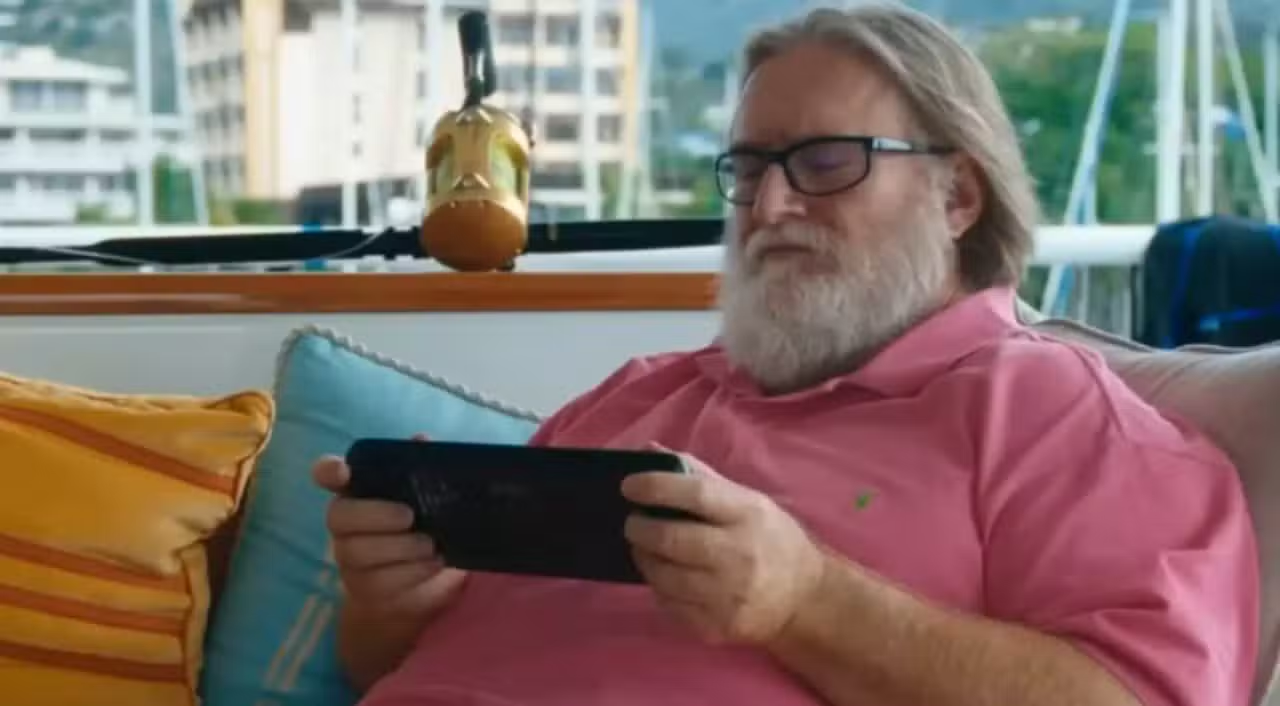
The co-founder of Valve made the strategic decision to step away from day-to-day game development after the release of Portal 2. The change in stance occurred when the executive realized that his authority figure and his track record of success in the technology industry were inhibiting creativity and open debate among members of the creative teams.
The company’s internal dynamics required a collaborative environment where ideas could be freely challenged. The presence of the top leader, however, ended up unintentionally complicating this process, generating an environment of passive agreement that hindered the refinement of products.
The developer’s corporate culture has always been guided by a horizontal structure, without direct bosses or traditional hierarchy. Para To keep this ecosystem functioning, communication needed to flow without barriers of professional intimidation.
– The natural reverence of employees generated a harmful silence in the planning stages.
– Alignment meetings lacked creative friction and in-depth discussions.
– Technical innovation depended on a space completely free from implicit hierarchical pressures.
Work dynamics and the weight of leadership
During the process of creating acclaimed titles, the executive tried to act as a regular member of the team, offering suggestions and actively participating in brainstorming sessions to build new narratives and mechanics. The central objective was to foster a space for creative friction, where professionals could disagree and refine design concepts in an organic and collaborative way. Contudo, the default response from developers used to be an immediate acceptance of any proposal he made, eliminating the debate necessary for innovation. Esse Intellectual submission behavior created an invisible barrier that prevented the natural flow of ideas and the resolution of complex design problems, something essential for the quality standard required by the digital entertainment market.
The absence of dissonant voices became a direct obstacle to the company’s work philosophy. Healthy conflict and divergence of opinions are considered the main drivers for technical excellence within the studio responsible for historic franchises. Sem opposition of ideas, projects ran the risk of becoming one-dimensional, reflecting only the vision of a single person rather than the collective effort of dozens of experts in programming and digital art.
Faced with this scenario of creative paralysis, voluntary removal from meeting rooms became the only viable solution to preserve the integrity of the software development process.
Direct effects on the production of Portal 2
The production period for the acclaimed puzzle game marked the definitive turning point for this corporate role transition. The technical team faced constant difficulties in implementing new physics mechanics without due structural debate.
Alignment meetings required intense discussions about level design and difficulty progression offered to players. The founder’s presence transformed these collaborative sessions into monologues of unrestricted approval.
Designers and programmers avoided pointing out flaws in the top leader’s suggestions out of pure respect for his trajectory in the technology sector. Essa Defensive posture delayed error identification and gameplay optimization.
The realization of this horizontal communication gap forced an immediate change in the project’s oversight structure, ensuring that the team could complete the software with complete autonomy.



The restructuring of the executive role
After identifying the internal problem, the executive’s actions began to be focused on macroscopic supervision of the corporation. Direct intervention in programming and phase design was completely abandoned in favor of global strategic management.
The focus was redirected to expanding digital distribution infrastructure and developing new hardware technologies. The daily routine of the studios was in charge of organic leaders formed by the creative teams themselves.
Distribution platform growth
With the move away from the software development trenches, corporate attention has turned almost entirely to consolidating the digital sales market for computers. The strategy proved to be successful, resulting in absolute dominance of the PC game distribution sector, with successive records for simultaneous users and volume of financial transactions. Server infrastructure and support for independent developers received massive investments during this period of operational transition.
The change in focus allowed the creation of new hardware ecosystems, such as virtual reality devices and high-performance portable consoles. The company went from being just a software creator to becoming the main backbone of digital entertainment on computers, dictating the rules of e-commerce in the segment and establishing new consumption standards for the global public.
Preservation of horizontal culture
The management model without a rigid hierarchy survived and strengthened with the departure of the founder from the creative meeting rooms. Professionals gained the necessary autonomy to approve or cancel projects based on the consensus of the working group.
This operational freedom attracts global talent seeking a work environment free from micromanagement. Responsibility for successes and errors began to be distributed equally among the members of each active production cell.
Emotional intelligence in team management
The attitude of retreating in the face of one’s own success demonstrates a high level of understanding about human behavior in the corporate environment. Líderes of large technology conglomerates often fall into the trap of centralizing decisions, which stifles long-term innovation and drives away creative talent. By recognizing that his mere physical presence altered power dynamics and inhibited the candor of highly qualified professionals, the founder ensured the longevity of his company’s inventive capacity. The decision to prioritize the health of the work ecosystem over personal ego set a rare precedent in the digital entertainment industry, proving that strategic absence can be a more powerful management tool than absolute control over the creation and execution processes of complex projects.
The future of studio operations
Currently, the developer maintains its peculiar pace of releases, prioritizing extreme quality over rigid commercial deadlines. Projects are born and die internally without external pressure for quarterly results.
The teams operate as small independent startups within the main technology corporation structure. Internal financing is guaranteed by the continuous profits generated by the virtual store and the sale of physical equipment.
Detachment from the top leader continues to be the golden rule for the functioning of these creative cells. The formula ensures that only thoroughly tested and debated ideas reach the final consumer market.
Legacy of continuous innovation
The corporation’s trajectory proves that the decentralization of creative power is fundamental to maintaining relevance in a highly competitive market and in constant technological transformation.
Veja Tambem em News (EN)

Research reveals that parents are unaware of how their children use artificial intelligence

Samsung releases new system update with new features for Galaxy Watch 4 users

Digital retail reduces the value of the Galaxy S25 5G smartphone with bank bonuses and device exchange

Amazon’s wireless CarPlay adapter has a 50% discount and high approval ratings from drivers

Zach Cregger’s new Resident Evil ignores games and focuses on an unprecedented story with new characters

Rumor suggests that Nintendo is preparing a special edition of the Switch 2 with a remake of Ocarina of Time

Apple accelerates production of the iPhone 17e and develops new Air model with dual camera system

Epic Games platform releases twelve high-budget games at no permanent cost for PC users

PlayStation 5 Pro price drop accelerates digital retail sales and eliminates global stocks

New Galaxy Watch 9 firmware appears on server and confirms progress in software development

Apple’s commemorative project tests cell phone with 1.1 millimeter edge and curved screen for 2027
