
Largest solar eclipse of the century darkens the sky for six minutes in Europe and North Africa

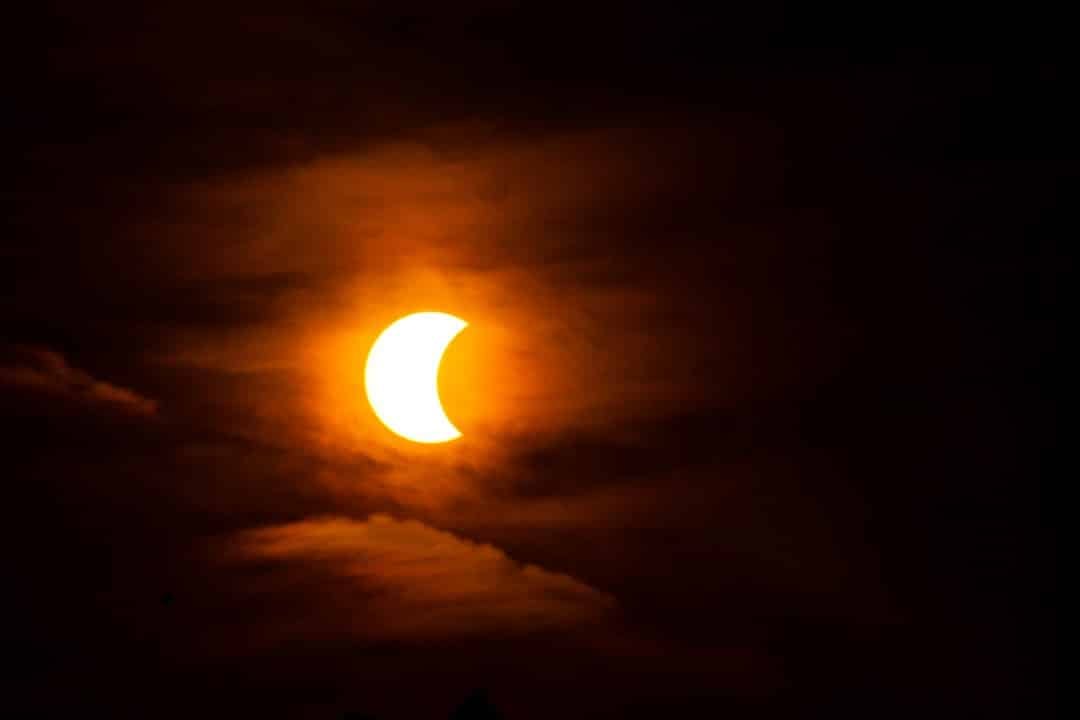
The most anticipated astronomical event of the decade will take place on August 2, 2027, when Lua will position itself exactly between Terra and Sol, generating a period of total darkness that will reach the mark of six minutes and twenty-two seconds. The lunar shadow will cover an area of fifteen thousand kilometers, crossing the south of the European continent, the north of África and parts of Oriente Médio, at a time when the natural satellite will be at its closest point to our planet. The combination of these orbital factors will result in the longest blockage of sunlight recorded in the twenty-first century, mobilizing the international scientific community and the tourism sector in regions located in the path of totality.
The celestial mechanics responsible for this phenomenon require a precise three-dimensional alignment between the three celestial bodies involved in the system. The main factors contributing to the magnitude of the event include:

– The passage of Lua through the orbital plane of Terra during the new phase.
– The projection of a double shadow cone towards the earth’s surface.
– The coincidence of the phenomenon with the lunar perigee.
The central, darkest region of this projection, called the umbra, establishes a narrow band where observers experience total darkness during the day. Nas areas adjacent to this main road, the penumbra causes only partial obscuration, causing the central star to appear as a luminous crescent in the sky.
Orbital alignment and the influence of lunar perigee
The orbit of Lua around Terra does not form a perfect circle, but rather an ellipse that moves the satellite closer and further away throughout the month. The point of closest proximity to this elliptical trajectory is technically known as perigee, a determining factor for the scale of visual obscuration.
During the 2027 event, the new phase will coincide exactly with this point of maximum approach of the system. Essa orbital configuration causes the lunar disk apparent in the sky to become slightly larger than the solar disk, creating the perfect conditions for a total blockage of direct light emission.
It is exactly this overlapping of apparent diameters that allows the photosphere to be covered for such an extended period of time. Sem this particular proximity, the maximum duration of totality would be drastically reduced, resembling common events that last just two or three minutes and offer much narrower observation windows.
Shadow trajectory and observation conditions
The corridor of total darkness will cover ten countries, starting its route at Oceano Atlântico and ending in the waters of Oceano Índico. The European continent will only be touched at the southern end of Espanha, encompassing coastal cities that are already organizing their structures to receive researchers and space enthusiasts.
In the north of África, the path of the umbra will cross Marrocos, Argélia, Tunísia, Líbia and Egito. Cidades historical Egyptians such as Luxor, are among the terrestrial sites with the longest duration predicted for the period of totality, combining archaeological heritage with observation of the cosmos.
The route continues through Oriente Médio and Chifre from África, encompassing parts of Sudão, Arábia Saudita and Iêmen. Centros urban areas such as Jeddah and Benghazi will also experience total obscuration, attracting scientific expeditions to these specific geographic coordinates.
The swath of totality will reach a maximum width of two hundred and fifty-eight kilometers, sweeping over a surface area of vast territorial extent. The probability of clear skies in this desert region during the month of August is considered extremely high by meteorologists, which guarantees ideal visibility conditions.
Astronomical records and comparison with previous events
The mark of six minutes and twenty-two seconds establishes a new level of observation for the current generation, surpassing the event that occurred in April 2024 on América of Norte, which recorded four minutes and twenty-eight seconds. Para To find a longer duration in recent history, astronomers need to go back to the year two thousand and nine, when the alignment provided six minutes and thirty-nine seconds of darkness. The phenomenon of almost two decades ago, however, occurred predominantly over oceanic areas of Pacífico and remote regions of Ásia, which made logistical access difficult for the vast majority of researchers and the general public, limiting the collection of terrestrial data.
The territorial accessibility of the 2027 route represents a significant difference for science and global astronomical tourism. The movement of the umbra through densely populated areas with established infrastructure allows a vast number of people to experience the totality without the need for large intercontinental expeditions. Todo the process, from the first visual contact of the lunar edge with Sol until the final separation of the disks in the celestial vault, will take approximately three hours, offering an extensive window for collecting atmospheric data, photometric measurements and recording the behavior of local fauna in the face of the abrupt change in luminosity.
Research Opportunities in the Solar Corona
The phase of totality offers the only natural opportunity for direct observation of the solar corona, the outermost and rarefied layer of our star’s atmosphere. Normalmente, the light intensity of the photosphere completely overshadows this region, requiring the use of space coronagraphs for its routine study. Durante After more than six minutes of natural blocking, astrophysicists will be able to analyze the dynamics of solar winds, coronal mass ejections and temperature variations that occur in this zone of intense magnetic activity. The extended time is crucial because it allows you to calibrate heavy equipment on the ground and capture images at multiple wavelengths without the rush characteristic of shorter events. Além of astrophysics, research teams monitor the abrupt drop in temperature in the Earth’s atmosphere and the reaction of the ionosphere to the sudden interruption of ultraviolet radiation, data that helps refine climate models and global communication systems that depend on the planet’s electromagnetic stability.
Eye safety protocols during the phenomenon
Observation of partial phases requires strict visual protection using internationally certified filters, as infrared and ultraviolet radiation can cause permanent damage to the retina in fractions of a second. The only time when naked-eye observation becomes safe is during the exact window of totality, when the luminous disk is completely covered, revealing the pearly glow of the corona and allowing the identification of planets and stars of great magnitude in broad daylight.
Economic preparations and the infrastructure of the hotel sector
Government authorities in the municipalities located in the central strip have already started logistical planning to absorb the flow of foreign visitors. The hotel sector in strategic regions north of África and south of Europa operates at maximum booking capacity years in advance, boosting the local economy.
Public bodies are working to develop contingency plans for road traffic and the temporary expansion of medical care services. The creation of official observation zones aims to concentrate the public in areas with adequate support and distribution of standardized safety equipment.
Upcoming alignments on the celestial calendar
After the passage of this great shadow, the astronomical community will need to wait until the year 2034 to witness a new period of blockade with similar characteristics. Até the arrival of this new date, the celestial calendar will offer partial or annular alignments, in which Lua is further away from Terra and cannot completely cover the star, leaving a ring of fire visible at the edges.
The distribution of such prolonged obscuration over accessible continental areas reinforces the importance of the current mobilization for the 2027 event. Instituições teaching and research organizations use the proximity of the date to promote scientific literacy, demonstrating how the mechanics of the solar system continue to provide predictable natural spectacles of great academic value.



