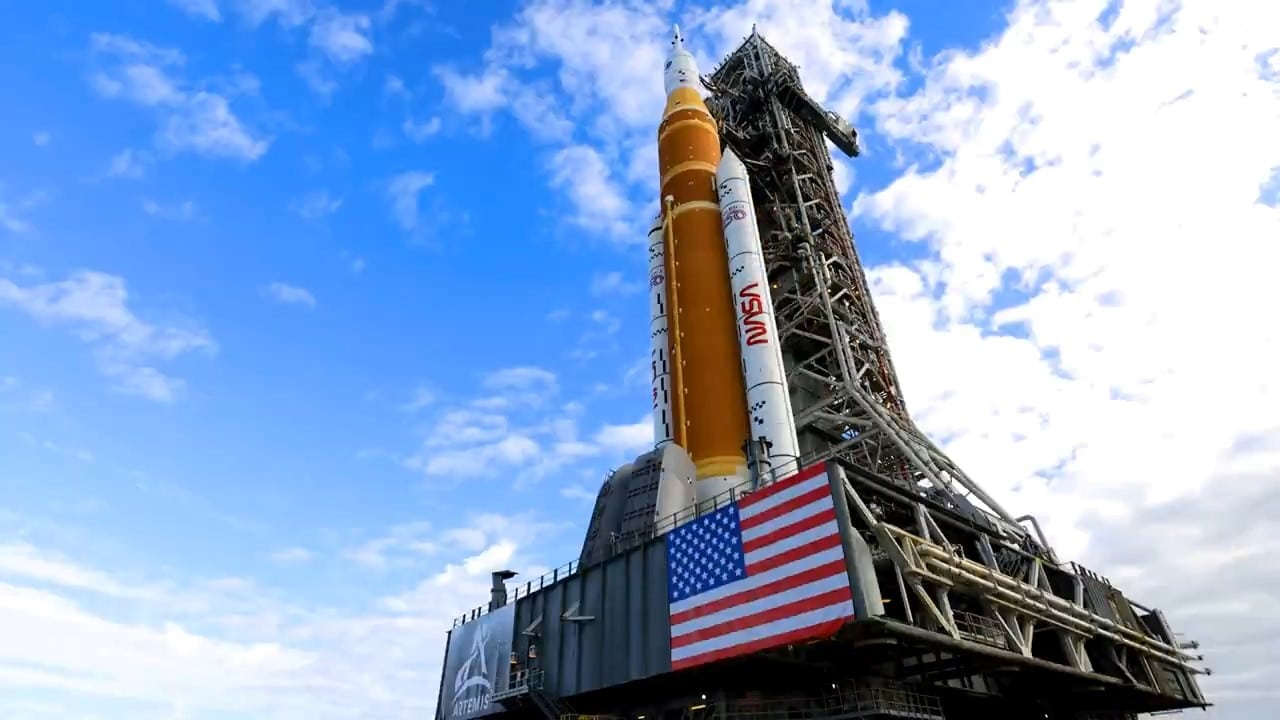
The North American space agency finalizes the latest security and systems integration protocols for the imminent launch of the space mission, scheduled to take off in early April from platform 39B of Kennedy Space Center, located in the state of Esta. Esta operation represents a historic milestone in contemporary aerospace exploration, as it will be the first manned flight to surpass low Earth orbit. Terra and travel towards the planet’s natural satellite since the end of program Apollo, which took place more than five decades ago. The crew will board capsule Orion, powered by powerful rocket Space Launch System, on a journey that will last approximately ten days and will pave the way for future commercial and government landings.
Mission control center experts have already confirmed that launch vehicle assembly and spacecraft integration have been successfully completed at the processing facility. Astronauts Reid Wiseman, Victor Glover, Christina Koch and Canadian Jeremy Hansen underwent intense contingency simulation training, handling life support equipment and navigation in deep space.
Action. Wonder. Adventure. Artemis II has got it all. Don’t miss the moment. Our crewed Moon mission will launch as early as April 1.
Learn how to watch:https://t.co/fAg0bGAqEc pic.twitter.com/2uhg8EhwTv
— NASA (@NASA)March 30, 2026
The flight schedule sets strict goals that need to be met before the agency authorizes sending humans to the surface in the next stages of the program. The main technical and operational guidelines for this testing phase include:
- Evaluation of the capsule life support system under real cosmic radiation conditions.
- Validation of orbital maneuver thrusters during the translunar injection trajectory.
- Continuous monitoring of telemetry and communication signals across the deep space network.
Ship navigation systems and heat shields Orion
The mission’s technical architecture allows flight engineers to evaluate the capsule’s structural and aerodynamic behavior with humans on board during all critical phases of the journey. The tests include exhaustive verification of the heat shields, which will need to withstand extreme temperatures during re-entry into the Earth’s atmosphere at speeds exceeding Mach 32, in addition to the calibration of the auxiliary thrusters and internal environmental control systems provided by the European service module.
The relative proximity of the orbit offers a fundamental strategic advantage for the safety of the crew, as it facilitates the execution of trajectory correction maneuvers and allows a faster emergency return in the event of serious anomalies, unlike what would occur on longer interplanetary journeys. The space agency uses this window of opportunity to refine contingency operational protocols that will be absolutely essential in the most advanced stages of solar system exploration.
The telemetry data collected over the ten days of flight will directly and immediately contribute to the necessary fine adjustments in the hardware and software of the next ships in the fleet under construction. Entre The components that will undergo rigorous scrutiny during the journey are:
- Solar panels responsible for autonomous generation of electrical energy in the vacuum of space.
- Carbon dioxide filtration and oxygen renewal systems in the pressurized cabin.
- Impact absorption mechanisms in the crew seats for landing in the ocean.
Mineral and frozen water extraction potential
The natural satellite of Terra houses vast deposits of water in the form of ice, concentrated mainly at the bottom of permanently shadowed craters located in the polar regions. Este natural resource is invaluable to aerospace engineering, as water can be chemically separated to provide vital oxygen for astronauts to breathe and liquid hydrogen to fuel rocket engines on future missions.
In addition to water resources, the crust has significant concentrations of strategic minerals, including rare earth elements and heavy metals such as titanium and iron. The ability to mine and process these materials directly in deep space will drastically reduce the need to launch heavy payloads from the Earth’s surface, optimizing the logistics of future permanent bases.
Housing structures for long-duration missions
The establishment of a continuous and sustainable human presence outside Terra requires the development of innovative solutions for the uninterrupted generation of energy, the production of breathable air and shielding against the severe thermal variations of the space environment. Housing modules designed for the surface need to offer absolute resistance against the cosmic background radiation and the constant bombardment of micrometeorites.
Performing hands-on testing in the harsh environment allows engineering teams to identify and fix structural vulnerabilities before these technologies are applied to much more distant and dangerous destinations. Mastery of microgravity survival architecture represents the foundation upon which all future solar system exploration operations will be built.
Fundamental step towards manned exploration of the red planet
The space program administration defines the current campaign of orbital flights and landings as a transition phase strictly necessary to enable manned missions to the red planet, projected to take place in the next decade. The considerably shorter distance and the almost imperceptible communications delay time make it easier to learn about the dynamics of work on another celestial body.
Any mechanical failure or calculation error committed during operations has much more controllable and reversible consequences than similar incidents that could occur during a nine-month journey towards Marte. The environment therefore functions as an ideal proving ground for the technological and psychological maturation of the crews.
The applied research laboratories are focused on developing next-generation spacesuits, unpressurized surface mobility vehicles, and closed-loop life support systems. Todos This equipment, initially tested in regolith dust, will later be adapted to withstand the rarefied atmosphere and Martian sandstorms.
The operational experience accumulated with performing recurrent landings and maintaining equipment in vacuum conditions builds the institutional and technical confidence essential for carrying out complex interplanetary journeys. Risk mitigation through exhaustive repetition of procedures is the basis of the safety philosophy adopted by ground teams.
Global partnerships and the advancement of aerospace engineering
The current geopolitical scenario shows that several other nations and international consortia are rapidly advancing their own exploration programs, including concrete projects to send astronauts to the surface by the end of this decade. Para maintain its position at the forefront of technology, the North American organization is strongly committed to forming strategic partnerships with European, Japanese and Canadian agencies, in addition to fostering a robust open innovation ecosystem with private companies in the commercial aerospace sector, ensuring the efficient distribution of costs and technical responsibilities.
The current orbital bypass mission represents only the initial stage of a scheduled sequence of flights with progressively greater levels of complexity. The next launch windows already foresee the integration of commercial logistics modules, the assembly of orbital station Gateway and the carrying out of manned landings at the South Pole. The official schedule was recently adjusted by flight directors to ensure a more efficient launch cadence, rigorously incorporating all engineering lessons learned during previous unmanned tests and optimizing the global supply chain.
Scientific return and development of new medical protocols
The massive volume of telemetric and biological data that will be obtained during the ten days of the flight will contribute decisively to the development of much more precise mathematical models on the behavior of the space environment in the vicinity of Terra. The medical research teams based in the control center will thoroughly analyze the effects of prolonged exposure to cosmic radiation and the consequences of weightlessness on the cardiovascular, muscular and bone systems of the human body. The results of these clinical analyzes will directly influence the formulation of new occupational health protocols, physical exercise routines and nutritional diets for future space travelers. Além from a purely scientific aspect, the program has the clear objective of inspiring a new generation of students to enter careers in science, technology, engineering and mathematics. Ultra-high-definition video transmissions, sent directly from orbit via laser communications systems, will allow the global public to follow the progress of exploration in real time, democratizing access to discoveries and demonstrating how technological advances developed for space often result in practical applications that improve the quality of life in the planet’s urban and rural centers.
Continuous flight path monitoring
Throughout the translunar journey, astronauts will perform detailed visual observations of the far side of the satellite and conduct manual capsule piloting tests to assess the responsiveness of the flight controls. The free return trajectory will ensure that the spacecraft is propelled back to Terra by its own gravity, without the need for prolonged activation of the main engines. Toda the complex orbital choreography will be monitored uninterruptedly by ground teams, using the global network of deep space satellite dishes to guarantee second-by-second telemetry reception until the moment of rescue at Oceano Pacífico.