
NASA doctors investigate Mike Fincke’s sudden aphasia during mission to the International Space Station


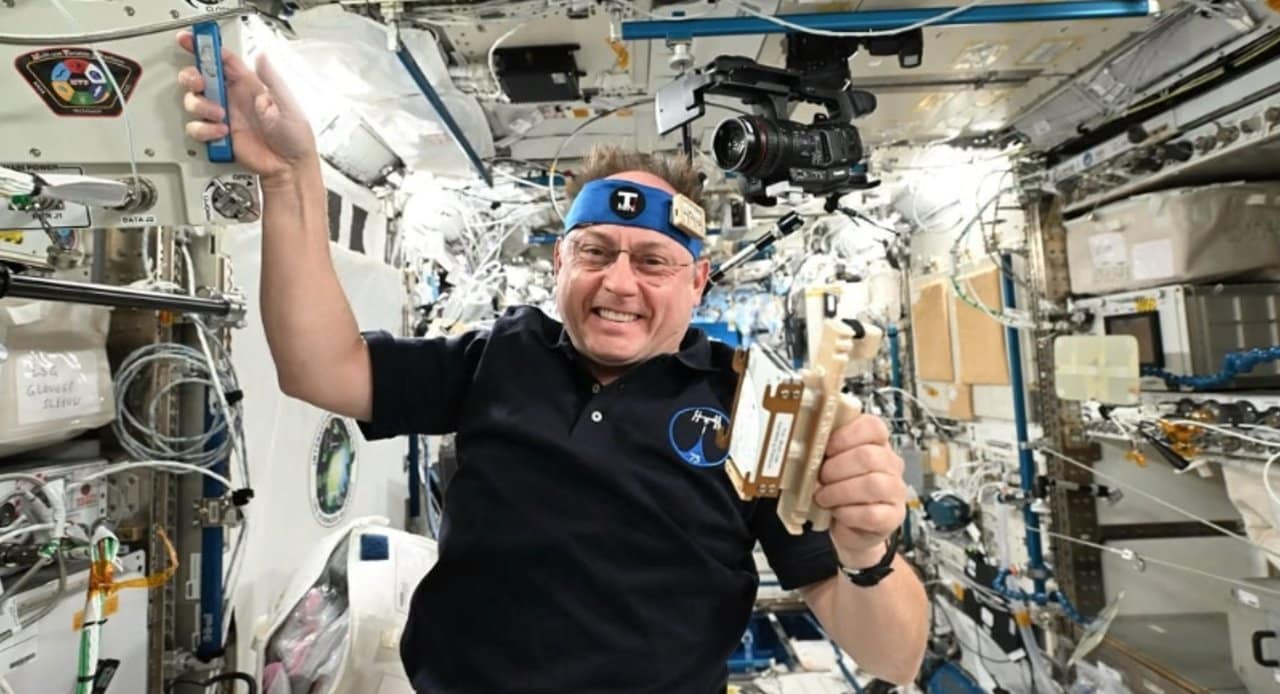
During routine operations aboard the orbital complex in early January, an atypical medical event altered the American space agency’s schedule of activities and mobilized the global scientific community. Veteran Michael Fincke, active member of expedition Crew-11, manifested a sudden inability to articulate words and make vocal sounds while participating in a meal in the housing module with the other crew members. The immediate medical incident required the activation of maximum security biological contingency protocols, activating health teams on the ground for an emergency remote diagnosis. Temporary aphasia in a microgravity environment represents an unprecedented clinical challenge for contemporary aerospace medicine, requiring a complete reevaluation of health parameters for missions outside Earth orbit.
The mission control team opted for a conservative and preventive intervention to guarantee the physical integrity of the professional and allow detailed laboratory tests to be carried out on Terra. The return of the transport capsule, which also carried astronauts Zena Cardman, Kimiya Yui and Oleg Platanov, was strategically brought forward to January 15th, weeks before the originally scheduled landing. for the month of February.
Preliminary examinations carried out immediately after the rescue in the ocean ruled out the occurrence of serious cardiovascular problems, such as strokes or acute myocardial infarctions. Stabilization of the clinical condition occurred naturally as soon as the patient returned to the influence of Earth’s gravity, eliminating the need for invasive surgical interventions.
Change in orbital expedition schedule
The mission’s operational chronology underwent drastic changes just hours before the official announcement about the early termination of activities on the orbital platform. The space agency had to cancel a complex extravehicular activity that would involve external maintenance work on Mike Fincke and Zena Cardman on the exterior of the main module.
Specialized medical transport was waiting for the crew in the rescue zone at Oceano Atlântico, with advanced life support equipment prepared for any respiratory or neurological eventuality. The descent operation took place under constant monitoring of the patient’s vital signs, ensuring that the gravitational forces of re-entry into the atmosphere did not worsen the clinical condition.
Rescue logistics involved direct coordination between different international command centers, including representatives from partner agencies JAXA and Roscosmos. Initial secrecy surrounding the identity of the affected crew member strictly followed medical privacy guidelines established for joint extraplanetary operations.
Effects of microgravity on the central nervous system
Human cranial anatomy undergoes severe physiological adaptations when exposed to long periods of weightlessness in the vacuum of space. The continuous displacement of body fluids towards the upper part of the body generates a progressive increase in intracranial pressure, altering the dynamics of the cerebrospinal fluid.
Researchers in the neurological field point out that brain tissue may undergo slight changes in physical positioning within the braincase due to the lack of gravitational resistance. Essa millimeter movement has the potential to temporarily interfere with the cortical areas responsible for language, specifically in the regions known as Broca and Wernicke.
Continuous exposure to cosmic background radiation is also among the primary variables analyzed by occupational health teams. The artificial environment of the orbital station imposes constant oxidative stress on the professionals’ nervous connections, which can trigger momentary electrical failures in the brain.
Monitoring neural plasticity has become an absolute priority to understand the failure in vocal motor coordination observed in the veteran. The absence of recurrent symptoms in Terra reinforces the hypothesis that the trigger for the dysfunction is strictly linked to the physical conditions of the space environment.
Clinical investigation and fluid analysis
Aerospace health departments have begun a process of reviewing all medical records from previous missions to identify possible underreporting of similar neurological events that may have occurred in a milder form. The detailed analysis seeks to establish a pattern of physiological behavior that can predict episodes of aphasia or mental confusion in future space travelers. Detailed genetic mapping and assessment of the patient’s brain electrical activity through continuous electroencephalograms provide an essential primary database for formulating new biological safety and crew selection guidelines.
Collecting samples of bodily fluids and performing high-resolution MRI scans make up the battery of tests underway at government medical facilities. The international scientific community works on the premise that neurological remodeling induced by microgravity has an individual tolerance limit that varies depending on the biology of each astronaut. The identification of specific biomarkers in blood can assist in the selection and training of teams for long-term expeditions, minimizing the operational risks of communication failures at critical moments of the mission.
Impact on long-distance exploration protocols
The medical incident aboard the orbital platform raises urgent operational questions about the viability of interplanetary missions that require months of transit through the vacuum of space without the possibility of rescue. The Artemis program, which aims to establish a sustainable human presence on the lunar surface and the construction of station Gateway, directly depends on the ability to maintain the cognitive and physical health of crew members at optimal levels of functioning. The impossibility of a rapid emergency return during a future trip to Marte requires that the ships be equipped with advanced imaging diagnostic systems and fully autonomous neurological treatment. Technical cooperation between government entities and private corporations in the aerospace sector gains a new strategic contour, focused on the development of non-invasive portable monitoring technologies and the possible implementation of rotating housing modules with artificial gravity to mitigate the degradation of the explorers’ central nervous system.
Continuous monitoring and current health status
The professional affected by the temporary condition maintains a routine of periodic examinations in specialized medical facilities to ensure the absence of late sequelae. Recent official statements indicate a full recovery of the astronaut’s vocal and cognitive capabilities, with no signs of permanent damage to the structure of the central or peripheral nervous system.
Preventative guidelines for future crews
Global training centers began immediately updating their zero-gravity medical emergency manuals and standard operating procedures. The simulation of critical scenarios where verbal communication is suddenly interrupted has become part of the mandatory preparation schedule for new space cadets.
The creation of alternative non-verbal communication protocols, using digital interfaces and standardized hand signals, ensures that the team can maintain operational coordination even in the face of individual neurological failures. The redundancy of security systems now extends to the capacity for human interaction within the modules.
Physiological factors in extreme environments
Human exploration medicine classifies the low-altitude orbital environment as one of the most hostile scenarios for long-term maintenance of terrestrial biology. The absence of constant gravitational pressure triggers a series of systemic adaptive responses that are not yet fully mapped or understood by modern medical science.
Preliminary reports from the investigative teams highlight specific environmental elements that contribute to clinical instability in outer space. Current research focuses on physical and radiological variables that directly affect the neurological performance of crew members.
- Redistribution of body fluids causing constant high intracranial pressure.
- Positional displacement of brain tissue in relation to language motor areas.
- Systemic microinflammations resulting from prolonged exposure to cosmic radiation.
- Changes in neural plasticity due to prolonged confinement and artificial environment.
- Impact of oxidative stress on the nervous connections responsible for vocal coordination.



