
SpaceX satellite failure mobilizes space agencies on the eve of the Artemis 2 lunar mission


SpaceX’s aerospace telecommunications division recorded a total communication outage with one of its equipment in low orbit Terra last Sunday. The artifact, technically identified as satellite 34343, was operating at an altitude of approximately 560 kilometers when it presented the systemic anomaly. Equipes engineering confirmed the loss of signal, but immediately ruled out any risk of collision or interference with Estação Espacial Internacional and its crew. The event also does not change the schedule of future major launches scheduled for the coming weeks.
Aerospace professionals began a full scan of telemetry systems to understand the source of the failure. The incident mobilized not only the private company’s technicians, but also government specialists who work in orbital traffic control. The initial priority was to establish the exact trajectory of the inactive object to ensure it did not cross active commercial or scientific routes.
Continuous monitoring of low Earth orbit is a standard practice that is reinforced in situations of loss of satellite control. Radares high-precision ground-based systems monitor the movement of artifact 34343 with each pass over the tracking stations. The collected data is processed in real time to calculate the orbital decay rate and predict the equipment’s behavior in the coming weeks.
Joint investigation and monitoring of space debris
Força Espacial of Estados Unidos and the American space agency are working in direct coordination with the satellite network operator to assess the consequences of the incident. The main focus of this task force is to identify the possible generation of traceable fragments that could pose a danger to other missions. Até At the moment, preliminary analyzes indicate that the satellite remains intact, with no signs of fragmentation or internal explosion.
Tracking objects in space requires a complex infrastructure of optical and radio frequency sensors. Quando a satellite loses its ability to maneuver and communicate, it essentially becomes temporary space debris, subject to atmospheric drag and gravitational variations. Collaboration between public and private entities ensures that the catalog of objects in orbit is updated with millimeter precision, allowing evasive maneuvers by other satellites if necessary.
Engineers analyze the last data packets sent by the equipment before the blackout to reconstruct the failure timeline. Essa technical investigation seeks to determine whether the problem originated from a short circuit, software failure or premature degradation of critical components. Transparency in sharing this information helps improve safety protocols across the aerospace industry as it navigates an increasingly congested environment.
Preparations for the American space agency’s manned flight
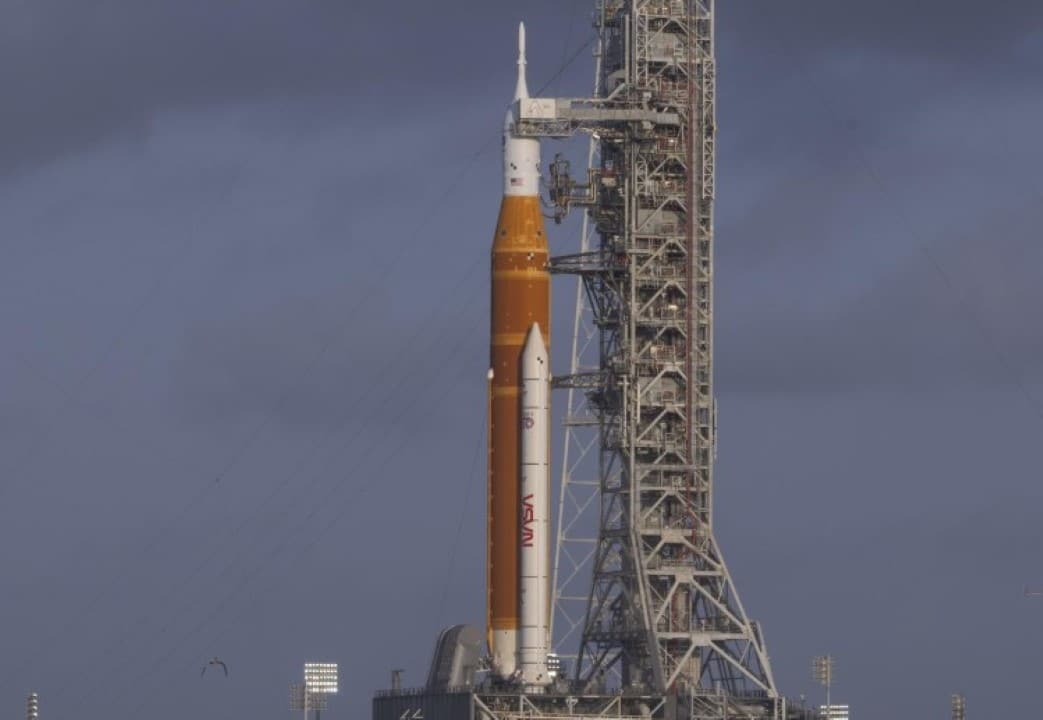
The orbital incident occurred at a time of high expectations for human space exploration, preceding the launch of mission Artemis 2, scheduled for April 1. Este project represents a historic milestone, as it will take a crew of astronauts for a flyby around Lua, testing the life support systems of capsule Orion in deep space. Autoridades confirmed that the anomaly with the commercial satellite does not interfere with the preparations for this lunar journey.
The planned trajectory for the rocket that will take astronauts into space was designed to avoid the orbital bands most densely populated by communications satellites. Especialistas in flight dynamics reviewed the ascent calculations and confirmed that the launch window remains safe. The separation of the orbits guarantees a wide safety margin for the crew during the critical phase of leaving Earth’s gravity.
Flight safety teams maintain strict monitoring of all variables that may affect the manned mission. Coordination between mission controllers and satellite constellation operators is a fundamental requirement for authorization of any manned launch. The launch vehicle testing and supply schedule follows the original plan without delays.
Trust in tracking systems allows ground operations to proceed smoothly. The lunar preparation teams’ focus remains on checking the spacecraft’s internal systems and final astronaut training, ensuring all emergency protocols are sharp for launch day.
No impact on commercial operations and mission Transporter-16
The commercial launch routine of the company responsible for the defective satellite was not interrupted. On Monday morning, rocket Falcon 9 successfully took off to execute mission Transporter-16, a flight dedicated to transporting multiple payloads for different customers. The operation took place without setbacks, demonstrating the independence between the launch systems and the management of the constellation in orbit.
The flight profile of mission Transporter-16 was executed in order to insert the new satellites at altitudes higher or lower than the range occupied by the global internet network. Essa intentional trajectory separation is an engineering practice that prevents dangerous approaches during the load deployment phase. The integrity of all newly launched objects was preserved, and customers confirmed signal reception from their respective equipment.
Global internet constellation dynamics and system redundancy
The satellite network in question operates with thousands of active units distributed in specific orbital planes to provide broadband connectivity on a global scale. The architecture of this system was designed with a high degree of redundancy, which means that the loss of a single piece of equipment does not affect the quality of service provided to users on the Earth’s surface. Data traffic is automatically redirected to neighboring satellites in the same region, ensuring connection continuity.
Isolated anomalies are considered part of the operational cycle of large constellations. The equipment is built to operate in a hostile environment, subject to intense solar radiation and extreme temperature variations. Quando a satellite reaches the end of its useful life or presents irrecoverable failures, it is programmed to re-enter the Earth’s atmosphere, where it disintegrates completely due to aerodynamic friction, avoiding the creation of permanent space debris.
The system operator maintains continuous production lines to replace inactive units and update fleet technology. Lançamentos frequency ensures that network density remains stable, compensating for natural or accidental losses. The sustainability of low orbit operations depends on this capacity for constant renewal and the safe disposal of obsolete equipment.
Preventive measures and technical analysis of internal components
The ongoing investigation focuses on ruling out external influences and mapping hardware vulnerabilities. Relatórios Preliminary technicians found no evidence of collision with micrometeorites or uncatalogued space debris. Diagnostic work progresses to isolate the subsystem responsible for the communications interruption.
To ensure clarity of actions taken by engineering teams, contingency procedures follow strict orbital safety guidelines:
– Avaliação continuous telemetry data stored before artifact 34343 lost signal.
– Rastreamento optical and radar to detect any change in the physical structure of the satellite.
– Compartilhamento of orbital ephemerides with government agencies to update security catalogs.
– Revisão of the manufacturing processes of the most recent batches to prevent similar failures in future units.
Updates on the status of inactive equipment will continue to flow through official space traffic coordination channels. The absolute priority of the organizations involved is the maintenance of a safe orbital environment, free from risks for scientific and commercial missions and, fundamentally, for manned flights that represent the future of human presence in space.



