
US military operation rescues pilot in Iran under threat of blockade in Strait of Hormuz

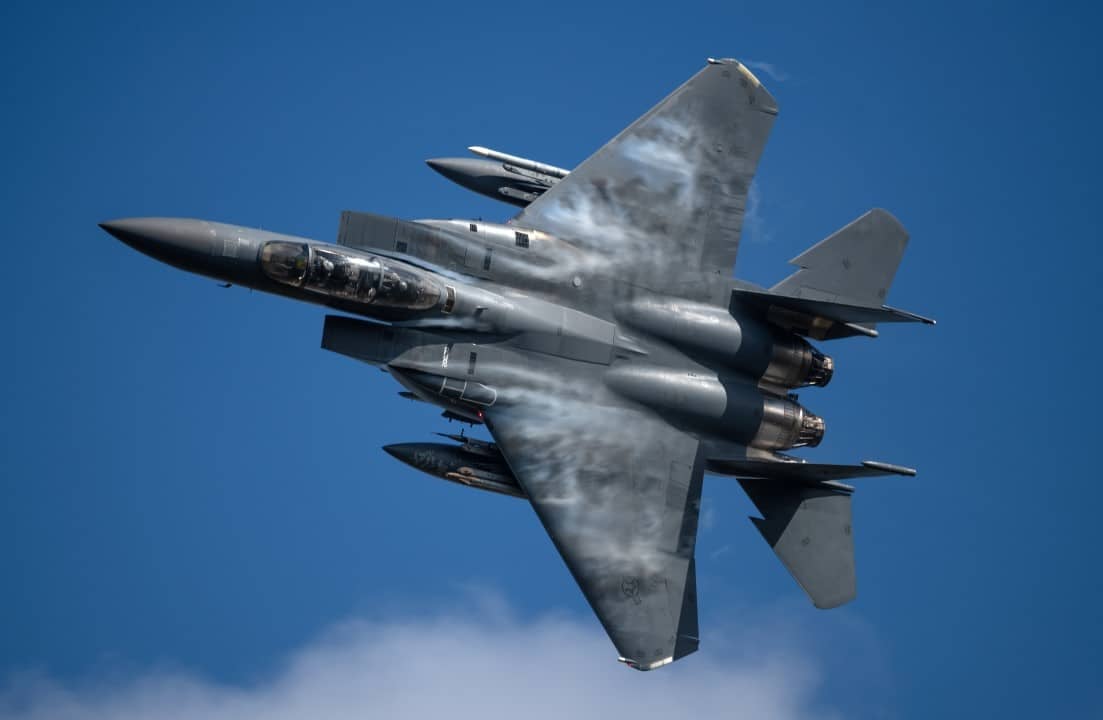
The tactical intervention to recover the crew of an F-15E fighter Strike Eagle shot down in Iranian territory raised the level of alert in international diplomatic relations. The rescue of the injured soldier took place in a scenario of strong geopolitical pressure, coordinated directly by the administration of Donald Trump. The military action demonstrated the infiltration capacity of American troops, while at the same time exposing the complexity of security operations in Oriente Médio.
Simultaneously with the extraction operation, the Estados Unidos government issued a direct demand to the Teerã regime. The focus of government demand was on the immediate reopening of the Estreito Ormuz, one of the main arteries of global maritime trade. Official communication established strict parameters, indicating that the absence of cooperation would result in military responses aimed at the Asian country’s infrastructure.
To clarify the developments of the mission, Casa Branca organized an official statement in the presence of the high command of the armed forces. Durante During the presentation, strategists detailed the logistics of the rescue and outlined the safety guidelines adopted to protect those involved. The event served to reaffirm Washington’s zero-tolerance stance toward threats against its military and commercial interests.
The F-15E Strike Eagle fighter, known for its ability to operate in air-to-air and air-to-ground missions in any weather condition, represented a high-value technological asset. The crash of the aircraft on hostile soil required an immediate response not only to save lives, but to prevent navigation and communications equipment from advancing into the hands of opposing forces. The rapid mobilization of search and rescue teams prevented the capture of the crew and the loss of sensitive data.
Details of tactical incursion into hostile territory
Executing the rescue plan required dividing the teams into two distinct operational fronts. The first phase of the mission focused on recovering the aircraft’s pilot during daylight hours. Essa strategic choice went against usual evasion protocols, which generally prioritize night cover to minimize visual detection by radars and enemy patrols.
For seven uninterrupted hours, elite American units operated within Iranian air and land space. Coordination involved close air support and satellite monitoring to ensure the safe extraction of the first crew member. The maneuver demonstrated the level of training and precision of the military planning used in the operation, requiring absolute synchrony between command bases and operators on the ground.
The second stage of the mission presented a significantly greater degree of difficulty, focused on rescuing a colonel who suffered serious injuries during the crash of the fighter. The military’s location in a difficult-to-access mountainous region required specialized equipment and vertical infiltration techniques, while local forces attempted to intercept the rescue team.
– The first extraction took place in broad daylight, defying standard special forces security norms.
– The second phase required navigation in mountainous terrain to locate and stabilize the injured officer.
– Patrulhas Iranian women were carrying out active searches in the same area as the plane crash, increasing the risk of direct confrontation.
– The military command classified both incursions as posing extreme risk to the aircraft and teams involved.
Government Requirements on Global Sea Route
The ultimatum established by the American administration set a deadline of 48 hours for the total unblocking of Estreito of Ormuz. The maritime route is responsible for the transit of a significant portion of the oil and liquefied natural gas consumed worldwide. Blocking this route represents a direct threat to the stability of financial markets and the energy supply of several allied nations.
The rhetoric adopted by the Estados Unidos government included warnings about precision strikes against vital Irã installations. Official statements mentioned the possibility of neutralizing power plants, bridges, and distribution centers if merchant ship traffic was not normalized. Essa approach aimed to create an immediate deterrent effect against the leaders in Teerã.
Estreito of Ormuz serves as the main logistical choke point for Golfo Pérsico. The geography of the location forces supertankers to navigate through narrow channels, making the vessels highly vulnerable to interceptions, rapid approaches or asymmetric attacks. The guarantee of free navigation in this area is a pillar of the doctrine of international economic security maintained by Western powers.
Foreign trade experts point out that a prolonged closure of the strait would cause severe disruption to supply chains. The immediate consequence would be a spike in fuel prices, affecting the costs of transporting goods and inflation on a global scale. The pressure exerted by Washington sought to prevent the materialization of this scenario of systemic economic crisis.
American defense strategy and military budget
The rapid response to F-15E incident Strike Eagle reflects the practical application of the show of force doctrine. The Estados Unidos national security apparatus maintains a state of continuous readiness to project power into conflict zones and protect its citizens. The ability to mobilize elite resources in short periods of time is considered fundamental to maintaining tactical superiority and protecting strategic trade routes around the globe.
To sustain this level of operability, the Departamento Defesa budget planning foresees investments in the order of 1.5 trillion dollars. The amount is directed towards the modernization of naval fleets, advanced technological research and expansion of the armaments industrial base. The allocation of resources aims not only to respond to specific crises in Oriente Médio, but also to prepare the armed forces for competition with other global powers, ensuring the continued production of state-of-the-art ammunition and equipment.
Arrests of family members from Qasem Soleimani to Los Angeles
In addition to actions abroad, the American government implemented strict internal security measures against individuals associated with the Teerã regime. Agentes federal officers arrested Hamideh Soleimani Afshar, niece of the deceased Major-General Qasem Soleimani, and her daughter, in the city of Los Angeles. The operation took place shortly after Secretário of Estado, Marco Rubio, signed the revocation of the permanent residence visas of the two women. Intelligence reports indicated that both acted as active promoters of the Iranian government’s ideology within the Agentes0. The accusations included the dissemination of propaganda material, the public celebration of attacks against American military bases in the Agentes2 and praise speeches for the supreme leader of the Agentes3. The intervention of the immigration and national security authorities demonstrated the zero tolerance policy against the presence of defenders of classified regimes as hostiles on American territory, integrating the strategy of maximum pressure in all government spheres and dismantling possible networks of foreign influence in the country.
International security and energy supply routes
Surveillance over shipping lanes in the Golfo Pérsico remains a top priority for international naval fleets. Constant monitoring aims to prevent acts of sabotage, illegal seizures of cargo ships and the use of sea mines that could interrupt the daily flow of millions of barrels of hydrocarbons destined for Asian and European markets.
Coordination between allied navies establishes protection corridors to ensure commercial vessels transit safely. Essa Overt military presence works as a stabilization mechanism, reducing the risks of diplomatic incidents that could escalate into direct armed clashes in the region and ensuring the fluidity of international trade.
Geopolitical dynamics on Oriente Médio
The rescue operations and diplomatic sanctions applied constitute a framework of international relations based on mutual surveillance. The politics of constant pressure shifts the balance of power in Oriente Médio, forcing neighboring countries to recalibrate their alliances and defense strategies. Rigor in negotiations and readiness to use military force establish guidelines that continue to guide diplomatic interactions, keeping the region under a state of permanent monitoring in relation to global security and control of strategic resources.



