Space agency accelerates testing of the Orion spacecraft for the historic manned flight of the Artemis 2 mission
The American space agency intensifies the verification and assembly stages for the first manned flight of its current lunar exploration program. The project represents a milestone in the resumption of human travel to deep space, with the aim of testing critical equipment before future descents to the surface of the natural satellite. Quatro astronauts make up the team that will travel aboard the capsule developed to withstand extreme conditions outside low Earth orbit.
The official schedule foresees the launch for the month of September, marking the advancement of joint operations between Estados Unidos and partner nations. The journey does not include a landing, but establishes a circumlunar trajectory designed to validate the spacecraft’s life support, communication and navigation. The data collected during the travel days will serve as an operational basis for the next phases of the space project.
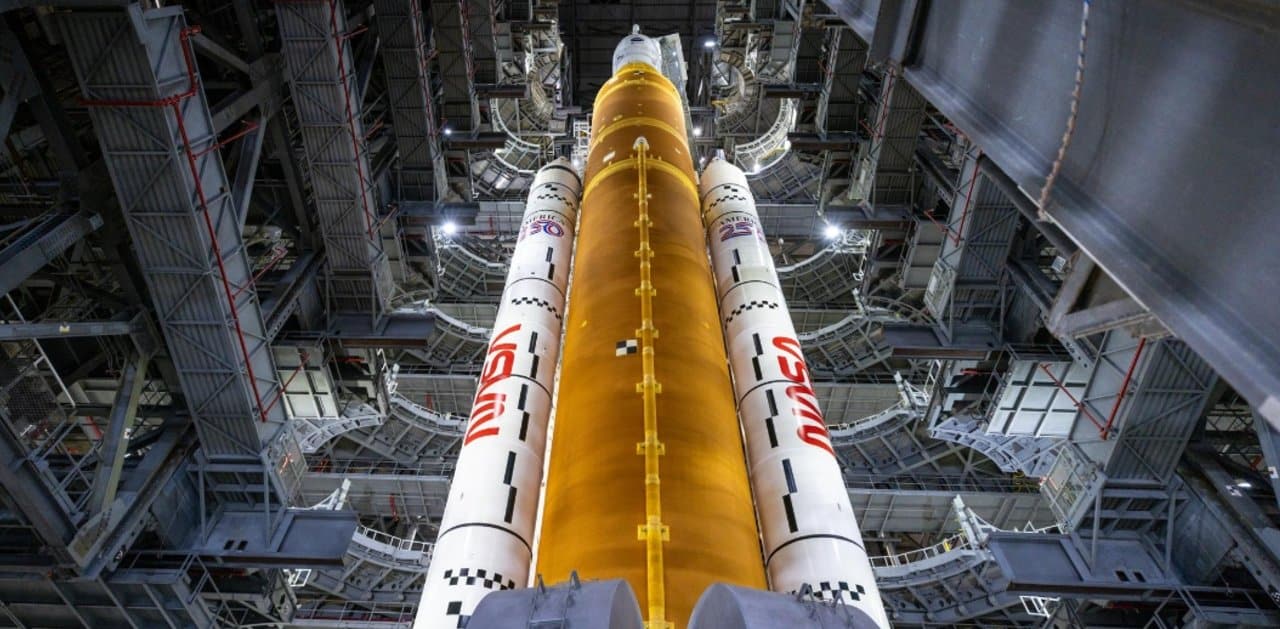
Engineers and technicians work daily at launch facilities to ensure that all components operate within the required safety margins. Vehicle validation in a real-world environment with humans on board is the final step before authorization for more complex missions. The success of this phase determines the pace of future expeditions aimed at establishing a permanent base at the lunar south pole.
Validation of support and navigation systems
The planned trajectory for capsule Orion uses the free return concept, taking advantage of lunar gravity to propel the vehicle back to Terra without the need for additional ignitions of the main engines. Este flight profile provides an extra layer of safety, ensuring that the crew returns automatically in the event of mechanical failures following translunar injection. The maximum distance reached by the spacecraft will reach approximately 400 thousand kilometers from our planet. Esta mark surpasses all distances ever traveled by human beings since the end of the Apollo program in the last century. Durante the route, the team will carry out continuous checks of the spacecraft’s performance in real vacuum and radiation conditions. Mission control at Terra will monitor each telemetry to attest to the vehicle’s stability.
Tests include manual manipulation of the spacecraft by pilots, assessing the clarity of deep-space communications and checking internal comfort for crew members. Exposure to cosmic radiation outside the protection of the Earth’s magnetic field is one of the most critical factors evaluated by scientists. Sensores installed inside and outside the cabin will record levels of energetic particles to help improve protective suits and shields. The practical experience gained during these flying days will be immediately applied to the planning of subsequent missions. The ultimate goal of these validations is to ensure that future explorers have the appropriate tools and protection for extended stays on the surface of Lua and, subsequently, on interplanetary travel.
Preparation of the international team
The team selected for the trip is made up of Christina Koch, Victor Glover and Reid Wiseman, American representatives, in addition to Jeremy Hansen, from the Canadian space agency. Wiseman assumes the role of mission commander, being primarily responsible for decision-making and the general safety of flight operations. Glover acts as a pilot, with the specific task of maneuvering the capsule Orion and maintaining the vehicle’s stability in critical phases of the journey. The collaboration between the two countries reinforces the global nature of new space exploration initiatives.
Koch and Hansen occupy the positions of mission specialists, responsible for monitoring control panels, carrying out scientific experiments and maintaining constant communication with the ground base. The presence of Christina Koch, holder of the record for continuous female stay in space, adds vast experience in long-term operations. The group’s selection highlights diversity, including the first African-American and first Canadian assigned to a lunar flight. The complementary skills of the four professionals are essential for managing a highly complex operation.
Launch vehicle power and assembly
Transport of the crew and capsule Orion depends on the Space Launch System rocket, currently classified as the most powerful launch vehicle in operation in the world. The equipment was specifically designed to carry massive payloads beyond Earth orbit, surpassing the thrust capacity of old Saturn V rockets. Initial propulsion is guaranteed by solid fuel thrusters combined with four high-performance main engines. The force generated in the first minutes of flight is essential to escape the gravitational pull of Terra.
The integration of all stages of the rocket takes place under strict engineering protocols at the launch center at Flórida. The assembly process requires perfect synchronization between electrical, hydraulic and software systems to avoid any anomalies during the countdown. The vehicle’s flawless performance in its previous unmanned test flight provided the confidence needed for the current phase of the project. Engenheiros continuously monitor structural sensors to ensure the integrity of the rocket before final fueling.
Training routine and simulations
The four astronauts follow an exhaustive preparation schedule that involves daily simulations of all phases of space flight. Training ranges from standard launch procedures to atmospheric re-entry maneuvers and rescue in Oceano Pacífico. Instrutores create complex emergency scenarios to test the team’s ability to react quickly and make decisions under pressure. In-depth familiarization with the Orion capsule panels is the main focus of these practical activities.


In addition to technical issues, the group undergoes intense physical conditioning to withstand the gravitational forces of the launch and the effects of microgravity. Psychological health also receives special attention, with dynamics aimed at strengthening teamwork and interpersonal communication. Prolonged isolation in a confined environment requires a high degree of cohesion among crew members to avoid operational conflicts. Médicos Spaces closely monitor the evolution of each member to ensure total fitness.
The simulations include the practical use of new survival spacesuits, which protect astronauts in the event of cabin depressurization. The team extensively trains contingency communication protocols, ensuring that contact with Terra is maintained even during system failures. The constant repetition of procedures aims to create muscle memory that allows automatic actions at critical moments. Final preparation will take place in the weeks leading up to the official launch date.
Expansion of space infrastructure
The manned flight around Lua serves as a practical test for the future construction of a cislunar orbital station. Esta platform will serve as a safe haven for ships traveling from Terra and as a transfer point for descent modules. The assembly of this infrastructure directly depends on the navigation and docking data that will be validated in the initial missions. The project involves the active participation of several international space agencies and private companies in the aerospace sector.
The manufacturing of the capsule and rocket components mobilizes a vast supply chain, generating technological advances in materials resistant to extreme temperatures. The development of new propulsion and life support systems drives innovation in research laboratories around the world. Engineering solutions created for the space environment often find commercial applications in Terra, benefiting industries such as telecommunications and medicine. Continued investment in the space program encourages the creation of highly specialized jobs.
Collaboration with the private sector has accelerated the development of landers and surface exploration vehicles. Contratos Governments allow companies to test their own technologies in support missions, reducing the operating costs of state agencies. Supplier diversification ensures that the program does not depend on a single technology source to achieve its objectives. The public-private partnership model has become the standard for new ventures to explore the solar system.
Supply logistics for long-duration missions require the development of highly efficient water and air recycling systems. Life support testing performed by the current crew will provide the metrics needed to improve this equipment. The sustainability of deep space operations is the greatest technical challenge for maintaining inhabited bases outside Terra. Closed systems engineering is the key to human survival in hostile environments.
Continuous monitoring protocols
Operational safety is guaranteed by a global network of antennas and control centers that track the spacecraft uninterruptedly from the moment of liftoff. The main command center, located at Texas, centralizes all telemetry information, crew health and engine status in real time. Dezenas of flight controllers, divided into shifts, analyze the data received to identify any millimeter deviation in the trajectory or change in cabin pressure. The launch abort system, designed to eject the capsule away from the rocket in the event of an explosion on the platform, undergoes daily software and hardware reviews. Communication with astronauts is maintained via high-frequency encrypted channels, ensuring that instructions arrive without significant delays, even hundreds of thousands of kilometers away. Maritime rescue teams carry out parallel training at Oceano Pacífico to ensure the rapid extraction of the crew after the capsule dives into the water. The experience accumulated from decades of operations in Terra’s low orbit has been adapted and expanded to meet the unpredictable demands of deep space. Transparency in the dissemination of technical data among international partners ensures that best engineering practices are applied at all phases of the project. Rigorous pre-flight inspections are the main tool for mitigating the risks inherent in a journey beyond the protection of our planet.
Next steps in the schedule
Engineering teams focus their efforts on completing the integration of the spacecraft’s electronic systems into the processing center. The launch window requires specific weather conditions and the correct orbital alignment to ensure trajectory efficiency. The successful completion of this trip will pave the way for the next mission, which plans to physically return astronauts to lunar soil. The methodical advancement of each phase ensures the construction of a solid foundation for continued human exploration.
Veja Tambem em Latest News (EN)

Italian Supreme Court confirms legality of hotel that offered only mineral water to customer

National Geographic Traveler Announces Travel Photography Contest Winners

Ferrari presents Luce, the first electric car, and receives harsh criticism from fans and the market

Yuki Yamada posts photo with beard and grimace on Instagram and surprises fans

Costco sees record demand at U.S. gas stations with lower prices

Passenger tries to enter cockpit and forces diversion of United Airlines flight to Madison
Astronomer explains white light recorded after meteor falls near volcano in Philippines

Comedian Sakamoto-chan reveals type 2 diabetes remission after lifestyle changes

Avi Loeb says discovery of alien intelligence can unite humanity amid global crises

Police investigate death of Hilde Ann Lynn Helphenstein in room at Rosewood São Paulo
Avi Loeb suggests that dark comet 1998 KY26 could be Soviet probe Phobos 1