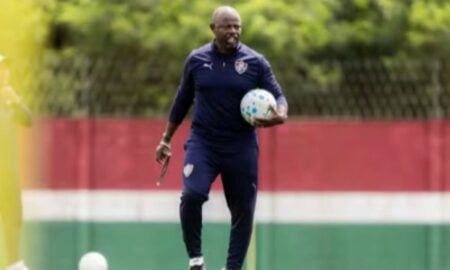
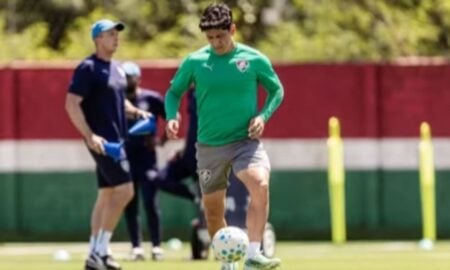
Fluminense faces Deportivo La Guaira in the Libertadores debut with the help of Savarino and Soteldo in Venezuela


Fluminense makes its official debut in the group stage of Conmebol Libertadores this Tuesday, facing Deportivo La Guaira on Venezuelan soil. The match marks the return of the Laranjeiras club to the country after a thirteen-year hiatus, bringing a load of expectations for its performance in the continental competition. Coach Luis Zubeldía prepared the team focusing on quickly adapting to the pitch and the local style of play, aiming to secure the first three points in the tournament.
For this unprecedented challenge against La Guaira, the tricolor squad has the technical knowledge of Jefferson Savarino and Yeferson Soteldo. The two players have extensive experience in Venezuelan football and have already faced the opponent of the night on several occasions throughout their careers. Essa Luggage is seen by the technical committee as a strategic advantage to anticipate movements and specific characteristics of the rival.
Preparation for the clash included detailed analyzes and conversations between the athletes and the Rio club’s scout team. The objective is to avoid surprises against a team that, although not a veteran of the competition, usually imposes difficulties playing at home. The delegation arrived in the Venezuelan capital in advance to minimize travel stress and focus exclusively on the tactical duel scheduled for UCV Estádio Olímpico.
- Savarino played five matches against La Guaira while defending the colors of Zulia, accumulating draws and defeats in that period.
- For Atlético-MG, the striker achieved his first significant victory over his rival with a 4-0 rout in 2021.
- Yeferson Soteldo maintains a positive balance, adding two important victories during his time at Zamora between 2015 and 2016.
- The overall record of Fluminense against teams from Venezuela is seven wins and only one defeat in history.
Experience of foreign attackers as a tactical advantage
Striker Jefferson Savarino knows the shortcuts of local football well having played professionally in the country between 2012 and 2017. Durante During this period, he wore the Zulia shirt in 120 official games, which gives him an accurate reading of the behavior of Venezuelan defenders on the field. Mesmo with a difficult initial record against Deportivo La Guaira, his technical evolution in Brazilian football turned him into a central piece for Zubeldía’s scheme in this debut.
Yeferson Soteldo also plays a key role in this sports intelligence logistics set up by Fluminense for the trip. The attacking midfielder was a starter in notable victories against this Tuesday’s opponent and has valuable information about the game environment in Caracas. Sua dribbling ability and speed are tools that the coach intends to use to exploit possible defensive weaknesses that the opponent usually presents.
Historical retrospective on Venezuelan soil
Fluminense has not played an official match in Venezuela since 2013, when they beat Caracas 1-0 with a goal from their idol Fred. Aquela match was engraved in the fans’ memory not only because of the positive result, but because of the off-field difficulties faced by the Brazilian delegation at the time. Naquela season, problems with arbitration and last-minute medical vetoes generated an atmosphere of tension that the club hopes not to repeat now.
Tricolor’s history against Venezuelan teams began in 1971, the year in which the team played four games against clubs from that country in the same edition. Naquele period, the team surpassed Deportivo Galícia and Deportivo Itália, establishing a hegemony that has been maintained throughout the decades. The only recorded defeat occurred in a controversial context that resulted in the departure of then coach Zagallo, in a game surrounded by internal controversies.
Group analysis and logistics of the continental competition
The draw for Conmebol Libertadores placed Fluminense in a group that requires extra attention with geographic movements and weather conditions. Além from Venezuela, Tricolor will need to travel to Bolívia to face Bolívar at the dreaded altitude of La Paz, a challenge known for testing physical endurance. The logistics for these matches were planned months in advance by the board to ensure the players had the best possible recovery between games.
Independiente Rivadavia, from Argentina, completes the bracket as an absolute newcomer looking to surprise the most traditional teams on the South American continent. Para or Fluminense, maintaining regularity away from home is the shortest way to guarantee early classification for the round of 16. The total focus on the debut against Deportivo La Guaira shows that the club does not underestimate any opponent on this journey in search of a second championship.
Tactical challenges for the away debut
Luis Zubeldía prioritized ball possession and quick transition training to neutralize the likely initial pressure from the home team in Caracas. The coach understands that control of the midfield will be vital to dictate the pace of the match and prevent the game from becoming excessively physical. Players were instructed to maintain defensive compactness, using the speed of Soteldo and Savarino to exploit counterattacks whenever space is available.
The pitch at UCV Estádio Olímpico is known for being heavy, which can directly influence the movement dynamics of the athletes during the ninety minutes. The technical team carried out a reconnaissance of the field to adjust the boots and the intensity of the runs, aiming to preserve the physical integrity of the starting squad. The expectation is for a truncated game, where the individual quality of the tricolor reinforcements can decide the confrontation in set pieces or individual plays.
Physical preparation and savings strategy for holders
The decision to spare some athletes in recent rounds of the state championship was based on the need to have the squad in peak physical shape for Libertadores. The physiology department at Fluminense monitors each player’s wear levels daily to avoid early muscle injuries at this stage of the season. With the extremely tight Brazilian calendar, energy management becomes as important as technical training within the four lines.
The players who remained in Rio of Janeiro carrying out specific recovery work have now joined the group that traveled to Venezuela. Essa strategy aims to ensure that the team maintains the intensity necessary to compete at a high level throughout the group stage. The athletes’ commitment to the training schedule has been praised by Zubeldía, who sees a group focused and aware of the importance of starting the competition with a good international result.
History of clashes of Fluminense against Venezuelans
Tricolor’s dominance against Venezuela teams is reflected in solid numbers over more than fifty years of official competitions. In 2012, for example, the club had a 100% success rate against Zamora, winning both at Brasil and at the La Carolina stadium. Esses historical results serve as psychological fuel for current players, who seek to maintain the prestige of Brazilian football against its continental neighbors.
Below, we detail the club’s sequence of historic games in Conmebol competitions against opponents from that country:
- 02/14/1971 – Deportivo Galícia 1 x 3 Fluminense – Estádio Olímpico
- 02/17/1971 – Deportivo Itália 0 x 6 Fluminense – Estádio Olímpico
- 02/28/1971 – Fluminense 4 x 1 Deportivo Galícia – Maracanã
- 03/03/1971 – Fluminense 0 x 1 Deportivo Itália – Maracanã
- 03/14/2012 – Fluminense 1 x 0 Zamora – Nilton Santos
- 03/29/2012 – Zamora 0 x 1 Fluminense – La Carolina
- 13/02/2013 – Caracas 0 x 1 Fluminense – Estádio Olímpico
- 04/18/2013 – Fluminense 1 x 0 Caracas – São Januário
Focus on the search for the second Libertadores championship
Fluminense enters this edition of Libertadores with the responsibility of someone who already knows the path to eternal glory in South American competitions. The investment in experienced players such as Savarino and Soteldo reflects the board’s ambition to consolidate the club as a permanent continental power. The debut at Venezuela is just the first step of a journey that promises to be intense and full of technical and logistical challenges for the Rio team.