
Thousands of Iranians surround power plants in response to US ultimatum


Hundreds of Iranian citizens began this Tuesday, April 7, a massive mobilization around the Kazeroon thermoelectric plant, located in the province of Fars, in the southwest of the country. The act consists of the formation of a human chain to surround the strategic installation, in response to an official call made by the government to Teerã through the state television network. The initiative occurs at a time of extreme diplomatic and military fragility, with the declared objective of protecting national heritage against possible foreign incursions.
The popular movement was widely recorded and publicized by local news agencies at around 11 am, at Teerã, showing men and women carrying flags and posters in support of the regime. The Iranian government used its official channels to encourage the participation of various sectors of civil society, including students, athletes and artists, in defending what they call vital assets. Essa The strategy of using human shields around industrial and nuclear complexes has already been employed in previous decades during peaks of hostility with Western powers.
The civil mobilization scenario intensified after aggressive statements coming from Casa Branca, which established a time limit for changes in Iranian foreign policy. The Kazeroon plant is considered one of the pillars of energy supply in the southwest region, and its shutdown or destruction would have severe consequences for the local economy. Iranian authorities reinforced that energy infrastructure is a national security priority and that the population’s presence serves as a symbolic and physical warning to the world.
The images circulating internationally show a rigid organization of the protesters, who strategically positioned themselves on the access roads and main gates of the thermoelectric unit. Além of Kazeroon, there are reports of similar movements in other provinces, indicating a coordinated effort to decentralize points of civil resistance. The local government remains on high alert, monitoring borders and airspace as the clock ticks down on the U.S. ultimatum.
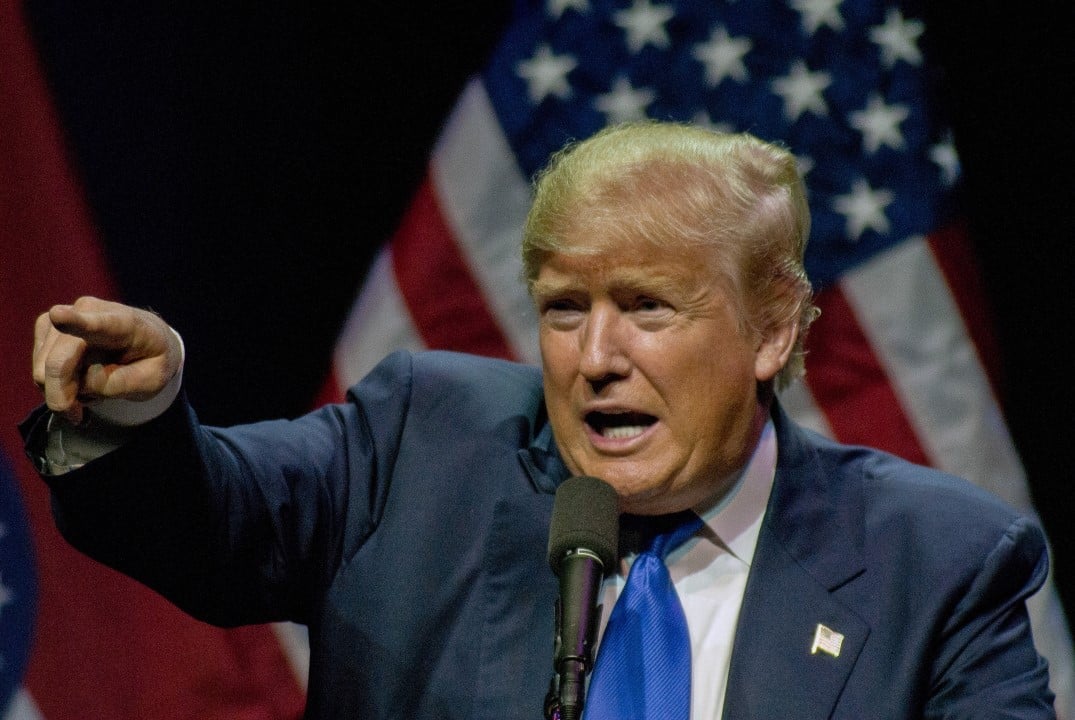
Ultimatum of Donald Trump and the deadline for reopening of Estreito of Ormuz
The current crisis was precipitated by a 48-hour ultimatum issued by the president of Estados Unidos, Donald Trump, which demands the immediate reopening of Estreito of Ormuz to international traffic. The deadline established by the American administration expires at 9 pm this Tuesday, at Brasília, increasing fears of direct military intervention against Iranian targets. Trump publicly stated that if the demands are not met, the country could face devastating consequences in a short space of time.
Washington’s rhetoric rose in tone after the shooting down of a Estados Unidos fighter in airspace claimed by Teerã, an event that culminated in a rescue operation for the pilots. The American president highlighted that transportation infrastructure, including bridges and power plants, is in the crosshairs of the US military as a response to Iranian actions. Essa explicit threat generated a chain reaction within the Iranian government, which began to mobilize domestic public opinion towards a possible war economy.
- Free movement requirement no. Estreito of Ormuz.
- Direct threat to thermoelectric and hydroelectric plants.
- Constant monitoring of strategic bridges by the American command.
- Positioning of naval fleets in international waters close to Golfo Pérsico.
Conselho Supremo of Juventude and Adolescentes of Irã, represented by Alireza Rahimi, was the government arm responsible for summoning the youngest part of the population to the streets. Rahimi emphasized on the national network that power plants represent the accumulated capital of generations and that they cannot be left vulnerable. The specific call for university students and teachers aims to create a narrative of intellectual and physical unity against the external pressure exerted by the Estados Unidos.
Masoud Pezeshkian position on military and civil readiness
The president of Irã, Masoud Pezeshkian, used his social networks and official statements to declare that the country will not back down in the face of pressure exerted by the administration Trump. Segundo the Iranian leader, more than 14 million citizens have already volunteered through digital campaigns and text messages to defend the country’s sovereignty. Pezeshkian reiterated that he himself is willing to sacrifice his life, seeking to inflame nationalist sentiment among the more than 90 million inhabitants.
Pezeshkian’s response is seen as a direct rejection of the 48-hour ultimatum, signaling that trade routes in Estreito of Ormuz will remain under strict Teerã control. The president argues that the mobilization of millions of volunteers demonstrates the legitimacy of the regime and popular resistance to sanctions and military threats. Although the number of 14 million is significant, international analysts note that the logistical capacity to arm and organize this mass of people in the short term is a considerable technical challenge.
During a previous press conference, the president had already signaled that Irã has asymmetric defense means that could cause significant damage to Western interests in the region. Ele highlighted that the aforementioned sacrifice is not limited only to direct combat, but also to economic resistance in the face of the isolation that the country faces. Pezeshkian’s communications strategy focuses on internal resilience and demonizing foreign actions as attempts to stifle Iranian development.
Messages sent by state media reinforce the idea that the country is united under a single leadership in the face of imminent aggression. The government has used engagement data on digital platforms to validate popular support, although internet access is frequently restricted in Iranian territory. The rhetoric of sacrifice is a central element in the country’s political culture and is being exploited to the fullest to consolidate internal control during the crisis.
Strategic importance of the Kazeroon plant and the energy network
The Kazeroon plant was not chosen at random for the demonstrations, given its geographical position and its capacity to generate energy for crucial industrial sectors. Localizada in an area that serves as a connection between the coast and the interior, the plant is an asset that supports much of the province’s electrical infrastructure. A possible attack on this installation would cause large-scale blackouts, affecting not only homes, but hospitals and command centers.
Energy experts point out that the Iranian electrical system is highly interconnected, which means that the outage of a large thermoelectric plant could have a ripple effect in other regions. For this reason, the protection of these units is considered vital to maintain public order and the operational capacity of security forces. The formation of human chains serves as a psychological barrier, forcing any attacker to consider the political cost of causing large-scale civilian casualties during a bombing raid.
- Generation capacity that serves millions of consumers in the southwest.
- Proximity to fossil fuel supply routes.
- Point of convergence for national engineering technical support.
- Symbol of technological self-sufficiency sought by the local government.
In addition to the technical aspect, there is a symbolic value in defending these facilities, which are presented as achievements of Iranian engineering under international sanctions regimes. The government has invested decades in modernizing these plants to reduce dependence on external technology, making them icons of national pride. By calling on the population to protect them, Teerã transforms industrial assets into monuments of political resistance and sovereignty.
International reactions and monitoring of Estreito of Ormuz
While the human chain remains firm around the plant, the international community is cautiously observing the movement of naval fleets in the Estreito of Ormuz. Esta passage is responsible for the transit of around 20% of the oil consumed worldwide, and any prolonged interruption could destabilize global energy prices. Países Europeans and Asians have called for restraint on both sides, fearing that a miscalculation could result in a conflict of global proportions.
International organizations are trying to establish last-minute dialogue channels, although communication between Washington and Teerã is reduced to the minimum necessary to avoid accidental collisions. The presence of civilians at potential military targets complicates the rules of engagement for the Estados Unidos armed forces, which monitor the situation via satellite and drones. Western intelligence assesses whether the mobilization is purely spontaneous or whether there is disguised military coordination among the protesters.
The financial market is already feeling the effects of tension, with volatility in oil prices reaching record levels in recent days. Grandes Economies that depend on the flow of fuel through Golfo Pérsico have initiated contingency plans for their strategic energy reserves. The impasse at Irã ceases to be a regional issue and becomes a global economic security problem, with direct impacts on supply chains on all continents.
Inside Irã, everyday life begins to be affected by uncertainty, with families stockpiling food and fuel who fear the outbreak of hostilities. The government has issued guidelines for the rational use of resources, preparing the population for possible total isolation if the ultimatum expires without an agreement. The mood in Teerã and other major cities is one of quiet expectation, awaiting the next diplomatic or military moves.
History of human chains and civil resistance in Iranian territory
The use of human chains as a form of protest and defense is not an unprecedented phenomenon in the recent history of Irã, having been recorded at critical moments of nuclear tension. In past crises, students have formed rings around facilities like Natanz and Isfahan to signal to the world their willingness to protect the nation’s atomic program. Essa tradition of organized civil resistance is a powerful tool of internal propaganda, reinforcing the idea that the people and Estado are a single entity.
The effectiveness of these mobilizations lies in their ability to generate impactful images for the international press, making it difficult to describe surgical interventions without victims. Para the Iranian military command, the presence of civilians acts as an extra layer of deterrence that can delay or prevent planned airstrikes. Além Furthermore, these actions serve to test the loyalty of the population and the ability of mass organizations linked to the government to mobilize quickly.
Student organizations and professional unions often lead these movements, ensuring that there is a rotation of people to maintain the siege for long periods. Em Kazeroon, protesters have set up tents and water distribution stations, indicating that they intend to remain in place beyond the deadline stipulated by Washington. Essa persistence is communicated via radio and television to the rest of the country, encouraging other provinces to follow suit in their respective critical infrastructure.
National security measures and the maximum alert of the armed forces
In parallel with the civil mobilization, Forças Armadas, Irã and Guarda Revolucionária raised their readiness level to the highest level of the defense scale. Sistemas anti-aircraft defense systems were repositioned in strategic locations to cover areas where human chains are formed. The military command said that any violation of airspace will be responded to with immediate force, using internally developed missile technology.
Coordination between civilian militias and the regular military has been intensified to ensure that plant protection is comprehensive and effective. Exercícios rapid response attacks were carried out in different parts of the country, simulating scenarios of coordinated attacks on energy and communications infrastructure. The Iranian government claims that its defense strategy is purely defensive, but warns that it has offensive capabilities to reach foreign bases in the region.
Monitoring of territorial waters was also reinforced with the presence of small fast vessels, known for their ability to harass large ships. Essas asymmetric warfare tactics are the core of Irã’s security doctrine, aimed at balancing the technological disparity with American forces. The current focus is to ensure that Estreito of Ormuz remains under constant surveillance, using state-of-the-art radar and sensors to detect any hostile approaches.
Impact on the civilian population and the dynamics of large Iranian cities
On the streets of Teerã, the atmosphere of tension is visible in the daily rush and conversations about the country’s immediate future in the face of a foreign ultimatum. Embora human chains occur in specific locations such as the Kazeroon plant, the psychological impact of the Trump threat affects all social strata. The government has promoted national unity campaigns, trying to minimize the internal divisions that arose in previous years due to economic and social issues.
The local economy, already punished by prolonged sanctions, faces new challenges with the possibility of a total closure of trade routes. The price of essential goods began to fluctuate, reflecting the nervousness of domestic markets and uncertainty about the stability of the national currency. Apesar Furthermore, the official discourse of resistance seems to resonate with a significant portion of the population who see external demands as an affront to the country’s independence.
Schools and universities maintain their activities, but students’ focus is on political events and calls for national defense. Grupos of young people organize discussions in controlled environments and actively participate on social media to disseminate Teerã’s position to an international audience. The use of VPNs and other digital tools allows Iran’s youth to track the global repercussions of the crisis, while reaffirming their commitment to protecting the country’s facilities.





