Carlos Alcaraz maintains top of the ATP rankings followed by Sinner and the rise of João Fonseca

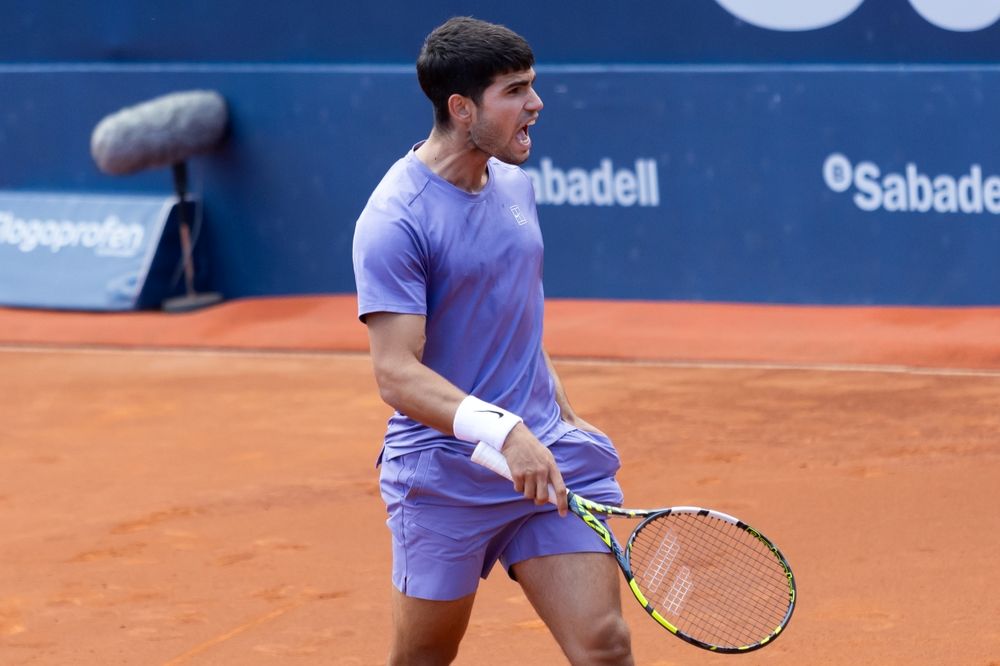
The men’s world tennis scenario in 2026 presents a definitive generational consolidation at the top of the Associação of Tenistas Profissionais (ATP) table. Carlos Alcaraz remains isolated in first place in the ranking, maintaining a considerable advantage over its direct pursuers, which reflects its dominance in the main international competitions of the current season. The Spaniard accumulates 13,590 points, maintaining a safe distance from the Italian Jannik Sinner, who occupies second place with 12,400 points.
The ranking update also brings a historic and promising milestone for Brazilian sport with the meteoric rise of João Fonseca. The young 19-year-old tennis player reached 40th position in the world, adding 1,115 points after consistent performances in high-level tournaments. Este advancement positions Fonseca as the country’s main hope in major tournaments, reflecting an early maturity in the men’s professional circuit.
- Carlos Alcaraz leads with 13,590 points at 22 years old.
- Jannik Sinner occupies second place with 12,400 points.
- Alexander Zverev closes the podium in third position in the world.
- Novak Djokovic remains competitive in the top 5 at age 38.
- João Fonseca reaches the best ranking of his career at 40th place.
Hegemony of Carlos Alcaraz and the persecution of Jannik Sinner
The young Spanish tennis player Carlos Alcaraz continues to set the pace on the professional circuit with a technical performance that combines physical resistance and versatility on different surfaces. Aos 22 years old, the athlete has already established a scoring margin that demands almost perfect regularity from his opponents for any attempt to overtake the classification table. The data indicates that its consistency in reaching the final stages of Grand Slams and Masters 1000 is the primary factor in maintaining number one.
Jannik Sinner appears as the only competitor capable of threatening Alcaraz’s hegemony in the short term, maintaining a fierce dispute for the technical leadership of the sport. With 12,400 points, the 24-year-old Italian demonstrates that the rivalry between the two young athletes should define the next decade of world tennis. The difference between the top two placed and the rest of the elite group is notable, creating a considerable scoring vacuum for the third placed team.
Veterans and new powers at the top of the world table
Novak Djokovic, at 38 years old, defies sporting longevity by remaining in fourth place in the rankings with 4,720 points, surpassing much younger competitors. The Serbian focuses his calendar on specific events to preserve his physical conditioning, but still manages to score enough points to be among the top five in the world. Sua Staying at the top serves as a technical reference for the new generation trying to set new records on the ATP circuit.
Just below G4, names like Lorenzo Musetti and Alex of Minaur show that the fight for intermediate positions in the top 10 is increasingly balanced. Musetti occupies fifth place with 4,265 points, while De Minaur appears in sixth with 4,095 points, showing a constant renewal among the top ten. The alternation of positions in this range of the table has been frequent, directly depending on the results obtained in the clay and grass tournaments.
Rise of João Fonseca and the new panorama of Brazilian tennis
João Fonseca is the highlight of Américas in this update, consolidating his name among the 40 best tennis players on the planet. At just 19 years old, the Brazilian demonstrates accelerated technical evolution, achieving significant victories against more experienced and better ranked athletes. Reaching 40th place represents a qualitative leap that allows the player to enter directly into the main tournament brackets Masters 1000 without the need to compete in the qualifiers.
Fonseca’s trajectory over the last year has been marked by impressive regularity in Challenger and ATP 250 level tournaments, where he accumulated the points necessary for his current position. Especialistas indicate that the Brazilian’s growth potential is high, given that he is one of the youngest players within the world’s top 50. Technical support and physical preparation have been essential for the young man to withstand the intensity of the professional calendar without suffering serious injuries.
Comparison of the ten best players on the men’s circuit
| Position | Name of Tenista | Score Atual | Age |
| 1 | Carlos Alcaraz | 13,590 | 22 |
| 2 | Jannik Sinner | 12,400 | 24 |
| 3 | Alexander Zverev | 5,205 | 28 |
| 4 | Novak Djokovic | 4,720 | 38 |
| 5 | Lorenzo Musetti | 4,265 | 24 |
| 6 | Alex from Minaur | 4,095 | 27 |
| 7 | Felix Auger-Aliassime | 4,000 | 25 |
| 8 | Ben Shelton | 3,900 | 23 |
| 9 | Taylor Fritz | 3,870 | 28 |
| 10 | Daniel Medvedev | 3,610 | 30 |
Significant changes to the ATP midfield
The area between 11th and 30th position also showed relevant variations, with emphasis on the rise of Jiri Lehecka and Flavio Cobolli. Lehecka reached 13th position, while Cobolli rose three places to reach 16th place, showing the strength of European tennis in training new talents. Essas movements are crucial for defining the seedings in the next major events on the association’s annual calendar.
Another point of attention is the drop in traditional names such as Andrey Rublev and Stefanos Tsitsipas, which face difficulties in maintaining the scores of previous years. Rublev now appears in 15th place, while Tsitsipas is in 48th place, a sharp drop that reflects the instability of recent results. The competitiveness of the current circuit does not forgive fluctuations in performance, demanding total focus from athletes who wish to remain in the elite.
Youth gains space with new talents in the top 100
In addition to João Fonseca, other young players are gaining ground and starting to bother veterans on the professional circuit. Learner Tien, 20 years old, occupies 22nd place, while the Czech Jakub Mensik, also 20 years old, appears in 26th place in the table. Esse movement indicates a clear transition of power in men’s tennis, where physical strength and aggression from the back of the court have been decisive for success.
The phenomenon of renewal is global, with representatives from different countries managing to break through the barrier of the one hundred best placed. Rafael Jodar, 19 years old, rose 32 positions to reach 57th place, being one of the biggest rises recorded in this weekly update. The balance between experience and youth makes the ATP circuit one of the most dynamic in contemporary world sport, attracting new audiences and sponsors.
Prospects for the development of tennis this season
Carlos Alcaraz’s maintenance at the top for a long period seems to be a palpable reality, given the quality of his play on all known surfaces. The Spaniard has adjusted his style to minimize wear and tear, which could further prolong his stay as world number one. The rivalry with Sinner will continue to be the focus of attention, as both raise the level of the sport with each direct confrontation held on the court.
For South American tennis players, the presence of João Fonseca and other Argentines in the top 100 brings new enthusiasm to the regional development of the sport. The success of these athletes serves as a mirror for new academies and social projects that seek to train the next champions on the continent. The current score of Fonseca is a solid foundation for him to pursue even more ambitious goals by the end of this sporting calendar.
Technical analysis of scoring and classification criteria
The ATP points system rewards performance accumulated over the last 52 weeks, which requires players to undertake rigorous strategic planning of travel and competitions. Carlos Alcaraz He knew how to defend his points in tournaments where he was previously champion, avoiding sudden drops in his overall rating. The efficiency in converting shares into titles is what differentiates the leader from other competitors seeking to climb the rankings.
The data update reflects the reality on the courts until the beginning of April 2026, considering all discards and regulatory score additions. The dynamism of the table ensures that each match played has a significant impact on the professional trajectory of each athlete involved in the circuit. With new important tournaments approaching, the expectation is that new movements will occur, keeping the interest of fans and experts high.