João Fonseca beats Arthur Rinderknech and advances to the round of 16 of the Monte Carlo Masters 1000

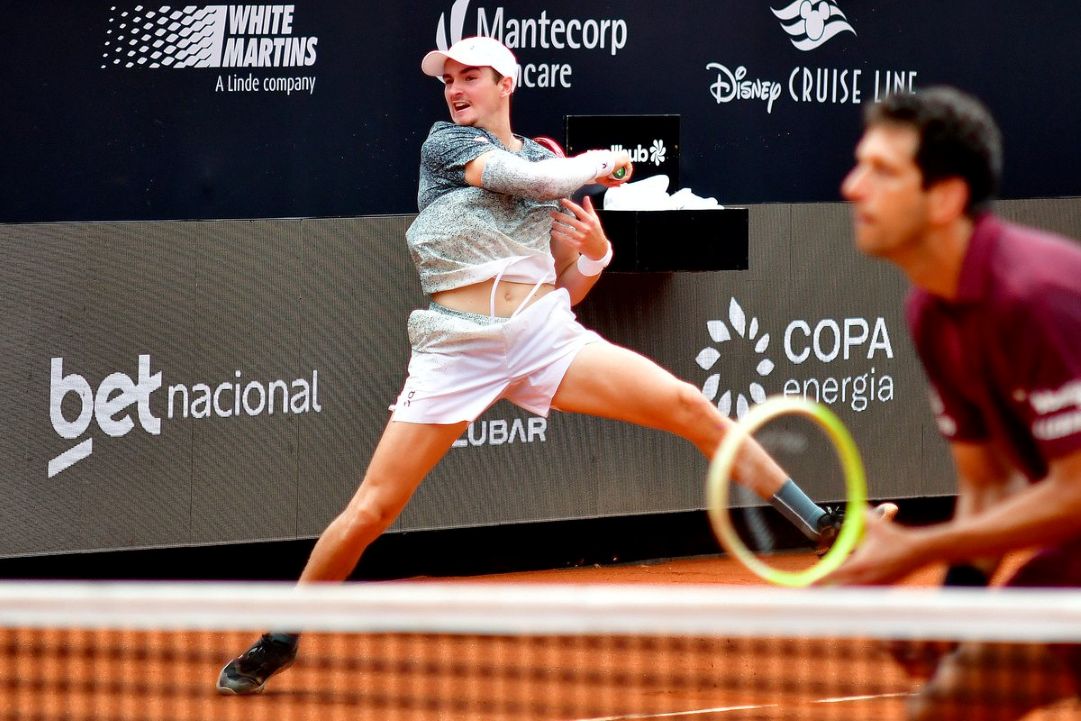
The young tennis player João Fonseca achieved one of the most significant victories of his career this Wednesday by defeating the Frenchman Arthur Rinderknech, current number 27 in the world rankings, in the second round of the prestigious Masters 1000 of Monte Carlo. In a match marked by intensity and emotional balance on the principality’s clay, the Brazilian from 19 years old closed the match with scores of 7/5, 4/6 and 6/3, demonstrating technical maturity in the decisive moments of the third set. The result places Fonseca for the first time in the round of 16 of a tournament of this level, consolidating his meteoric rise on the ATP professional circuit in this 2026 season.
The match began with both players maintaining solidity in the service games, but Fonseca’s aggressiveness prevailed in the final stretch of the first half, when he managed the decisive break to close at 7-5. In the second set, Rinderknech took advantage of a fluctuation in the Brazilian’s first serve to balance the actions and tie the dispute, forcing the tiebreaker set to take place under the strong sun of the Monegasque afternoon. At the crucial moment of the third half, Fonseca raised the level of his returns and broke his opponent’s serve in the eighth game, opening the necessary advantage to serve and settle the score against a visibly frustrated opponent.
- First set: João Fonseca 7 x 5 Arthur Rinderknech.
- Second set: João Fonseca 4 x 6 Arthur Rinderknech.
- Third set: João Fonseca 6 x 3 Arthur Rinderknech.
- Total aces: Fonseca scored seven direct service points.
- Game time: The match lasted approximately 2 hours and 25 minutes.
Technical dominance in the decisive set and the crucial break in the eighth game
The third set was played point by point, with both athletes showing a high performance with the first serve until the fifth game of the partial. João Fonseca remained calm even when under pressure on his serve, using deep variations and right-wing winners that forced the Frenchman to make unforced errors in moments of transition.
In the eighth game, the pressure exerted by the Brazilian had an immediate effect after a sequence of intense ball exchanges at the back of the court. Fonseca won a fundamental break point with a precise smash and, shortly afterwards, had a mistake by Rinderknech, which sent the ball into the net and threw the racket to the ground in a sign of irritation.
Solid service performance earns historic ranking
After winning the break of service, the Brazilian served to close the game at 5-3 with an extremely focused and aggressive stance. Ele quickly gained an advantage in the game and reached match point after a return from the French tennis player, who could no longer find answers to the pace imposed by the young South American talent.
The victory was sealed in the first decisive point, when Rinderknech again misdirected the ball, confirming the 6-3 final score of the third set. Este triumph represents a milestone for Brazilian tennis, as Fonseca overcomes a direct opponent from the world’s top 30 on a surface where physical and mental consistency is demanded to the extreme in each rally.
Analysis of the confrontation and fluctuations between the sets played
Balance was the keynote of the duel from the first minutes, with the Frenchman trying to use his experience to dictate the pace of the longer points. Arthur Rinderknech showed a lot of strength in his ground strikes, but ended up succumbing to the reaction speed of Fonseca, who managed to neutralize the most powerful attacks with efficient defense and quick counterattacks on the sidelines.
In the second set, there was a small drop in the Brazilian’s performance, something natural for young athletes in long matches against veterans of the circuit. Entretanto, the recovery capacity demonstrated by Fonseca at the beginning of the third half was what really determined the course of the match, preventing the Frenchman from gaining the necessary confidence to take full control of the game.
Tactical evolution of João Fonseca on the professional circuit
The tactical evolution presented by the Brazilian in Monte Carlo reflects the intense work that has been carried out in his preparation for the clay season in Europa. João Fonseca has shown a reading of the game far superior to the average for his age, knowing how to alternate between moments of total aggression and periods of greater patience, waiting for the opponent’s error to attack safely.
This performance against the world number 27 proves that the tennis player is ready to compete at a high level against any opponent in the ATP rankings. Today’s victory not only guarantees important points for the world rankings, but also sends a clear message to competitors about Fonseca’s potential to become one of the sport’s protagonists in the coming years.
Next steps and expectations for the round of 16
With a place in the round of 16 guaranteed, João Fonseca now awaits the definition of his next opponent, who will emerge from the clash between other big names in the tournament. The physical exhaustion of today’s match will be a factor to be monitored by the technical team, as the level of demand in the acute phases of a Masters 1000 tends to increase considerably with each round.
- Fonseca adds 100 points in the ATP rankings with this victory.
- The prize money for those who reach the round of 16 is more than 80 thousand euros.
- The Brazilian is looking to break the record for precocity in victories on clay of Mônaco.
- Brazilian fans have been a constant presence on the principality’s courts.
The impact of victory over a top 30 ranked opponent
Beating an established player like Arthur Rinderknech brings extra confidence for the European spring season. The Frenchman is known for being a “tough nut to crack” on slow surfaces, which further enhances the strategy put together by the Fonseca staff, who knew how to exploit the opponent’s vulnerabilities in lateral movements and short balls close to the net.
The result also had repercussions internationally, with analysts from different countries highlighting the Brazilian’s coolness in closing the game at a time when the opponent was trying to make an emotional reaction. Manter concentration after losing the second set is a difficult task, and Fonseca executed this transition with a maturity that is rarely seen in players who are only in their first full year on the adult professional circuit.
Technical aspects of withdrawing and returning João Fonseca
Fonseca’s service was a fundamental weapon in maintaining the score during the most pressured moments of the game in Monte Carlo. Ele managed to vary directions well, preventing Rinderknech from getting into the rhythm of the returns, which resulted in several games confirmed quickly and without offering the Frenchman any chances of breaking in the third set.
On the other hand, the Brazilian’s return of serve is also worth highlighting, especially in the opponent’s second service points. Fonseca positioned himself more aggressively on the court, attacking the balls with depth and forcing the Frenchman to always play defensively, which ended up generating frustration that culminated in the definitive break of service in the eighth game of the final set.
Mental preparation and resilience on the courts of Monte Carlo
Mental resilience was put to the test when Rinderknech won the second set and seemed to have the momentum of the match on his side for the decider. João Fonseca did not let himself be shaken and maintained his hydration and focus routine during the turn of the set, returning to the court with the same energy shown at the beginning of the match, which was essential to destabilize the opponent.
Este controle emocional é fruto de um trabalho psicológico robusto, permitindo que o atleta lide com as variações naturais de um jogo de tênis de alto nível sem perder a eficiência técnica. The environment of Monte Carlo, with its history and glamour, can be intimidating for newcomers, but Fonseca seemed perfectly at ease, treating each point as a final and ignoring the external pressure of the stands and the importance of the tournament.