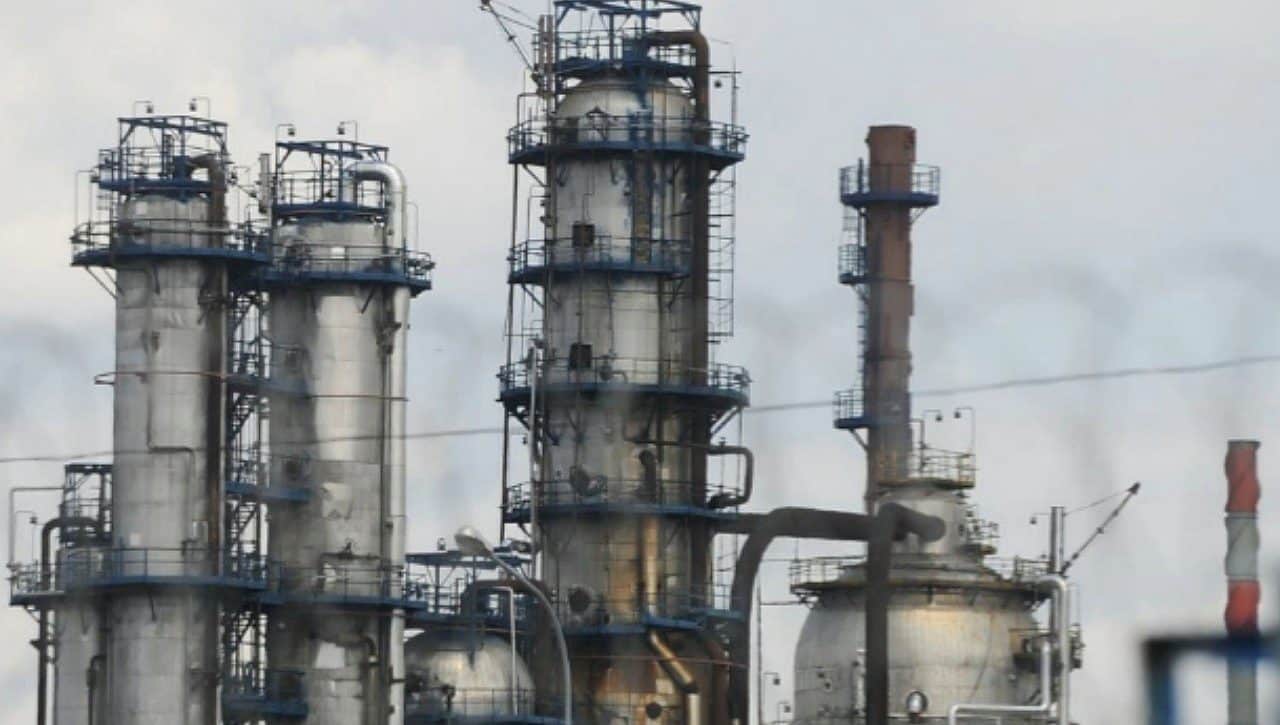
One of Rússia’s largest oil refineries, Nizhegorodnefteorgsintez (NORSI), operated by giant Lukoil, was forced to suspend operations after being the target of a Ukrainian drone attack. The structural damage is considered significant, with predictions that the unit will remain inactive until at least the end of April. Este incident marks an escalation in attacks against Russian energy infrastructure, generating repercussions on the fuel market and the country’s economy.
The outage at NORSI, located in the Nizhny Novgorod region, represents a considerable blow to Rússia’s refining capacity. The plant is Lukoil’s largest refinery, with a processing capacity reaching 17 million tonnes of crude oil annually. Last year, the refinery was responsible for the production of more than 5 million tons of gasoline and a similar volume of diesel, playing a crucial role in domestic supply and exports.
Russian authorities confirmed a fire at the refinery shortly after the drone attack. News agency Reuters reported that NORSI will not carry out shipments of gasoline and diesel under barter contracts, and sales on the barter market have also been suspended until the end of April. Adicionalmente, transportation from the refinery’s fuel depot was halted, indicating the seriousness of the situation and the need for extensive repairs.
Impact on oil and fuel markets
The shutdown of the NORSI refinery is not an isolated event in the Russian energy landscape. Este is the third refining complex to cease production due to recent attacks from Ucrânia. Anteriormente, the refinery at Rosneft, at Saratov, halted operations on March 21, and Kirishinefteorgsintez (Kinef), located in the region of Leningrado, was also closed on March 26. The sequence of these attacks highlights a Ukrainian strategy to destabilize Russian refining capacity, fundamental to the country’s war economy.
The accumulated effect of these closures has been reflected in international oil prices. The price of Russian crude oil Urals, for example, has seen an increase of approximately 75% in the last month, surpassing the $100 mark per barrel. Esse bullish scenario is driven not only by direct attacks on refineries, but also by a broader geopolitical context, which includes tensions in other oil-producing regions.
Revenues from oil and gas exports constitute an essential financial pillar for the Rússia budget. The interruption of production and rising prices, although they may generate higher revenues initially, also signal vulnerabilities in the supply chain and increase uncertainty in the global market. The resilience of these refineries will be crucial to Russia’s long-term economic stability.
Developments and military strategy
The coordinated attacks on Russian oil refineries are interpreted as part of a Ukrainian strategy to impact Rússia’s logistical and economic capacity. By targeting fuel processing infrastructure, Ucrânia aims to put pressure on the Russian economy and, consequently, its ability to finance its military operations. The choice of targets demonstrates planning that seeks to maximize damage to the heart of the Russian oil industry.
Russian air defense has faced challenges in containing this wave of attacks. Apesar efforts to protect strategic facilities, the recurrence of incidents suggests that Ukrainian drones are able to penetrate defenses, reaching high-value targets. The effectiveness of these attacks has been a cause for concern for Kremlin, which needs to ensure the security of its critical infrastructure.
The Russian response to these attacks has included intensifying operations against Ukrainian cities and infrastructure, creating a cycle of retaliation. Contudo, the vulnerability of the refineries exposes a weakness that could have significant ramifications for the country’s economy and internal morale. Repairing and reactivating large complexes like NORSI requires time, resources and technical expertise, factors that can be in short supply under the pressure of international sanctions.
Analysis of the global energy scenario
The increase in crude oil prices Urals is indicative of the volatility that permeates the global energy market. Conflitos geopolitical issues, such as war in Ucrânia and tensions in Oriente Médio, are direct catalysts for this instability. Economistas point out that the rise in oil prices, aggravated by factors such as the conflict with Irã, is already resulting in an increase in Federação Russa budget revenues. Estimativas preliminaries suggest that this additional budget revenue could amount to tens of billions of dollars annually, even with refineries being targeted by attacks.
This scenario, paradoxically, benefits Rússia in the short term in terms of revenue, but poses a logistical and security challenge in the medium and long term. The need to reconfigure export routes, ensure the security of facilities and, at the same time, maintain internal supply becomes complex. Para the global market, the situation adds a layer of uncertainty, with the possibility of even greater fluctuations in the prices of fuel and petroleum products.
Refinery capacity is a key bottleneck in the petroleum supply chain. Mesmo With crude oil production maintained, the inability to process it and convert it into usable products like gasoline and diesel creates shortages. Global dependence on fossil fuels means that any disruption at large refineries has a ripple effect that quickly spreads across multiple economies.
The situation at the NORSI refinery, as well as other affected facilities, remains under intense observation. Especialistas in energy closely monitor developments, seeking to understand future implications for global supply and price dynamics. The rapid recovery of operations is vital for Rússia, but current conditions indicate that the Russian energy sector will continue to face considerable pressure in the coming months.