

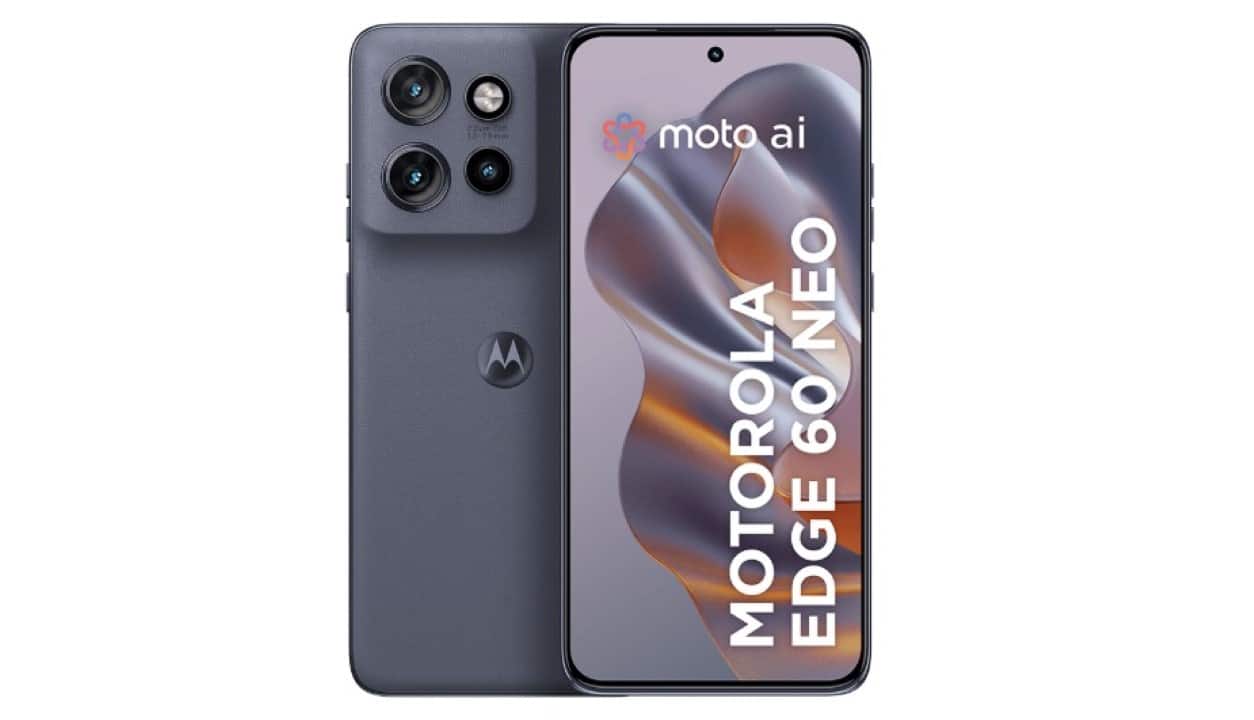
The mid-range smartphone market saw the launch of two models with high cost-benefit proposals in 2025: the POCO Ambos promise to deliver a robust experience without requiring the investment of a premium device, but with distinct features that can influence the purchasing decision.
The choice between an Motorola Edge 60 Neo and a POCO X7 Pro depends directly on the consumer’s priorities, whether in terms of performance, camera quality, battery life or even the preferred software ecosystem. Cada device presents a set of specifications that seek to meet specific niches within the advanced intermediary segment.
To assist in this decision, an in-depth analysis of its technical data sheets is essential. Detalhes such as design, screen technology, processor power, camera configuration and battery capacity are the pillars for understanding which device best aligns with the user’s day-to-day expectations and needs.
Detailed model design and construction

Motorola opted for a sophisticated design for the Edge 60 Neo, which stands out for its vegan leather back, providing a premium touch and a safer grip. The sides of the device are made of plastic, but the resistance is reinforced by the IP68 and IP69 certifications, which guarantee protection against water and dust, and the military MIL-STD-810H, for greater robustness against falls and impacts. The device measures 154.1 x 71.2 x 8.1 mm and weighs 174 grams, presenting a lighter and more compact profile.
The POCO X7 Pro, in turn, features a mostly plastic construction on the back and sides, although there is a version available with a vegan leather finish for those looking for a different aesthetic. Ele also has IP68 certification, offering good resistance to immersion in water and particles. In terms of dimensions, the POCO
In-depth analysis of screens
The Motorola Edge 60 Neo comes equipped with a 6.36-inch LTPO P-OLED display, which offers a resolution of 1200 x 2670 pixels. LTPO technology allows for a variable refresh rate of up to 120 Hz, optimizing power consumption. Além Additionally, the screen supports HDR10+ and reaches a maximum brightness of 3,000 nits, providing vibrant colors and excellent visibility even in bright light.
The POCO X7 Pro is not far behind, with a 6.67-inch AMOLED panel and a resolution of 1220 x 2712 pixels. Assim Like its competitor, it offers a refresh rate of 120 Hz and HDR10+ support. A difference is the inclusion of Dolby Vision, which elevates the experience of consuming multimedia content, and an even higher peak brightness, reaching 3,200 nits, which guarantees exceptional image sharpness and clarity.
Performance and memory capacity
Internally, the Motorola Edge 60 Neo is powered by MediaTek’s Dimensity 7400 processor, combined with 12 GB of RAM. Storage options range between 256GB and 512GB. Este chipset delivers consistent and efficient performance for daily activities, being able to run most applications and games available on the Play Store with good fluidity.
The POCO X7 Pro raises the performance bar with the Dimensity 8400 Ultra, also from MediaTek. Este chip is configured with 8GB or 12GB of RAM and 256GB or 512GB storage options. The main advantage of the 8400 Ultra lies in its more powerful core, which operates at 3.25 GHz, in contrast to the 2.6 GHz of the Edge 60 Neo. Isso translates into superior performance, especially notable in games with high graphic demands, where the X7 Pro can offer a more optimized and crash-free experience.
Camera system comparison
The Motorola Edge 60 Neo features a versatile array of three rear cameras. The main lens has 50 MP, ensuring high-resolution photos and sharp details. Além There is a 10 MP telephoto camera with 3x optical zoom, ideal for capturing distant objects without loss of quality, and a 13 MP ultrawide camera for landscapes and group photos. Para selfies, the device has a 32 MP front sensor and is capable of recording videos in up to 4K at 30 frames per second.
In contrast, the POCO X7 Pro adopts a dual camera setup at the rear. The main sensor is also 50 MP, promising excellent quality images. Acompanhando-o, there is an 8 MP ultrawide lens. The front camera is 20 MP, suitable for video calls and self-portraits. A highlight for the POCO X7 Pro is its ability to film in 4K at 60 frames per second, offering greater fluidity in video recordings.
Battery, autonomy and quick recharge
Battery capacity is a crucial factor for many users, and in this regard, the two models have significant differences. The Motorola Edge 60 Neo comes with a 5,000 mAh battery. Ele supports 68W fast charging, allowing the device to be fully charged in a relatively short time. Além Additionally, it offers the benefit of 15W wireless charging, a convenience for those looking for practicality.
The POCO X7 Pro stands out with an even larger battery, 6,000 mAh, which promises superior autonomy in intense use. Fast charging is even more powerful, at 90W, meaning the device can be recharged in a considerably shorter period of time. In battery tests, the Xiaomi model demonstrated superior performance, finishing the stages with 31% energy remaining, while the Edge 60 Neo had 16%.
Operating systems and update policies
Both smartphones were launched with the latest version of the Android available in 2025. The Motorola Edge 60 Neo hits the market with the Hello UI, based on the Android 15. The Motorola promised a long life cycle for the device, guaranteeing four major operating system updates.
The POCO Essa difference in software support can be an important point for users who prioritize longevity and access to the latest features and security patches.
Connectivity and other attributes
When it comes to connectivity and other features, Motorola Edge 60 Neo offers a full range of modern technologies. Isso includes Wi-Fi 6E, Bluetooth 5.4, support for 5G networks, GPS, NFC for contactless payments, a fingerprint reader integrated under the screen and stereo speakers for an immersive sound experience.
The POCO X7 Pro also features a robust set of features, including 5G, GPS, NFC, under-screen fingerprint reader and dual speakers. The main difference in terms of connectivity is in the Wi-Fi, which is Wi-Fi 6 on POCO, while the Motorola already offers the more advanced 6E version. Ambos The models do not have a P2 input for headphones.
Price positioning in the market
The Motorola Edge 60 Neo was launched with a starting price of R$3,499. However, the market has shown promotions where the device can be found for prices around R$2,200, making it a very competitive option within its category.
The POCO X7 Pro reached Brasil with a starting price of R$5,199. Atualmente, it is possible to find it on the market for approximately R$1,900, which positions it as an even more attractive alternative for those looking for high performance at a cost-benefit ratio.
Final thoughts on the choice
The decision between the Motorola Edge 60 Neo and the POCO X7 Pro lies in the prioritization of certain attributes. Para Those looking for a smartphone with maximum performance for heavy games and intense multitasking, in addition to a battery with greater capacity and ultra-fast charging, the POCO 90W charging. Sua screen also offers slightly higher brightness and support for Dolby Vision, elements that enrich the user experience.
On the other hand, the Motorola Edge 60 Neo captivates audiences who value a more refined design with a vegan leather back, greater resistance with MIL-STD-810H certification and the versatility of a telephoto camera with 3x optical zoom. Além Furthermore, wireless charging and the promise of four years of operating system updates are strengths that add value, especially for users who prefer to keep the same device for longer. Ambos are balanced intermediaries, but with different focuses that serve different consumer profiles.