

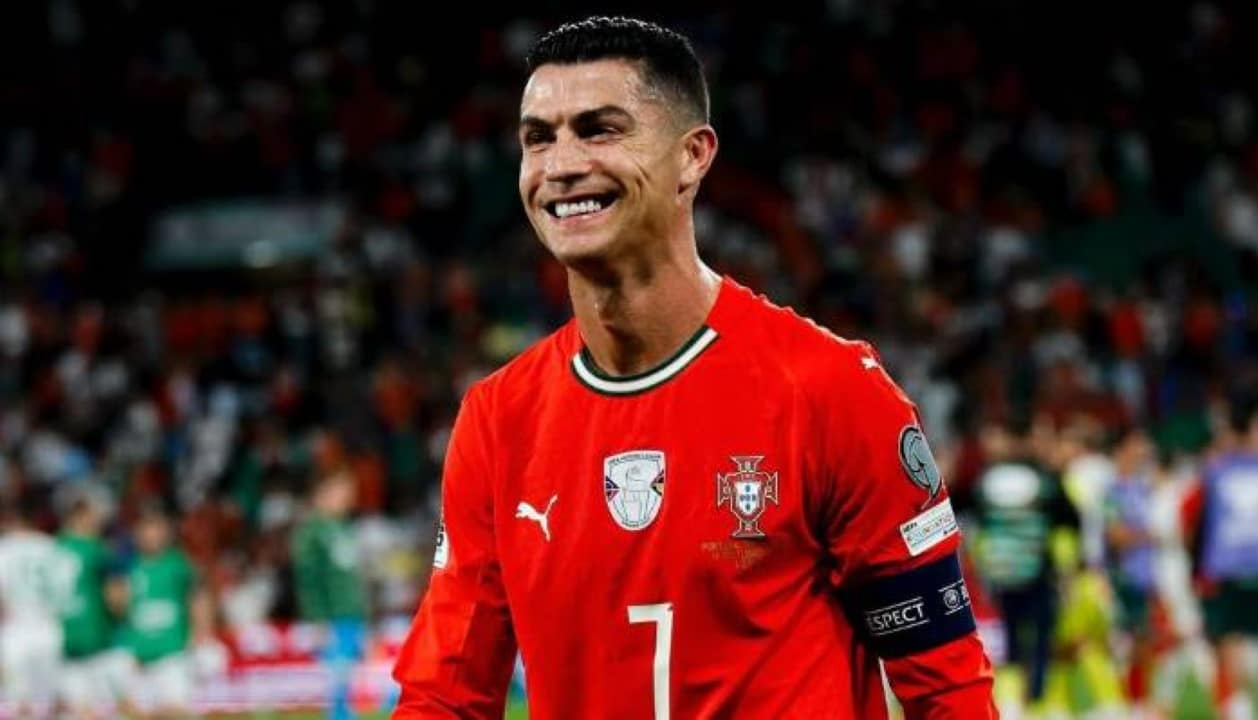
Born on Madeira Island, Portugal, on February 5, 1985, Cristiano Ronaldo dos Santos Aveiro is widely recognized as one of the greatest football players of all time. His confirmed presence for the 2026 FIFA World Cup, at the age of 41, highlights a career marked by records and impressive consistency at the highest level of sport.
Legacy consolidated in the Portuguese team

Wearing the Portugal national team shirt, the striker established an unparalleled historical mark in men’s football. He is the leading goalscorer for national teams, a feat that underlines his importance and lasting impact in international competitions.
Still defending his country’s colors, Cristiano Ronaldo led Portugal to memorable achievements. Among the most important titles are the 2016 UEFA European Championship and the 2018-19 UEFA Nations League, moments that etched his name in the history of Portuguese football.
The victorious journey for big clubs and individual achievements
Ronaldo’s brilliant career on the club scene is full of glories and prestigious individual awards. He was awarded the Ballon d’Or multiple times, a recognition of his excellence, in addition to becoming top scorer and UEFA Champions League champion for different teams, demonstrating his ability to adapt and play a leading role in different scenarios.
Throughout his career, the star wore important shirts in world football. His professional journey includes notable spells with Sporting, Manchester United (on two occasions), Real Madrid, Juventus, and he currently plays for Al-Nassr, from Saudi Arabia, showing a versatility and ambition that is rare in sport.
During his time at Real Madrid, Cristiano Ronaldo established himself as an unquestionable icon. He became the greatest scorer in the history of the Spanish club, a feat that places him at a legendary level within one of the most successful institutions in world football.
Longevity and professionalism that defy time
Cristiano Ronaldo’s ability to maintain elite performance at the age of 41 is a testament to his longevity, exemplary physical discipline and rigorous professionalism. This resilience contrasts with the trajectory of most high-performance athletes, whose careers generally experience a significant decline after age 35. His dedication to training and health redefines lifespan standards in football.
With another World Cup approaching, the Portuguese star maintains his status as captain and main symbol of the national team. His presence is essential not only for his talent on the field, but also for the leadership and inspiration he represents for his teammates and millions of fans around the globe.