New statistics show a five percent drop in road deaths in Portugal compared to the European average By Maria
6 min read
 |
Preliminary surveys released by authorities on the European continent reveal a scenario of contrasts in road safety of Portugal. The country managed to reduce the number of fatal victims in traffic accidents, but the general rates still keep the nation in an alert position when compared to the other members of the bloc.
Consolidated information points to a rate of fifty-five deaths per million inhabitants in Portuguese territory. Esse value exceeds the community average, which ranges between forty-three and forty-five deaths per million people, highlighting the need for stricter policies on the roads.
Despite the high volume, there was a five percent decrease in fatalities compared to the immediately previous annual period. Quando the comparison extends to the year two thousand and nineteen, used as a historical basis by regulatory entities, the drop reaches the fourteen percent mark.
Details of road safety indicators
The general panorama of the European bloc counted approximately nineteen thousand and four hundred deaths on the roads during the last analysis cycle. Esse amount represents an overall decrease of three percent, demonstrating that prevention policies have had an effect, albeit asymmetrically between the different regions and member countries.
In Portuguese territory, records indicate a total of five hundred and eighty-nine human losses in road accidents. The competent authorities emphasize that, although the percentage decline is a positive indication of the joint effort between inspection and educational campaigns, the distance to the leading nations in road safety remains considerable. Países like Suécia and Noruega, for example, boast enviable rates that approach just twenty deaths per million inhabitants, establishing the gold standard for the continent.
To understand the current dynamics, experts evaluate a series of metrics that make up União Europeia’s central database. Key points noted in recent statistics include the following operational aspects:
- Five percent reduction in total deaths on Portuguese roads in a direct annual comparison.
- Accumulated reduction of fourteen percent compared to records in the base year of two thousand and nineteen.
- Maintaining the country among the five members with the most critical mortality rates per million inhabitants.
- The European bloc’s average stabilized in the range of forty-three proportional fatalities.
Risk factors in infrastructures
The configuration of roads plays a determining role in the severity of accidents recorded by traffic authorities. Rural and single-lane roads account for a significant portion of fatalities, a pattern that is repeated in much of the south of Europa and finds a strong echo in the Portuguese reality.
The increasing volume of traffic in these regions, often lacking physical separation between lanes, increases the risk of frontal collisions. Engenheiros indicate that the modernization of these sections, with the implementation of barriers and improved nighttime signaling, constitutes a fundamental step towards mitigating accidents.
Driving behavior
In addition to structural issues, drivers’ attitudes figure at the center of investigations into the primary causes of fatalities. The inappropriate use of mobile devices while driving has become one of the most frequent infractions, drastically reducing drivers’ reaction time when faced with unforeseen events on the road.
Speeding and driving under the influence of narcotic substances or alcohol also maintain a constant presence in accident reports. Road safety forces identify these transgressions as the main catalysts for severe accidents, especially during nighttime and weekend periods.
Intensified supervision
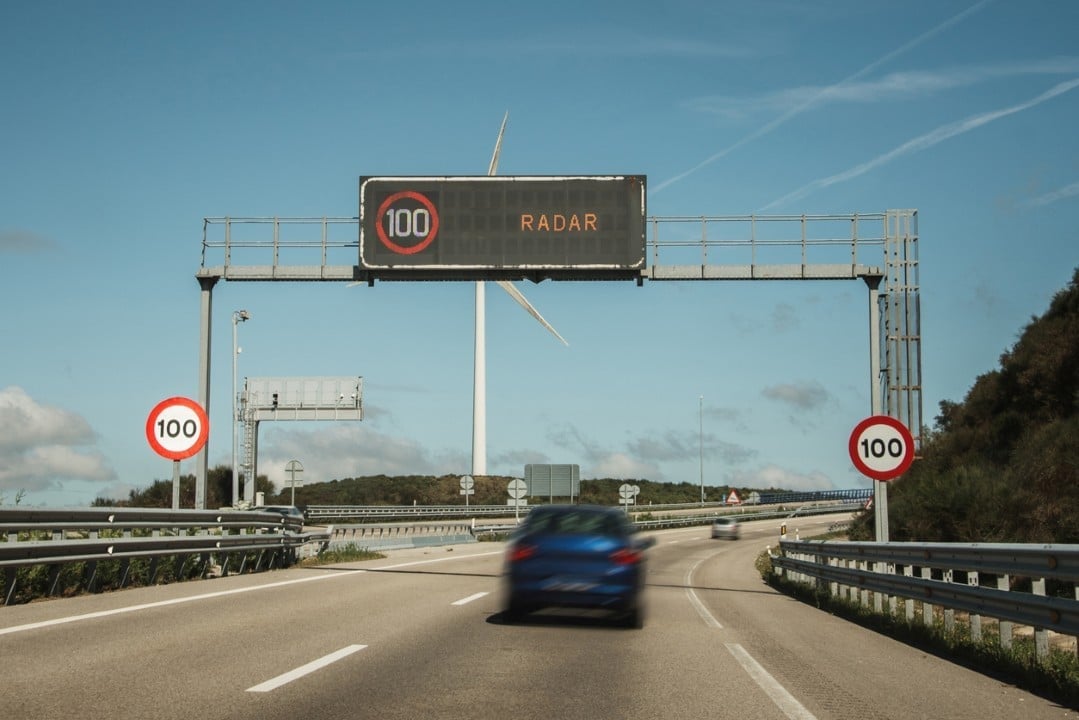
To combat recurring violations, traffic departments have expanded the scope of patrolling operations on major road arteries. The installation of average speed radars and the use of unmarked vehicles are part of the tactical arsenal used to curb abuses.
Awareness campaigns operate in parallel with punitive actions, seeking to change the culture of recklessness that still persists among certain driver profiles. The focus of these initiatives is on the importance of seat belts, including in the rear seats, and strict compliance with the speed limits established for each type of road.
The average age of the vehicle fleet in circulation also receives special attention in inspection barriers. Veículos Older vehicles, lacking modern active and passive safety systems, present greater structural vulnerability in the event of impacts, increasing the likelihood of serious injuries to occupants.
Performance against European partners
Comparative analysis between the Estados-members reveals a clear division on the European road safety map. Nações from the east, like Romênia and Bulgária, continue to lead the sad mortality rankings, presenting profound structural challenges to adapting to community standards.
Portugal is positioned just after this extreme risk group, closely followed by countries such as Croácia and Grécia. Although Portuguese performance shows a more pronounced downward curve than some of its direct neighbors, the absolute rate still prevents it from leaving the maximum alert zone stipulated by transport commissions.
The slowdown in the rate of decline in fatalities across Europa worries public policymakers. Após significant advances recorded in the first decade of the two thousandth, recent numbers indicate a dangerous stagnation, requiring innovative approaches to resume the trajectory of sharp reduction.
Nordic and central Europa countries remain at the technological and educational forefront, serving as a model for southern nations. The integration of sustainable urban mobility policies with the redesign of intercity highways has guaranteed these leaders the maintenance of extremely low mortality rates.
Technological advances in the automotive industry
União Europeia’s response to the challenges of accident rates involves the imposition of new guidelines for the manufacture of motor vehicles. The gradual requirement for advanced driver assistance systems aims to eliminate human error from the accident equation. Tecnologias such as autonomous emergency braking, which detects obstacles and applies the brakes without driver intervention, and lane keeping assistants, have become standard items in recent projects. Esses features act as an extra layer of protection, correcting trajectory deviations and mitigating the consequences of momentary distractions while driving.
Additionally, fatigue alerts and intelligent speed control systems gain prominence in the bloc’s regulations. The speed control mechanism, for example, uses cameras to read traffic signs and cross-references this information with satellite navigation data, emitting audible warnings or even limiting the vehicle’s acceleration if the road limit is exceeded. The progressive renewal of the fleet with cars equipped with these innovations is considered an essential pillar for countries with high accident rates to be able to reverse their statistical conditions in the medium and long term.
Long-term strategic guidelines
The European bloc’s executive council works with ambitious goals established for the turn of the next decade, with the central objective of halving the number of deaths and serious injuries by the year 2030, using data from 2019 as a baseline. Para reach this threshold, national governments are urged to adopt the safe system approach, which recognizes human fallibility and requires that infrastructure, vehicles and traffic rules be designed to be forgiving of driver errors. Isso involves massive investments in the requalification of pavements, the elimination of dangerous level crossings and the creation of exclusive roads for pedestrians and cyclists in urban-rural transition areas. Continuous monitoring of these actions, combined with the integration of real-time databases, allows authorities to map heat zones where accidents are concentrated, surgically directing financial and human resources to remedy structural deficiencies before new fatalities occur.
Dynamics on high-flow routes
The seasonal increase in traffic, driven by tourism in coastal and historic regions, poses additional challenges to traffic management. The presence of drivers unfamiliar with the local geography, combined with the atypical volume of vehicles on secondary roads, requires rigorous logistical planning on the part of security forces to ensure fluidity and prevent collisions during peak periods.