
War in the Middle East causes disruption in global chains beyond oil, warns IMF
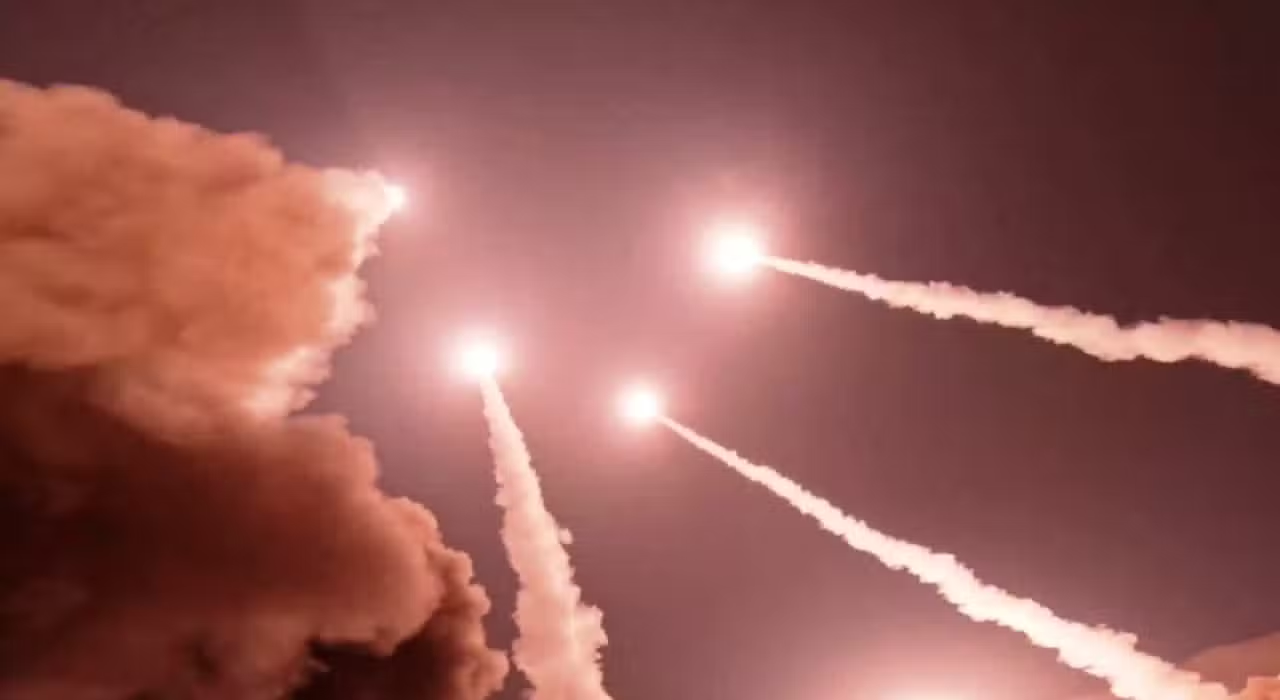
The conflict in Oriente Médio has effects that go beyond the energy sector and reach entire global supply chains. The managing director of Fundo Monetário Internacional, Kristalina Georgieva, described the event as a major asymmetric global shock that varies depending on the profile of each economy. Exportadores and energy importers feel the impact differently, while the limited fiscal space of many countries complicates responses.
The world supply of oil fell by 13% and that of liquefied natural gas fell by 20%. Esses numbers reflect significant disruptions to critical trade routes and contribute to the maintenance of elevated Brent barrel prices even after the initial peak. Fuel shortages force the closure of refineries in several regions and create gaps in the supply of diesel and jet fuel.
- Sea and air transport face additional freight and insurance costs.
- Energy-dependent sectors experience operational delays.
- Energy-importing economies accumulate more intense inflationary pressures.
Disruptions in critical inputs for technology and manufacturing
Supply chains for essential materials also suffer from the effects of conflict. Helium, produced in large volumes in the Golfo region, is experiencing a shortage that directly affects semiconductor manufacturing. Nafta and other chemical inputs used in the production of plastics and electronic components face similar bottlenecks.
Technology companies on several continents report difficulties in maintaining stable production rates. The rerouting of tankers and containers increases delivery times and increases logistics expenses. Esses adjustments affect everything from electronic devices to vehicles and medical equipment that depend on advanced chips.
Increased food insecurity affects millions of people
The conflict raises the risk of acute hunger for an additional 45 million people around the world. The total number of individuals experiencing severe food insecurity could exceed 360 million in the coming months.
Fertilizers, especially urea, are seeing price increases close to 30% or more in some markets. Cerca of a third of maritime exports of this input pass through affected routes in Golfo. The timing coincides with the start of the planting season in Hemisfério Norte, which threatens agricultural yields in importing regions such as Ásia, África and América Latina.
Low-income countries face the dual challenges of higher energy costs and reduced access to fertilizers. The result includes pressures on local food production and gradual rise in retail prices. Organizações international organizations are monitoring the scenario to prevent the humanitarian crisis from worsening.
Policy responses and global fiscal challenges
Economic authorities recommend targeted and temporary fiscal measures to protect vulnerable families. Subsídios Broad or export controls can worsen the inflationary situation and should be avoided. Bancos Centers are preparing to adjust monetary policies if inflation expectations are discouraged.
The IMF managing director highlighted that the world faces a structural problem of fiscal space. Dívidas High public debt and rising interest costs limit the ability of many governments to respond. Mesmo In more optimistic scenarios, global growth projections will be revised downwards.
Asymmetric impacts on different economies



Oil exporters not directly involved in the conflict may see temporary gains from higher prices. Já Net energy importers, especially those with low foreign exchange reserves, face greater balance of payments tensions.
Financial markets reacted with wider spreads in emerging economies and adjustments in equity valuations. Custos Loan rates have risen in several jurisdictions, although some recent relief has been observed. Volatility persists while the duration of the conflict remains uncertain.
IMF indicates possible increase in demand for financial support
The institution projects that demand for balance of payments support could rise between 20 and 50 billion dollars in the short term. The lower value should prevail if a ceasefire is consolidated. Países Those affected by the asymmetric shock will receive calibrated assistance to mitigate immediate effects.
Georgieva reinforced that good policies make a difference even in adverse contexts. The IMF maintains dialogue with other global agencies to coordinate actions on food security and financial stability. The next institutional meetings should devote central attention to the topic.
Mitigation strategies and continuous monitoring
Governments adopt cautious approaches to balance support for the vulnerable and inflation control. Medidas monetary authorities remain on alert to contain second waves of prices. International cooperation gains relevance to stabilize trade routes and flows of essential inputs.
The scenario evolves daily as new developments in the field affect shipping routes and regional infrastructure. Analistas monitor variables such as fertilizer export volumes and helium availability to update sector projections.
Companies adjust inventories and contracts to reduce exposure to volatility. Consumidores In several markets, they are already noticing gradual variations in the prices of fuel and basic items. Monitoring remains intense to identify additional chokepoints in global chains.
Coordination between institutions for integrated response
Fundo Monetário Internacional, Banco Mundial and Programa Mundial of Alimentos issued joint warnings about worsening food insecurity. The combination of high energy, gas and fertilizer prices with logistical bottlenecks increases the risks. Países Dependent importers receive priority attention in support strategies.
Experts highlight the need to preserve trade flows even in periods of tension. Alternativas Logistics and supplier diversification emerge as complementary tools. The focus remains on factual actions that stabilize markets without generating lasting distortions.
Veja Tambem em Latest News (EN)

Study suggests that asteroid 1998 KY26 visited by Hayabusa2 may have artificial origin

Understand why fire trucks threw water on the Brazilian team’s plane

Park Mi-sun returns to TV after battle with breast cancer

Hiroshima Carp confirm Tokoda against Nippon Ham on the 3rd after game postponed by rain

Older, poorly maintained vehicles face problems when using E10 gasoline

Heavy rain and storms hit 17 Indian states this Tuesday with warning from IMD

Claude down in global outage and Anthropic confirms errors in models

Typhoon No. 6 Chanmi approaches southern Kyushu and advances to eastern Japan

Seibu Lions have game canceled due to typhoon and schedule Kaima Taira for the 4th against Hanshin Tiger

Facebook whistleblower, Sarah Wynn-Williams, complies with Meta’s order and remains silent at event in the United Kingdom

Romantic comedies and mysteries arrive on Netflix in June with Office Passion and Oasis
