

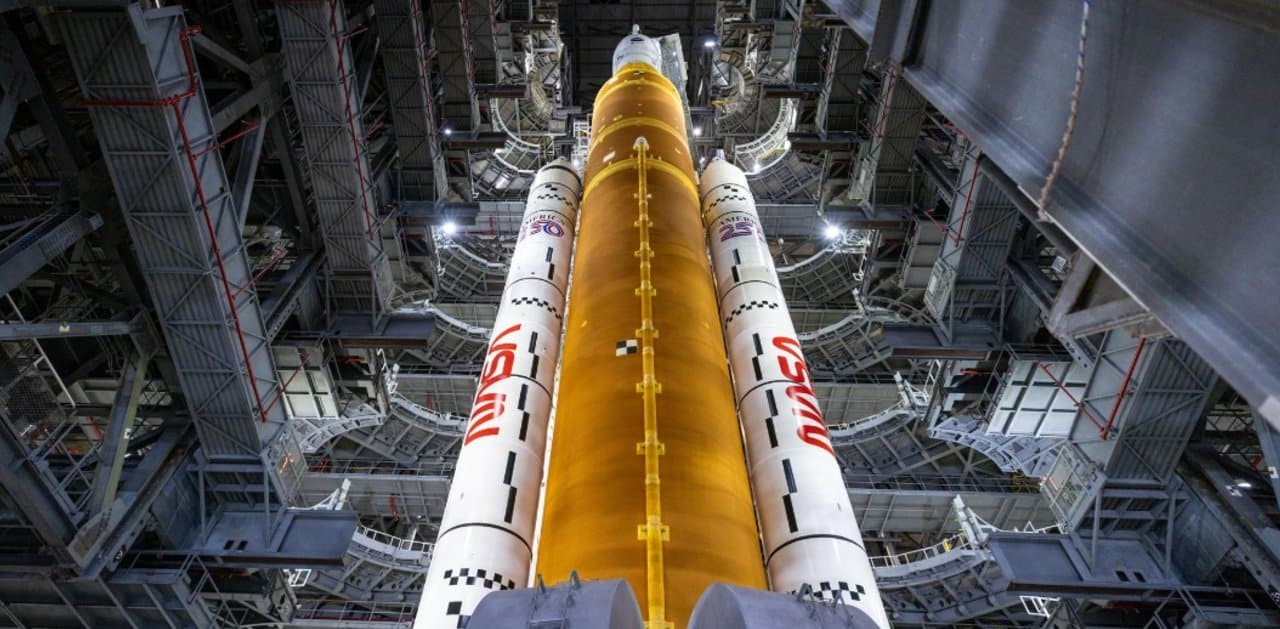
Capsule Orion from mission Artemis II, with four astronauts on board, completed its return to Terra this Friday after a ten-day flight that marked the first manned test towards Lua in more than 50 years. The splashdown occurred at Oceano Pacífico off the coast of San Diego at about 8:07 p.m. West Coast local time at Estados Unidos. The operation capped a journey that tested the spacecraft’s critical systems and paved the way for future crewed lunar landings. The crew included North Americans Reid Wiseman as commander, Victor Glover as pilot, Artemis0 as mission specialist and Canadian Artemis1 also in the role of specialist.
The astronauts traveled more than 694,000 miles, setting a Terra distance record for a crewed mission with the Space Launch System launch system and the Orion capsule. Durante en route, the team performed precise maneuvers, including trajectory corrections and preparations for the final phase of reentry. Separation from the service module occurred as scheduled, followed by entry into the Earth’s atmosphere at high speed. Esses steps validated essential technologies for the Artemis program, which aims to return humans to the lunar surface.

Preparations for reentry challenge Orion’s heat shield
Reentry represented one of the most critical stages of the mission. The capsule faced extreme temperatures of up to around 5,000 degrees Fahrenheit as it traversed the atmosphere at speeds approaching 35,000 feet per second. Engenheiros at NASA adjusted the descent profile to reduce the time of exposure to maximum heat, adopting a steeper trajectory with a brief atmospheric jump. Essa modification was based on data from unmanned flight Artemis I and minimized risks identified in the heat shield.
The crew experienced forces of up to 3.9 G during the initial descent. A communications blackout lasting about six minutes occurred due to the formation of plasma around the capsule. Parafusos braking systems were activated sequentially, with the drogue parachutes opening at an altitude of 22 thousand feet and the main ones at around 6 thousand feet. The capsule touched down at approximately 20 miles per hour, maintaining structural integrity as expected.
- Checking navigation and propulsion systems before separation from the service module
- Continuous monitoring of weather conditions in the landing zone
- Pre-inspection of external images of the capsule to confirm the absence of critical damage
- Internal cabin configuration to protect equipment during water impact
Recovery involves coordination between NASA and US Marinha
Rescue teams positioned in the area began operations immediately after the splashdown. Mergulhadores of Marinha of Estados Unidos assisted in stabilizing the capsule and extracting the astronauts, who were removed one by one. Helicópteros transported the crew members to the amphibious ship USS John P. Murtha, equipped with a helicopter deck and medical facilities for initial assessments.
Capsule Orion, named Integrity by the crew, was also recovered by the naval team and taken to the same ship. Todo The crew extraction and transfer process was completed in around two hours, following protocols tested in previous simulations. Sea conditions in the landing zone, with controlled winds and waves within limits, allowed the operation to proceed without complications.
The astronauts underwent preliminary medical examinations on board the ship before heading to Centro Espacial Johnson, no Texas, where they will receive more detailed monitoring. The successful recovery reinforces the reliability of rescue procedures for future missions of the Artemis program.
Historical significance of the mission drives the program’s next steps Artemis
Artemis II tested several systems in a real environment that will be used in subsequent flights, including the European service module and guidance thrusters. The journey provided valuable data on the spacecraft’s performance at extreme distances and during high-energy reentry. Esses results will be analyzed to refine manned lunar landing projects planned for subsequent missions.
The inclusion of a Canadian astronaut highlighted the international collaboration in the program, which involves space agencies from several countries. The mission met all primary objectives of systems verification and crew safety. Equipes on the ground, they followed each phase in real time, adjusting parameters as necessary.
Details of the final trajectory guarantee precision in the return
The trajectory correction burn performed hours before reentry adjusted the capsule’s speed to about 4.2 feet per second. Essa maneuver refined the entry path into the atmosphere and reduced the zone of uncertainty for splashdown. The flight profile allowed Orion to follow an optimized route over Pacífico.
Nearby airports, such as San Diego, temporarily diverted flights to accommodate the air rescue operation. The sound impact was brief and limited to specific coastal areas. Coordination between federal agencies ensured that air and sea space remained safe during the final phases.
Crew maintains preparation routine until the final minutes
In the final hours in orbit, the astronauts configured the cabin, stocked loose equipment and installed seats for the descent. Eles reviewed the weather briefing and reentry schedule with mission control. The tradition of wake-up songs marked the beginning of the final day, reinforcing the bond between the team on the ground and the space travelers.
All Orion systems responded as designed during the approach phase. The absence of significant problems on external visual inspection of the capsule increased confidence in the sequence of events. The crew followed detailed checklists to ensure that nothing compromised the integrity of the ship.
The completion of Artemis II represents a concrete milestone in the effort to return humans to Lua in a sustainable way. Dados collected during the ten-day mission will continue to be processed to support the development of deep space exploration technologies. NASA plans to use this information to safely advance the next steps of the program.




