
New research reveals that Prototaxites was an unknown multicellular organism 400 million years ago

Scientists have presented new evidence about Prototaxites, the largest terrestrial organism that existed about 400 million years ago, during the early period Devoniano. The study, based on well-preserved fossils, indicates that this creature does not fit into any known category of plants, animals or fungi. Instead, it may represent a completely extinct multicellular evolutionary lineage distinct from any modern group. The fossils reached up to nine meters in height and dominated landscapes without trees or dinosaurs.
Researchers from Universidade of Edimburgo analyzed three specimens excavated from Rhynie Chert, a sedimentary formation near Aberdeen, in Escócia. Esse site preserves in exceptional detail ancient terrestrial organisms, including primitive plants, fungi and animals. Preservation has made it possible to detect chemical traces of molecules that disappeared hundreds of millions of years ago.
- Intertwined tubular structures formed the body of the organism
- Absence of blocky cells typical of plant tissues
- Chemical biomarkers different from those found in fossilized fungi at the same site
Chemical analysis rules out fungus hypothesis
The results show that Prototaxites has a structural and chemical composition distinct from both extinct fungi and current species. Corentin Lorron, paleontologist at Universidade and co-lead author of the study published in January in the journal Science Advances, highlighted that the organism is completely different from any group known today.
The team compared the fossils with other organisms preserved under the same conditions in Rhynie Chert. Essa approach eliminated similarities to fungi, which had previously been a leading hypothesis. The researchers also observed that there is no evidence of photosynthesis or a symbiotic relationship typical of lichens.
History of controversial ratings
Since the discovery of the first fossils 160 years ago, scientists have debated the nature of Prototaxites. Inicialmente, in the 19th century, was interpreted as decaying conifer trunks. Estudos Later studies revealed tubular structures that did not correspond to known plant tissues.
Other theories suggested that it was a lichen or a giant fungus. Algumas Recent research pointed to fungal affinities due to the absence of photosynthesis. However, new chemical and structural analysis refutes these possibilities conclusively.
Details of the fossils of Rhynie Chert
Rhynie Chert offers unique preservation conditions due to the ancient hot spring environment. The three fossils examined allowed for detailed examinations of biomarkers and internal anatomy. Esses data indicate that the organism was complex multicellular, but without direct parallels with current life forms.
Prototaxites formed columnar structures that rose across the early Earth landscape. Eles lived before the evolution of trees and dominated early ecosystems with very small plants. Their height of up to nine meters made them the largest living beings on dry land at the time.
Implications for terrestrial evolution
The research reinforces that Prototaxites belongs to an independent eukaryotic lineage that became extinct around 360 million years ago. Scientists use modern tools, including spectral analysis and chemical comparison, to reinterpret ancient fossils.
This discovery expands the understanding of the diversity of life in the early stages of terrestrial colonization. The organism does not fit into traditional classifications, which opens up new questions about other possible extinct groups not yet identified in fossil records.
Exceptional preservation enables new insights
The quality of Rhynie Chert’s fossils makes it easier to detect ancient molecules that normally degrade. Pesquisadores applied methods that directly compare the material with fungi preserved in the same location. The results show clear differences in the chemical components.
These advances help resolve debates that have persisted since the initial identification of the genre. The team involved experts in paleontology, geochemistry and molecular biology for a multidisciplinary analysis.
Internal structures reveal complexity
Prototaxites had tubes intertwined with sporadic medullary points, structures that allowed exchange of gases and nutrients. Essas characteristics do not correspond to typical fungal anatomy or plant tissues.
The scientists further observed that the walls of the tubes exhibited different branching patterns than fungal hyphae. Essa Anatomical distinction complements the chemical data and strengthens the hypothesis of a separate lineage.
Discovery added to museum collection
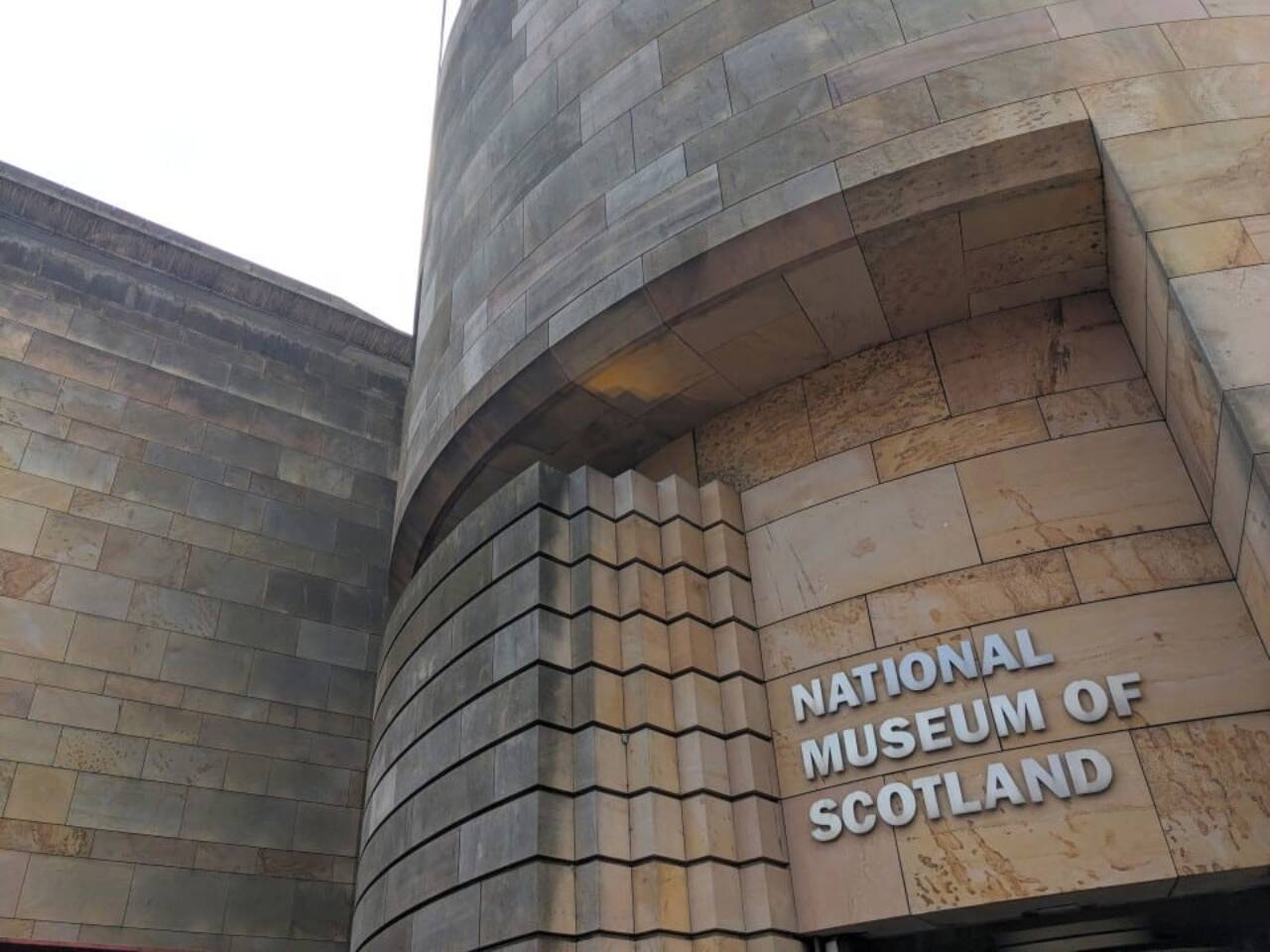
A specimen from Prototaxites Tahiti was recently incorporated into the collections of National Museums Scotland. The fossil, found by a local landowner in the region of Rhynie, in Aberdeenshire, provides additional material for future study.
Inclusion in the public collection facilitates access for researchers and contributes to scientific dissemination about the first terrestrial ecosystems. The site remains an important source of information about life in the early Devoniano.
Scientific debate remains open
Although the new research rules out fungal affinity, the authors acknowledge that there are still hypotheses to explore. The absence of modern equivalents suggests that Prototaxites represents a unique evolutionary branch that left no direct descendants.
Additional studies with new analytical techniques may reveal more details about their biology and ecology. Rhynie Chert remains one of the most important sites for understanding the transition from aquatic to terrestrial life.
Paleontological context of Devoniano
400 million years ago, life on dry land was still in its infancy, with primitive plants and no developed forests. Prototaxites stood out in this scenario as the largest organism. Sua presence possibly altered the local environment and influenced other living beings.
The subsequent extinction of this lineage coincides with environmental changes and the advancement of other groups, such as vascular plants. Fossils offer clues about how biological diversity manifested itself before modern diversification.
Advanced research methods
The team employed biomarker analysis and computational modeling to compare the fossils to known organisms. Esses methods allowed detecting subtle differences that escaped previous observations.
Preservation in the flint of Rhynie Chert preserved microscopic and chemical details that are typically lost over geological time. Essa Exceptional condition makes the site a global reference in early paleobiology studies.
Perspectives for future research
New finds or more refined techniques could help draw connections to other enigmatic fossils. The researchers plan to expand the analyzes to specimens from other locations where Prototaxites occurs.
Understanding this form of life contributes to the general panorama of the evolution of multicellular eukaryotes. The study highlights the importance of re-evaluating ancient evidence with contemporary tools.





