Valverde takes advantage of Gazzaniga’s mistake and guarantees Real Madrid’s advantage against Girona at home

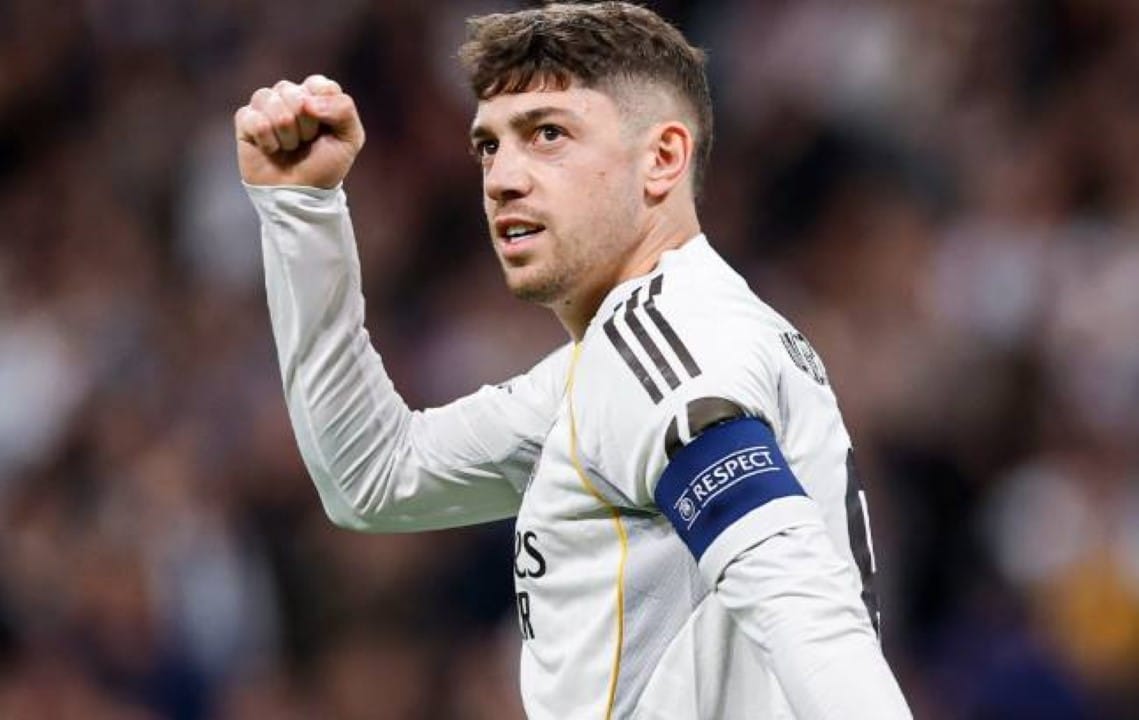
The clash valid for LaLiga brought together the squad of Real Madrid and the team of Girona on the lawn of the Santiago Bernabéu stadium, marking yet another high-level clash in Spanish football. The match began with the home team imposing their characteristic rhythm, seeking absolute control of ball possession and pushing the opposing defensive line back from the opening whistle. With an estimated audience of 70,885 fans present in the stands, the atmosphere reflected the importance of gaining points on the leaderboard for the season’s aspirations. The Merengue team used short passes and quick triangulations to dismantle the visiting team’s marking, focusing their offensive actions on the ends of the field to expand the defense. The strategy had an effect on the volume of the game, culminating in the decisive moment in the 49th minute of the first half, when Federico Valverde risked a shot from outside the area and had a technical error to open the scoring. The minimal advantage before the break rewarded the team that demonstrated greater offensive initiative and territorial control throughout the initial stage of the duel.
Strikers Vinicius Junior and Kylian Mbappe acted as the main escape valves in the offensive sector, receiving deep balls and trying individual plays at speed. The Girona defense, in turn, had to redouble its attention to contain the attacks, organizing two compact lines at the entrance to its own area to block the finishing spaces.
⚽ 51′ | 1-0 | ¡¡¡GOOOOOOOOOOOOOOOOOOOOOOOOOOOL of@FedeeValverde!!!@EASPORTSFC pic.twitter.com/4UhuEQugWH
— Real Madrid C.F. (@realmadrid)April 10, 2026
- Initial territorial dominance with 55% of ball possession for the home team in the first moments.
- Advantage in total shots, registering seven shots against three from the opponent in the initial stage.
- Frequent corner kicks in the first minutes, totaling five to zero at one point in the game.
Referee Javier Alberola had to intervene in harsher moves in midfield to maintain tactical discipline and order in the match. Aos 35 minutes, the referee issued a yellow card to Mbappe after a foul considered harsh by the refereeing team, signaling the rigor in ball disputes.
Offensive construction and opportunities created in the midfield sector
Midfielder Jude Bellingham had one of the clearest opportunities to find the net in the opening minutes of the match. The player infiltrated the penalty area with speed, received a precise low pass and finished low, but found the goalkeeper well positioned to execute the save. The English athlete’s movement was fundamental in attracting markers and opening side corridors for his teammates.
On the right side of the field, Daniel Carvajal and Brahim Diaz established a constant partnership in attack and transition actions. The full-back took to the offensive field several times, even risking a dangerous cross shot that went to the right of the opponent’s goal. Crosses into the area sought out centralized attackers, requiring constant and precise hits from visiting defenders.
The Girona team did not completely give up on the attack and tried to respond with sporadic quick transition moves down the flanks. Claudio Echeverri managed to find space in the middle and risked a long-range shot, but the ball went wide of the post. Arnau Martinez also registered a dangerous attempt with a shot from the edge of the area that scraped the left post, frightening the local fans.
The decisive move and the opening of the scoring in the Spanish capital
Zero came off the scoreboard exactly in the 49th minute of the opening half, in a move that seemed controlled by the visiting defense until the moment of completion. Federico Valverde received a pass in the middle, quickly adjusted his body and fired a relatively weak shot towards the center of the goal. The finish carried no apparent danger, but the technical execution of the shot ended up surprising the defensive system.
Goalkeeper Paulo Gazzaniga tried to fit the ball, but made a clear error in positioning and reading the trajectory of the shot. The ball escaped his gloves and crossed the fatal line, completely changing the tactical panorama of the confrontation before going to the changing rooms. The individual error was costly to the containment strategy that had been working efficiently up to that point.
Defensive posture of the visitors and performance of the goalkeepers
Girona’s tactical organization was based on closing spaces in the center of the pitch, forcing the opponent to play on the flanks and cross balls into the area. Viktor Tsygankov and Azzedine Ounahi were important pieces in the defensive recovery, helping the midfielders in double marking the rival wingers. Essa Compactness required a lot of patience from the home team when exchanging horizontal passes.
Despite the failed goal attempt, Gazzaniga had registered important and safe interventions minutes before the incident. Federico Valverde himself had tested the goalkeeper with a high and strong shot, which resulted in a plastic save and the concession of a corner. The security shown at the start of the match contrasted sharply with the error made in stoppage time.
On the other side of the field, Andriy Lunin also needed to show service when called upon by the visiting attack on rare occasions. The home team’s goalkeeper made a highly difficult save in a Azzedine Ounahi shot from inside the penalty area. The precise intervention ensured that his team’s defensive score remained zero.
During the first stage, the technical committee needed to closely monitor the physical condition of full-back Francisco Garcia. The player reported muscular discomfort after a high-speed ball dispute, generating immediate movement on the bench for a possible warm-up of the available substitutes.
Tactical adjustments and movement in the second stage
The return of the teams for the second half maintained the dynamics of ball possession favorable to the home team, who sought to manage the newly acquired advantage intelligently. Midfield players began to value retaining the ball even more, rotating the game from one side to the other with the aim of physically wearing down the opponent’s marking. The tactical orientation aimed to reduce the frenetic pace of the opening minutes and control actions through short and safe passes, forcing the opponent to leave their defensive comfort zone to try to regain possession of the ball in the attacking field.
Girona, needing to seek a draw to avoid being defeated, needed to advance their marking lines and expose their defensive system more to counterattacks. Essa Change in posture generated considerable spaces on the backs of the full-backs, areas that began to be exploited by long throws and quick game reversals by the home team. The physical duel became more intense, with fierce disputes for the second ball in the central strip of the pitch. The coaches began the tactical observation process for possible substitutions, evaluating the natural wear and tear of the athletes after a first half played at very high intensity.
Defensive performance and ball possession control
The solidity of the home team’s defensive system was a determining factor in sustaining the advantage on the scoreboard throughout the subsequent minutes of the match. The defense duo formed by Eder Militao and Raul Asencio demonstrated extreme synchronization in their covering movements and anticipations, neutralizing infiltration attempts by opposing attackers with precision. Eduardo Camavinga played a crucial tactical role acting just in front of the defense line, functioning as the main pass distributor and the first man in direct combat to recover the ball. The precision in the French midfielder’s passes allowed the team to transition from defense to attack very fluidly, using the wingers in favorable conditions one-on-one against the defenders. Além Furthermore, the defensive line worked in a coordinated manner to execute the offside trap, catching Girona’s attackers in an irregular position on several counterattack opportunities. The strategy of keeping the ball away from their own area, combined with highly efficient post-loss pressure, drastically limited the offensive options of the visiting team, who found it extremely difficult to establish a consistent volume of play in the attacking field for the majority of the match.
Chronology of the main moves of the match
The chronological record of the confrontation highlights the superiority in game volume and the main actions that defined the history of the match until the present moment. The sequence of events demonstrates the intensity from the opening whistle and the crucial moments of intervention by the goalkeepers and the refereeing team.
- 1′ – Início of the confrontation with immediate pressure from the home team in the attacking field.
- 7′ – Cobrança from a quick corner taken after an acute play by the baseline.
- 14′ – Intervenção crucial from the home goalkeeper in a dangerous finish inside the area.
- 28′ – Arremate strong long distance defended safely, generating a corner shot.
- 35′ – Aplicação warning with a yellow card for a harsh infraction in the midfield sector.
- 49′ – Abertura from the scorer after a technical failure by the visiting defensive system.
- 46′ – Reinício of the clash for the final forty-five regulatory minutes.
Game dynamics and disputes in the central sector
The match continues with a well-defined tactical scenario, where the disadvantaged team tries to organize positional attacks against a very well-placed defensive system. Fights for space in the center circle became the focal point of the clash, with tactical fouls being used intelligently to stop promising counterattacks before they reached the box.
Referee assistants pay extra attention to the offside lines, given the advanced positioning adopted by the two defenses at different moments of the game. The progress of the clash reflects the technical balance and physical intensity expected for a duel of this magnitude within the main competition on the national calendar.