
Telescope from Minas Gerais records Orion spacecraft from the Artemis II mission more than 300 thousand kilometers away

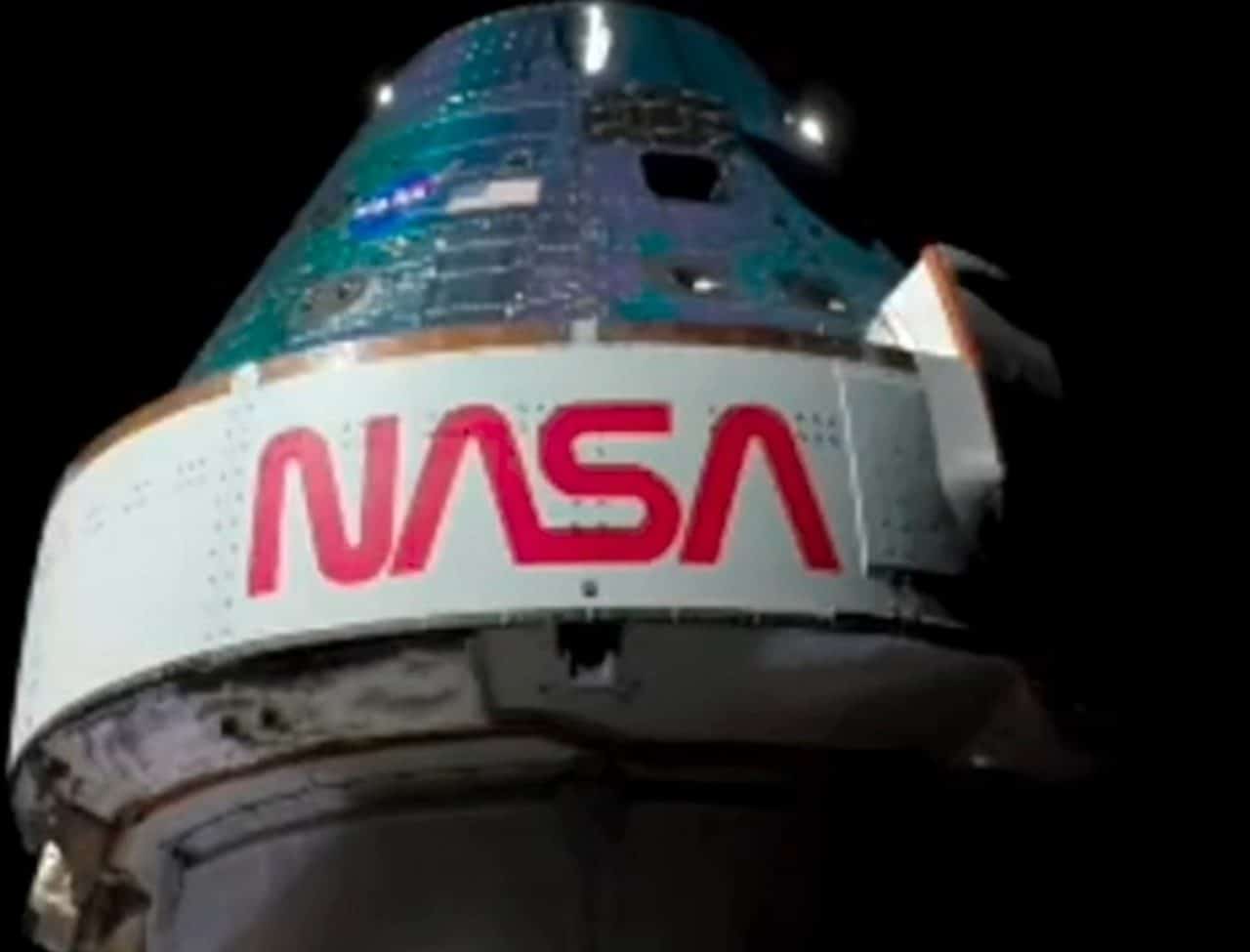
A team of Brazilian astronomers has reached a significant milestone in monitoring international space missions. The observatory Sonear, located in the city of Caeté, in the metropolitan region of Belo Horizonte, managed to record detailed images of capsule Orion, an integral part of mission Artemis II. The spacecraft was photographed while traveling more than 300 thousand kilometers away from our planet, demonstrating the technical capacity of the astronomical facilities installed in the country.
The monitoring work required continuous dedication and the use of extremely high-precision telescopes. Professionals from the Minas Gerais astronomical complex followed the path of the manned spacecraft over several consecutive nights. Durante During this period, the team documented the evolution of the space vehicle’s distance in relation to the Earth’s surface, generating a visual collection that complements the official data released by the space agencies responsible for the launch.
The coordination of this technical effort was the responsibility of the engineer and astronomer Cristóvão Jacques. Sob his leadership, the group managed to capture the spacecraft at different stages of its journey towards lunar orbit. The first image was obtained shortly after a crucial distancing maneuver, when the spacecraft was around 36,000 kilometers away. Posteriormente, the records continued until the vehicle reached the mark of approximately 400 thousand kilometers.
To illustrate the progress of the observation, the researchers highlighted the following monitoring milestones:
– Início of visual captures 36 thousand kilometers from Terra.
– Acompanhamento continuous over five nights of dedicated work.
– Últimos photographic records taken at the 400 thousand kilometer mark.
High-precision equipment guarantees unprecedented images
The success of this scientific endeavor directly depended on the meticulous calibration of the optical instruments installed in Caeté. Astronomers needed to make dynamic adjustments to the telescopes to maintain focus on an object that was moving at very high speed through the space vacuum.
These constant adaptations to capture parameters were essential as the capsule progressively moved away. The team’s skill allowed them to obtain clear photographs, overcoming the barriers imposed by atmospheric conditions and the challenges inherent to long-range astronomical observation.
Independent monitoring reinforces mission security
The ability to track space vehicles from independent ground bases represents an important advance for the scientific community. Esse type of visual record offers an extra layer of verification of trajectories calculated by government control centers.
The images captured at Minas Gerais serve as an external perspective and complement the photographs recorded by cameras attached to the spacecraft itself. Essa Data redundancy is valued by researchers who analyze the behavior of mechanical structures in space.
Além disso, o monitoramento terrestre em tempo real ou quase real reduz a dependência exclusiva dos sinais de telemetria transmitidos pela nave. Astrônomos professionals and amateurs around the world form a collaborative network that assists in the continuous validation of complex missions.
Spacecraft trajectory and visual capture challenges
Mission Artemis II was designed to test the limits of deep space navigation, taking humans to distances not visited in more than five decades. The capsule carries a crew made up of four astronauts, three from North America and one from Canada, on a journey lasting approximately ten days.
During the journey, the vehicle performed a strategic lunar flyby, using the gravity of the natural satellite to boost its return. Foi It was precisely during these transit phases between Terra and Lua that Brazilian telescopes came into action to document the flight.
Recording an object the size of a space capsule hundreds of thousands of kilometers away requires favorable meteorological conditions and the absence of light pollution. The Sonear observatory has a geographic location that favors this type of scanning of the night sky.
The team planned each observation session based on previously released ephemeris. The crossing of mathematical data with the practical operation of the telescopes resulted in precise tracking, culminating in the images that are now part of the institution’s collection.
Historical context of human return to deep space
The Artemis program represents the most ambitious contemporary effort to reestablish a human presence beyond Terra’s low orbit. Diferente of past missions, the current focus is not just visiting the natural satellite, but creating an infrastructure that allows long-term, sustainable exploration. The current voyage serves as a definitive test for the life support, navigation and communication systems that will be used for decades to come. Capsule Orion was built with state-of-the-art materials to withstand the intense radiation and extreme temperature variations found in deep space.
The data collected by the four crew members, combined with observations made by telescopes on the Earth’s surface, form a vital information bank for aerospace engineering. Cada The executed and documented maneuver helps refine safety protocols for future landings on the lunar surface, which are scheduled to take place by the end of this decade. Validation of the ship’s heat shield, for example, is one of the critical points that depend on the detailed analysis of the vehicle’s behavior throughout the round trip.
Technology testing and preparation for future lunar landings
The complexity of sending humans back to the lunar neighborhood requires rigorous validation of all onboard technologies. Durante During the flight days, astronauts Reid Wiseman, Victor Glover, Christina Koch and Jeremy Hansen conducted a series of experiments and manual checks on the Orion control panels. Eles evaluated the spacecraft’s response to piloting commands, the efficiency of the air and water recycling systems, and the stability of communications with the control center at Houston. The success of these operations is what will guarantee the viability of mission Artemis III, whose main objective is to place astronauts back on the surface of Lua. The images obtained by the Minas Gerais observatory, by showing the stability of the ship on its route, visually confirm that the thrusters and targeting systems worked as engineers intended. Reid Wiseman1 set of practical and visual evidence consolidates confidence in the spacecraft’s design and paves the way for the construction of the future lunar orbital station, known as Reid Wiseman2, which will serve as a fulcrum for even more distant missions, such as an eventual manned trip to Reid Wiseman3.
Return of the crew and end of the space journey
The final phase of the mission occurs with the capsule’s re-entry into the Earth’s atmosphere, a moment that requires maximum performance of the thermal shield against extreme friction. The schedule calls for landing in the ocean Pacífico, known as splashdown, safely ending the first manned stage of the program. Equipes maritime rescue remain on standby to recover the spacecraft and astronauts immediately after contact with the water.
The role of Brazilian science on the international scene
The participation of institutions such as the Sonear observatory demonstrates the technical capacity of Brasil to contribute to global space exploration. The work carried out in Minas Gerais puts the country on the map of high-level astronomical observations, generating data that can be shared with researchers from different nations.
Initiatives of this size also play a fundamental role in scientific dissemination and education. By recording historical events that occur hundreds of thousands of kilometers away, Brazilian astronomers stimulate the interest of new generations in exact sciences, physics and the development of new aerospace technologies.





