
Todt says Schumacher’s failures prevented more world titles in Formula 1


Jean Todt, former head of team Ferrari at Fórmula 1, revealed that the seven-time world champion Michael Schumacher lost at least two important titles due to his own mistakes made at decisive moments in his career. The director’s statement offers an inside perspective on controversial episodes that shaped the German driver’s career on the track. Segundo Todt, Schumacher “lost control” in key situations, which resulted in direct consequences for the championship dispute. Dois specific incidents were highlighted by the former leader: Grande Prêmio from Europa from 1997, from Jerez from Ferrari0, and the classification session from Ferrari1 from Ferrari2 from 2006. Ferrari3 the moments are widely remembered by fans of the category and the sports press for their controversial nature and the direct impact on the final results of the respective seasons. The analysis of Ferrari4 highlights how specific failures influenced the legacy of the pilot considered one of the greatest in the history of Ferrari5 1.
The decisive incident in Jerez
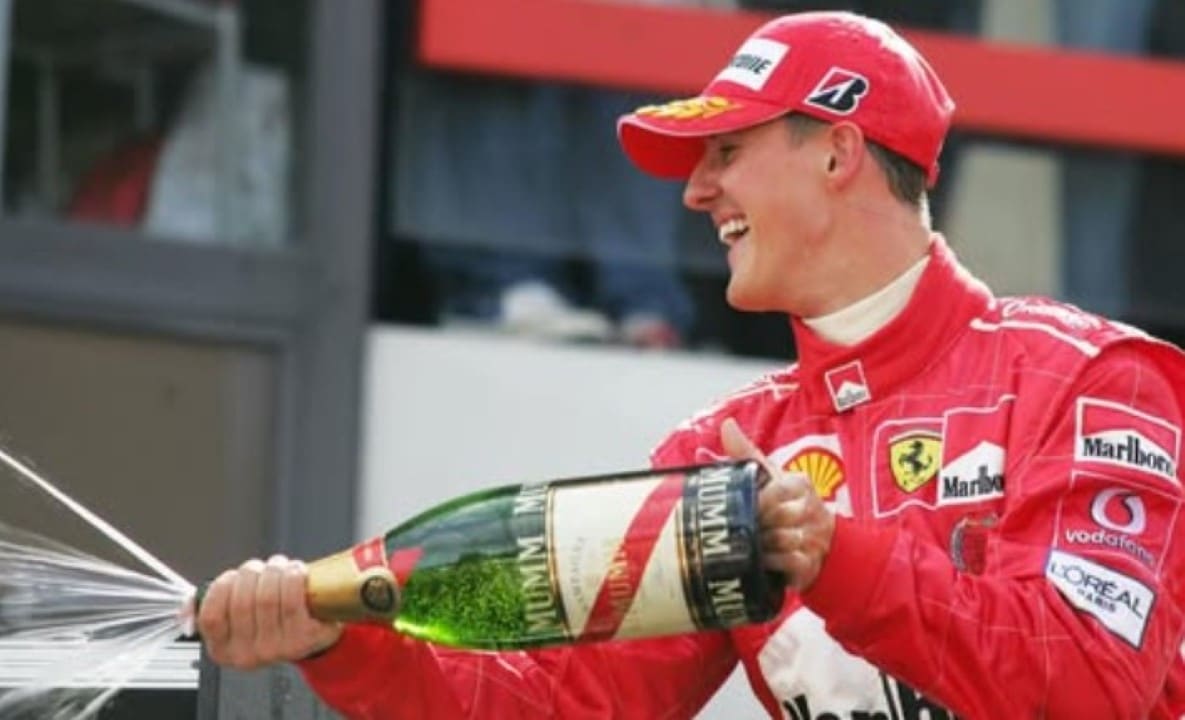
The 1997 season of Fórmula 1 culminated in a fierce dispute between Michael Schumacher and Jacques Villeneuve, with the title being decided in the last stage, Grande Prêmio of Europa, in Jerez. Schumacher reached the final race with an advantage of just one point over the Canadian driver of Williams. The classification for the race was historic, with both drivers recording exactly the same lap time: 1:21.072. Contudo, Villeneuve secured pole position for having registered the brand first.
During the race, after a stop in the pits, Villeneuve tried to overtake Schumacher at curve Dry Sac. At the time of the maneuver, Schumacher initially went around the curve, but then turned his car abruptly towards his rival, in a clear attempt to take him off the track. The collision resulted in the abandonment of Schumacher, which was trapped in the gravel box at the edge of the road. Jacques Villeneuve managed to continue in the race, finishing in third place, which was enough to secure his first and only Fórmula 1 world title.
As a direct consequence of his conduct, Michael Schumacher was disqualified from the 1997 drivers’ championship by Federação Internacional of Automobilismo (FIA), an unprecedented punishment at that time in the history of the category. Posteriormente, the German driver himself admitted the error, recognizing that his maneuver was intentional and inappropriate for the title fight. The episode in Jerez became one of the most memorable in Schumacher’s career, demonstrating an aggressive side that often accompanied him on the track.
The controversy in Mônaco 2006
Almost a decade after the incident in Jerez, Michael Schumacher again found himself at the center of a major controversy, this time during the qualifying session for the Grande Prêmio of Mônaco of 2006. Naquele day, the German driver was provisionally leading Q3, the final stage of qualifying, after the first fast laps. However, Fernando Alonso, his main rival for the title and then driver of Renault, was on a fast lap and with a time that indicated an advantage of almost two tenths over Schumacher’s time.
In this crucial scenario, Schumacher simulated a mistake in the challenging corner Rascasse, one of the slowest on the Monte Carlo circuit. Ele spun his car at low speed, blocking the track and causing the session to be immediately interrupted with a red flag. The maneuver prevented Fernando Alonso from completing his flying lap and potentially taking pole position. Schumacher’s attitude generated a strong reaction and outrage throughout the Fórmula 1 paddock. An FIA steward described the maneuver as “pathetic”, while former champion Keke Rosberg classified it as “the cheapest and dirtiest thing I have ever seen in F1”.
As a result of the investigation, the stewards decided to punish Schumacher, who had all of his qualifying times annulled. Ele He was forced to start from the last position on the starting grid. Apesar from the penalty, Schumacher demonstrated his ability in the race and managed an impressive recovery to fourth place. Fernando Alonso, in turn, won the race in Mônaco, consolidating his lead in the championship. At the end of that season, Schumacher finished just 13 points behind Alonso, and missed out on an almost certain victory in Ele0’s Ele0 due to a rare engine failure while leading the race, which underlined how decisive the lost points were.
Jean Todt’s review of errors
Jean Todt, who followed Michael Schumacher closely during his glory years at Ferrari, was blunt in analyzing the impact of the pilot’s decisions. Para the former team leader, Schumacher’s mistakes were decisive in him losing titles that could have further expanded his already great legacy in Fórmula 1. Todt recalled the beginning of work in Maranello and the challenges overcome to build a winning team.
“We rebuilt the team little by little in 1996, we won three races, and in 1997 we lost the championship in the last race with the controversial overtaking of Villeneuve, when Michael made a mistake”, stated Todt, highlighting the importance of that moment. Ele did not hesitate to recognize the intentionality of the maneuver, which cost him the title. “I mean, he hit on purpose, but he did it badly, and Michael was an amazing guy. Ele was a brilliant man, a leader, very human.” Todt further reinforced the idea that these moments of failure were recurrent and cost the pilot dearly.
The leader emphasized that Schumacher, despite his brilliance, paid a high price when his emotions failed him. “But every time he lost control, he paid dearly, because it cost him the championship,” said Todt, generalizing the observation to other moments in his career. Ele also cited the 2006 case in Mônaco as another direct example of this thesis. “As in Mônaco, in the classification with Alonso, he had to start from the bottom, and that cost him the championship”, he concluded. The sum of these episodes, in the view of the former boss of Ferrari, was crucial for the final results of the seasons in which the pilot was in contention for the title.
Consequences and impact on legacy
The episodes highlighted by Jean Todt represent pivotal moments in Michael Schumacher’s career, which, although marked by numerous triumphs, was also punctuated by significant controversies. The perspective of the former boss of Ferrari illuminates how the driver’s impulsive decisions had direct repercussions on the results of the championships. Losing titles due to questionable maneuvers adds a complex layer to the narrative of one of the greatest athletes of all time.
Despite the mistakes, Schumacher’s legacy as one of Fórmula 1’s most dominant drivers remains unquestioned, with his seven world titles and countless records. However, the flaws highlighted by Todt serve as reminders that even the greatest champions face moments of extreme pressure that can result in poor choices with major consequences. Tais episodes continue to be debated by fans and analysts, adding depth to the analysis of the German pilot’s career.
- The moments of “loss of control” that Jean Todt mentioned, according to his analysis, were decisive in changing the course of seasons and Michael Schumacher’s final title count.
- Big Prêmio of 1997 Europa (Jerez): Schumacher attempted to drive Jacques Villeneuve off the track, resulting in its abandonment and complete disqualification from that year’s drivers’ championship.
- 2006 Grande Prêmio Classification of Mônaco (Mount Carlo): Schumacher simulated an error at turn Rascasse to prevent Fernando Alonso’s fast lap, leading to the loss of pole position and a last-place start.
- Grande Prêmio failure of 2006 Japão: Apesar not being a driving error, the engine failure when leading the race was a crucial mechanical event that complemented the loss of points due to previous failures, contributing to Schumacher not winning the 2006 championship by a narrow margin.





