
End of support for Xbox One in the new Forza Horizon changes production and focuses on new generation consoles

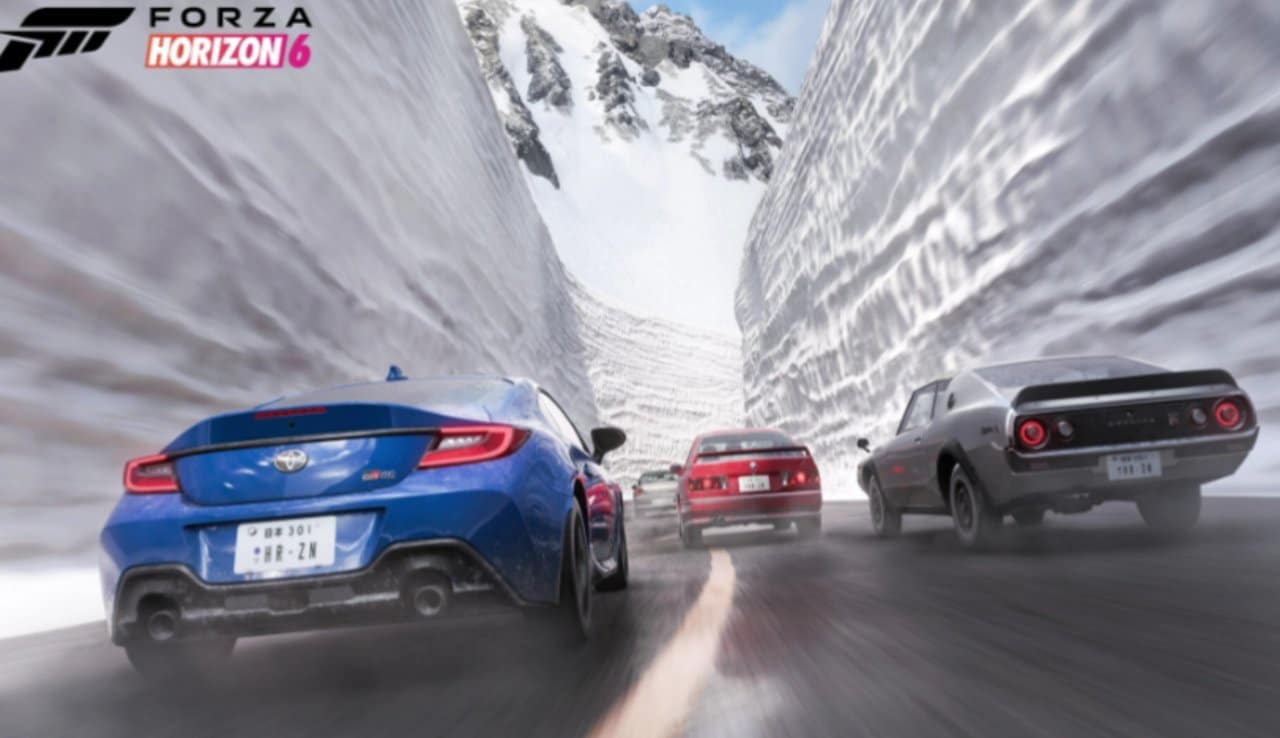
The next title in the Forza Horizon racing franchise will be developed exclusively for the Xbox Series X and S consoles. The decision by British producer Playground Games definitively ends support for Xbox One, launched more than a decade ago. The movement marks a long-awaited transition in the digital games market. The change in strategy eliminates the need to level up the game’s code to run on older hardware. Esse constant technical obstacle in recent years prevented more significant advances in the series.
Without the limitations of outdated processors and mechanical hard drives, the engineering team gains complete creative freedom. The developers promise to implement unprecedented physics and graphics rendering systems from the first day of the project. Analistas from the sector point out that the measure is essential to justify consumers’ investment in the current generation of Microsoft devices. The definitive transition changes the way the map and vehicles are built. The focus now lies entirely on getting the most out of recent machines.

End of technological constraints on map architecture
During the first years of the current video game cycle, which began at the end of 2020, the industry adopted the practice of launching simultaneous products for different generations. Esse format guaranteed a significant volume of immediate sales by taking advantage of the huge user base that had not yet migrated to the new systems. Contudo, the strategy exacted a high price in the development of titles focused on high speed and exploration of vast scenarios. Programmers needed to create two parallel versions of the same virtual environment. Eles constantly adjusted the traffic density and geometric complexity of the tracks so as not to overload the weaker machines. Maintaining big-budget games on older platforms severely limited mission design and map topography. Developers were forced to design long corridors or purposefully empty areas. The goal was just to give the old console time to load the next part of the city into memory. With the elimination of this double stage, the geography of the virtual environment is now built with an exclusive focus on the fluidity of the race.
The absence of outdated hardware on the production line completely changes the artists’ daily routine. The final optimization process, which previously took months of exhaustive work, is now focused entirely on polishing the core experience. Practitioners report a notable gain in efficiency, with much faster code builds and direct testing on today’s development kits.
Graphical and mechanical innovations driven by new hardware
Exclusive targeting of the latest systems unlocks full use of the North American manufacturer’s custom solid-state storage technology. Reading data at very high speed completely eliminates the need for prolonged waiting screens during biome transition. The updated graphics engine can load the complex elements of the scene at the exact moment the player approaches at high speed. Isso Maintains constant immersion and no visual choking during competitions. Superior processing capacity also makes it possible to apply advanced lighting techniques and dynamic reflections to automobiles.
The evolution of the central processor directly affects the artificial intelligence of computer-controlled opponents and the traffic behavior of civilian vehicles. The updated hardware allows for much more complex route calculations, creating less predictable runs. Virtual drivers can now make natural miscalculations and adapt speed to severe weather conditions.
The studio detailed the main technical improvements guaranteed by exclusivity in this new phase of production:
- Global illumination processing with real-time ray tracing during all tests.
- Completely stable frames per second rate at native ultra high definition resolutions.
- Substantial increase in car model polygon count and vegetation density.
- Dynamic climate systems that change the asphalt’s grip in a localized and instantaneous way.
- Spatial audio calculated in real time based on the specific acoustics of different environments.
Community reactions and the impact on console sales
The announcement of exclusivity generated mixed reactions on video game discussion platforms and on the main social networks dedicated to the topic. A portion of consumers who still use eighth generation consoles expressed clear dissatisfaction. Eles criticize the mandatory need to purchase new, high-cost equipment to access the title. On the other hand, the community focused on cutting-edge technology received the news as a fundamental and urgent step towards the evolution of the racing genre. The debate illustrates the eternal tension between financial accessibility and graphical advancement in the gaming market. Do From a strictly commercial point of view, the launch of a high-budget product works as a powerful sales driver for Microsoft devices. The corporate strategy follows the historical pattern of the global industry. Franquias of weight act as true technological showcases to justify consumers’ transition to new tabletop platforms. The installed base of the Series X and S systems already reaches a global level that enables the financial return of exclusive large-scale productions.
Improved connectivity and stability in multiplayer mode
The new consoles’ improved network infrastructure makes it easier to implement massive multiplayer modes. The system guarantees instant synchronization of events and the exact position of the cars on the track. Standardizing data reading speed among all participants in an online session eliminates long-standing latency issues. Esses Bottlenecks were caused by players using slow mechanical hard drives. The shared environment becomes significantly more stable and reliable for official competitions and community-organized events.
Level designers no longer need to limit the number of buildings, pedestrians, or destructible elements present on screen at one time. The density of the virtual world is now dictated solely by the vision of the art direction. Improved haptic and visual feedback makes driving simulation much closer to the reality of professional motorsport.





