Kindle readers manufactured until 2012 lose access to the Amazon book store in May
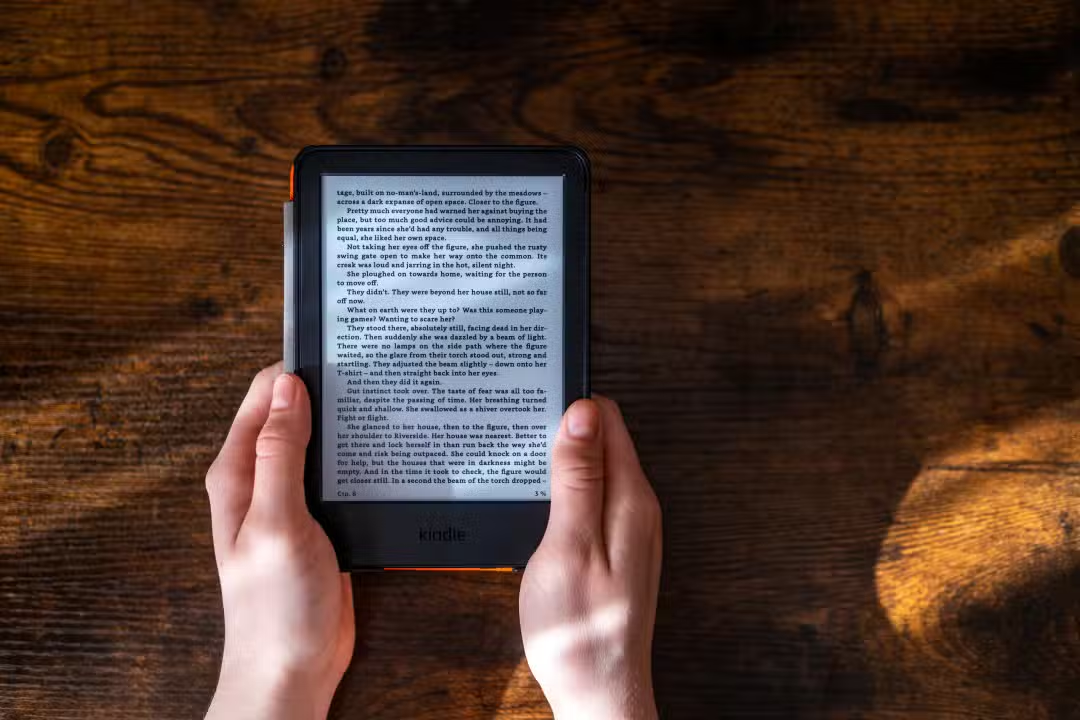
The North American manufacturer Amazon confirmed the blocking of access to its virtual store for digital readers Kindle released until 2012. The technical restriction comes into force on May 20, 2026 and prevents the purchase or direct download of new books using old devices. The measure affects equipment that has been in operation for more than a decade in the hands of consumers.
The end of support covers the first generations of the e-reader line, including versions with a physical keyboard and the initial models of the Paperwhite family. The company justifies the decision based on the evolution of the network infrastructure and the processing requirements of current services. Clientes who own these devices received email communications with discount offers for purchasing the latest hardware. Access to the already downloaded collection remains unchanged for offline reading.
Consumer reaction and impact on reading routine
The notification about the end of connectivity generated immediate dissatisfaction among the platform’s long-time users. Fóruns technology and social networks registered complaints from owners who keep their equipment in perfect condition and in daily use. The customers’ central argument is based on the nature of the device itself, which was designed exclusively for displaying static text on e-ink screens. Diferente than smartphones or computers, an e-reader does not require constant hardware updates to fulfill its basic function of opening literary files. Muitos Readers report that the battery of models launched fourteen years ago still supports weeks of continuous reading. The forced transition to a new device represents an unplanned cost for consumers who did not see the need for replacement. The company argues that the change affects a minimal portion of its global active user base. The offer of promotional credits was not enough to contain criticism about the planned obsolescence of the ecosystem.
Environmental concerns and the volume of waste
The shutdown of servers for this generation of readers raises debates about the environmental impact of consumer technology. Especialistas in sustainability calculate that the measure could abruptly transform up to two million functional devices into electronic waste. Esse volume represents approximately 624 tons of materials that require specialized disposal due to the presence of lithium batteries and toxic components. Organizações global players who defend the right to repair criticize the corporate practice of rendering hardware unusable through software blocks. The loss of synchronization capacity turns a connected device into an isolated tool that is difficult to manage practically.
Technology market analysts recognize the challenge of keeping old servers operational indefinitely. The 2012 digital security protocols present vulnerabilities that are incompatible with the standards required for contemporary financial transactions. The manufacturer emphasizes that it provided technical assistance and system updates for a period ranging from fourteen to eighteen years for these specific batches.
Alternatives for preserving digital collections
Consumers impacted by the restriction have alternative ways to avoid losing the financial investment made in their virtual libraries. Todos digital books purchased over the years remain linked to the customer’s main account on the company’s servers. Access to this material can be done entirely through the official applications available for operating systems Android, iOS, Windows and macOS. Essa solution transfers the reading experience to liquid crystal screens, which changes the visual dynamics originally provided by e-ink technology. The synchronization of read pages, text markings and personal notes continues to function normally in these auxiliary software. The manufacturer issued an important technical alert recommending that users not perform a factory reset on old hardware. The formatting procedure erases local registry keys and can prevent basic recognition of the device, making it completely inoperative even for offline reading. Manually transferring files via USB cable from a computer appears as the last technical alternative for sending new texts to disconnected devices.


Migrating to the mobile application environment ensures the continuity of the reading habit without the obligation to purchase a new e-reader. The cloud ecosystem preserves the history of literary consumption regardless of the hardware currently used. Clientes Those who choose to keep their old devices will need to manage the internal storage space with the titles already downloaded before the deadline.
Official list of equipment affected by the blockade
The cut-off list established by the manufacturer encompasses the initial phases of development of the category of digital readers and multimedia tablets. The mapping includes everything from the original project that launched the product line to the versions that popularized lighting built into the screen. Tablets from the Fire series, which operate with a modified system based on Android, also lose communication with the book store if they belong to the 2011 and 2012 vintages. Checking the exact model can be done in the device’s own settings menu or on the device management page on the company’s website.
Correct identification of the equipment is essential for consumers to plan their actions before the month of May. The schedule for closing network functions has not changed since the first communication sent to customers. Abaixo are the e-ink screen readers that will lose direct access to the online store:
- First generation Kindle manufactured in 2007
- Models Kindle DX and DX Graphite launched between 2009 and 2010
- Version Kindle Keyboard sold from 2010
- Kindle 4 released on the market in 2011
- Edition Kindle Touch with touch screen released in 2011
- Kindle 5 and the first generation of 2012 Paperwhite
The first and second generation Kindle Fire tablets, in addition to the HD 7 and HD 8.9 editions from 2012, complete the group of discontinued hardware. The digital content distribution infrastructure is undergoing a restructuring that prioritizes modern encryption and data transfer protocols. The end of this technological cycle marks the platform’s definitive transition to connectivity standards that require more robust internal components. The company maintains full support for all generations manufactured from 2013 onwards.
Veja Tambem em Latest News (EN)

Atlético-MG confirms agreement with defender Léo Duarte after period of prominence in Turkish football

Tiger shark bites 19-year-old girl and rips off her leg in Boa Viagem, Recife

2026 World Cup will have 32 athletes who play in Brazilian football

OnePlus develops portable video game with Android system focused on competitive shooters

New BYD Seal 6 DM-i Touring hybrid station wagon debuts in Europe with ample interior space and super-efficient engine

Costco reaches historic volume in gasoline sales in the United States with prices below market

June PlayStation Plus Catalog Brings Grounded and Warhammer 40,000 Darktide to Subscribers

Disney+ brings Avatar Fire and Ash finale to The Bear and new Pixar animation in June

Netflix updates June catalog with new season of Avatar and classic cinema sagas

Geely Xingyuan electric compact gains 47 kWh battery and autonomous driving system in China

Episode 1156 of One Piece marks arrival at Elbaf with decisive actions by Shanks and Blackbeard