
Jaguar sighting at high altitude rekindles hope for conservation in Honduras

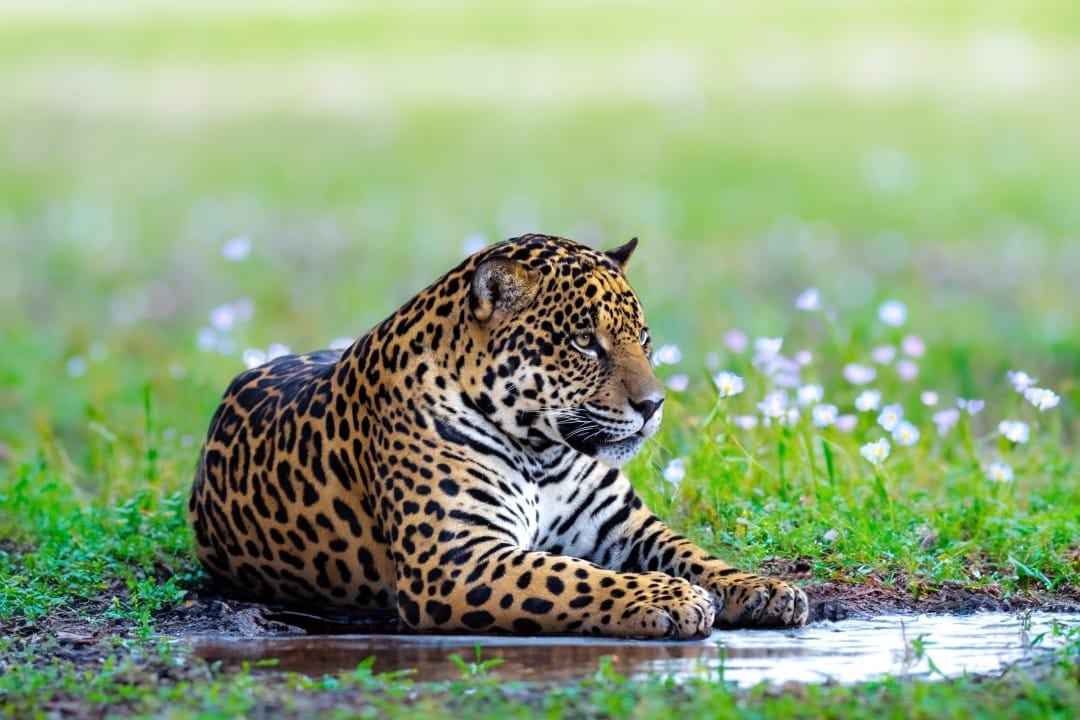
A camera installed in an altitude forest captured images of a male jaguar at Serra del Merendón, in the west of Honduras. The recording took place on February 6 at around 2,200 meters high. Trata is the first confirmed sighting of the species in the region in 10 years.
This fact represents a positive indication for environmental restoration efforts in the country. Panthera, a big cat conservation organization, installed the camera traps and released the images. The animal appears alone and in good condition.
Sighting marks return in high altitude area
The recorded jaguar belongs to the group that inhabits high forests, known for its adaptation to higher elevations. Most individuals of the species live below 1,000 meters. Avistamentos at high altitudes are rare in Honduras and occur infrequently in América Central.
Cameras at Serra del Merendón have been monitoring the area continuously for around 10 years. The last previous record in the region dates back to 2016. Após that event, Panthera and partners created a protection corridor between Honduras and Guatemala to facilitate the movement of animals.
The male photographed in February may be a young man on the move. Onças Guinea fowl are nomadic and travel long distances. Registros indicate that they can travel up to 10 kilometers in one night and up to 400 kilometers on longer journeys, especially males in search of territory or mates.
Threats persist despite local advances
Deforestation and illegal hunting remain the main risks to jaguar populations. União Internacional to Conservação to Natureza classifies several subpopulations as endangered or critically endangered. Cerca of 49% of the species’ historical habitat in Américas has been lost.
In Honduras, forest loss reached 1.5 million hectares between 2001 and 2024, equivalent to 19% of total coverage. The main causes involve expansion of plantations and pastures. The largest concentration of jaguars in the country is concentrated in areas such as Parque Nacional Janet Cahuas, with an estimated 10 to 18 individuals, and Parque Nacional Pico Bonito, with 20 to 50.
- Monitoring with cameras and patrols has increased by Serra from Merendón in the last 15 years
- Release of natural prey helps restore the food chain
- Observed reduction in illegal hunting in the protected region
- Confirmed presence of four other species of wild cats in the same area
- Ecological corridor connects populations of Honduras and Guatemala
Government measures seek to curb deforestation
The government of Honduras declared a state of environmental emergency and mobilized 8,000 soldiers for patrols in forest areas. The official goal is to stop deforestation by 2029 and regenerate 1.3 million hectares. Actions include combating illegal agriculture and logging.
In the forests of Serra del Merendón, surveillance initiatives show initial results. Organizações and Panthera have intensified the use of hidden cameras, microphones and ground patrols. Franklin Castañeda, director of Panthera at Honduras, monitors fieldwork in the region.
The recent sighting adds to other positive records. In 2021, a puma was photographed for the first time in the same mountain range. Desde then, ocelots, jaguarundis and wild cats also appeared in the images, confirming the presence of the five species of wild felines that occur in the country.
Importance of the corridor for genetic diversity
Movement between isolated populations is essential to avoid loss of genetic diversity. Em Honduras, jaguars are divided into main groups. The corridor at Serra del Merendón facilitates the exchange between individuals from Honduras and Guatemala.
Experts point out that young males tend to disperse in search of females. The animal registered in February may be carrying out this type of movement. Connectivity between high and low habitats increases the chances of long-term survival.
Other felines confirm gradual recovery
In addition to the jaguar, the presence of pumas and smaller felines indicates that the local ecosystem is gaining resilience. Restoration actions include protection against hunting and recovery of degraded areas. Continuous monitoring makes it possible to assess the impact of public policies.
Serra del Merendón is part of a larger conservation effort at América Central. The February registration reinforces the relevance of maintaining active ecological corridors.
- Environmental restoration efforts have gained momentum in recent years
- Surveillance combined with technology assists in early detection
- Collaboration between organizations and local authorities advances
- Preservation of tall forests benefits multiple species
The case of Serra del Merendón illustrates how integrated measures can produce signs of recovery in stressed areas. The male photographed represents yet another piece of information in monitoring the Honduran fauna.





