João Fonseca beats Alejandro Tabilo in straight sets and guarantees a place in the round of 16 in Germany at the ATP 500 in Munich

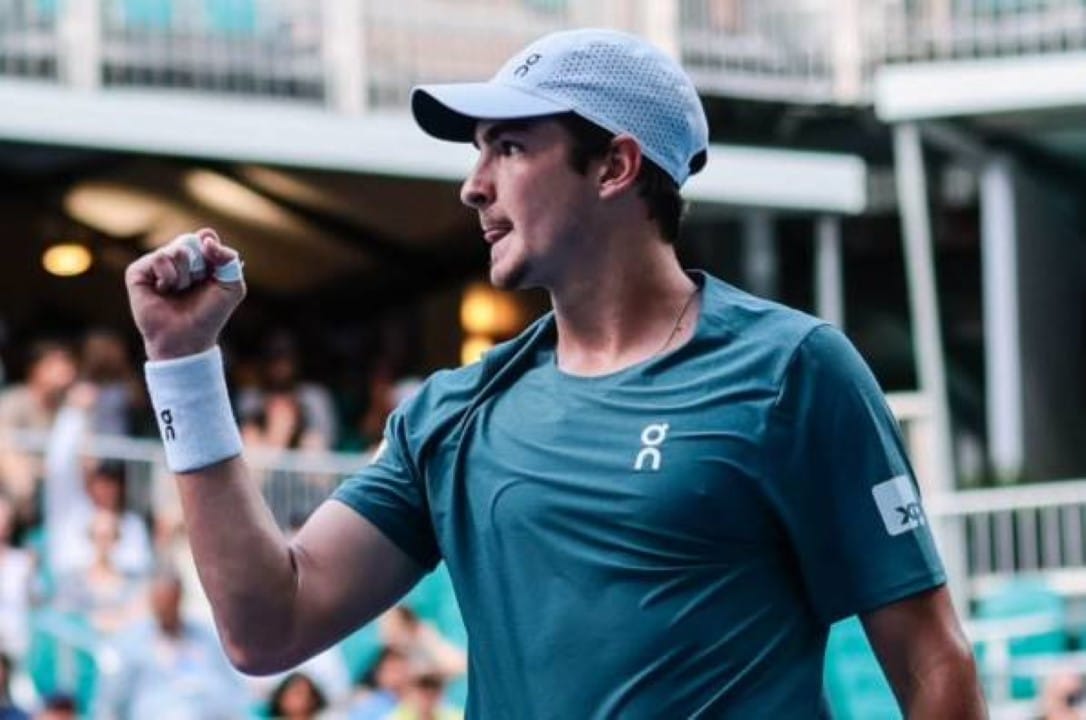
The 19-year-old Brazilian tennis player beat the Chilean Alejandro Tabilo by 2 sets to 0 in the opening round of the ATP 500 of Munique, at Alemanha, this Tuesday morning. The match played on clay courts ended with scores of 7/6 and 6/3 after just over an hour and a half of play. The result guaranteed qualification for the round of 16 of the European tournament and ended a negative streak against the South American opponent. Quick adaptation to the region’s cold climate was crucial to the solid performance in serving and returns. The next challenge in the main draw will be against French Arthur Rinderknech.
Dynamics of the confrontation and breaking of the taboo against the Chilean
The clash required patience and consistency from the Rio athlete from the first games played on the central court. The opening set was marked by a strong balance, with both players confirming their services without giving up clear break opportunities. The decision had to go to the tie-break, at which point the young athlete’s aggressiveness made the difference to close the partial at 7/6. In the second stage, the scenario changed slightly in favor of the national representative. A surgical break of serve at the decisive moment destabilized the opponent and paved the way for the definitive 6/3. Toda The match lasted around ninety minutes of ball time in play.
The victory carries extra weight due to the recent history between the two professionals on the world circuit. Alejandro Tabilo, who currently occupies forty-fifth position in the tennis players association ranking, entered the court boasting the favoritism generated by two previous triumphs over his rival. Past meetings, which took place at the beginning of this same season and the previous year, ended with the Chilean dominating the action at the back of the court. Desta time, the strategy adopted by the Brazilian technical team focused on neutralizing the angles opened by the South American southpaw. The execution of the tactical plan worked perfectly, resulting in a drastic reduction in unforced errors in moments of greatest pressure. The emotional control demonstrated by the rookie caught the attention of experts present at the German sports complex. Superar An experienced opponent on clay shows clear maturity in reading the game. The result serves as a shot in the arm for upcoming commitments on the clay surface.
Tournament transition and climate adaptation at Alemanha
The tight schedule of professional tennis requires quick shifts and immediate physical adjustments. Arrival in the German city took place a few days after an intense campaign in the Masters 1000 level tournament hosted in Monte Carlo. The reduced training time in the new location tested the athlete’s muscle recovery capacity.
Weather conditions presented an additional obstacle during the opening round. Enquanto the principality of Mônaco offered sunny days and mild temperatures, the region of Baviera received the competitors with a considerably colder climate and a slight interference from the local altitude. The player himself made a point of mentioning this contrast during the interview given when leaving the court. Ele assessed that the ball behaves differently in these circumstances, requiring a more accurate reaction time when returning serves. The rapid assimilation of these environmental variables was classified by him as the morning’s main asset.
X-ray of the next opponent in the main draw
The organization of the event confirmed that the next obstacle in the search for the quarter-finals is called Arthur Rinderknech. The thirty-year-old French tennis player is experiencing a period of stability on the circuit and is currently in twenty-sixth place on the world list. Ele secured his place in the second round after dispatching the North American Alex Michelsen in a match resolved in straight sets. The European’s physical profile completely dictates his style of play on clay courts. With a tall stature, he bases his tactics on powerful serves and frequent climbs to the net to shorten the points. Esse pattern tends to bother players who prefer to build plays at the back of the court with long exchanges of the ball. Rinderknech carries with him the experience of having played in the final of Masters 1000 of Xangai last year, which attests to his ability to perform at a high level on the big stages. The confrontation will require deep returns to prevent the Frenchman from taking control of offensive actions.
The crossover between the two athletes is not new in the current European season. Eles recently met forces on the courts of Monte Carlo, in a duel that tested the physical resistance of both. Naquela occasion, the representative of Brasil had to achieve an impressive comeback after losing the second half, closing the game in 2 sets to 1. The recent history provides a valuable tactical map for the technical team to outline the strategy for the new clash. The expectation is for a game with few extensive rallies and a lot of definition in the first three shots of each point.
Impact of the European tour on the world ranking
Participating in category 500 tournaments has immense strategic value for those looking to quickly climb the general classification. The points distributed at this stage of the season usually define the seedings for subsequent Grand Slam tournaments. Cada Advancement in the main draw represents a significant jump in accumulated points.
- The tournament awards five hundred points to the champion of the singles bracket.
- The clay tour prepares athletes for the Aberto of França.
- The surface requires greater physical preparation due to the slowness of the floor.
- The German event traditionally attracts clay specialists.
- The financial prize increases progressively with each round completed.
The structure of the world circuit divides the year into specific phases based on the type of surface on the courts. The current period, focused entirely on European clay, is considered the most exhausting of the professional calendar. Games tend to last longer, requiring impeccable footwork for the characteristic slides on the surface. Consistent performance at this stage usually separates the players who remain at the top from those who fluctuate throughout the year. The German tournament serves as an ideal thermometer to assess the level of competitiveness before events of greater magnitude.
Streaming options for Brazilian fans
The public who follows the sport with rackets on Brasil has a variety of alternatives to watch the competition unfold. The closed television programming schedule allocates space for the tournament through ESPN2 network channels. Para fans of on-demand consumption, the streaming service Disney+ Premium offers complete coverage of the main courts. Existe and the official platform of the tennis players’ association, Tennis TV, which provides a signal for all matches of the event. The multiplicity of screens facilitates real-time monitoring during Brazilian business hours.
Interest in tennis broadcasts has registered a noticeable increase in recent weeks nationwide. The presence of a young talent competing in high-level tournaments attracts both traditional fans and a new generation of spectators. Social networks amplify the reach of results, generating debates about the prospects of sport in the country. The event organization at Alemanha is still working on defining the exact schedule for the round of 16 round. The European time zone requires fans to follow matches generally during the mornings and early afternoons on Brasil. Broadcast teams prepare special coverage focused on the South American athlete’s performance. Advancement in the bracket guarantees important media exposure to consolidate its image on the international sporting scene. The next confrontation attracts a significant audience for the platforms that hold the exhibition rights.