
NASA recovers Artemis II astronauts after critical phase of atmospheric reentry

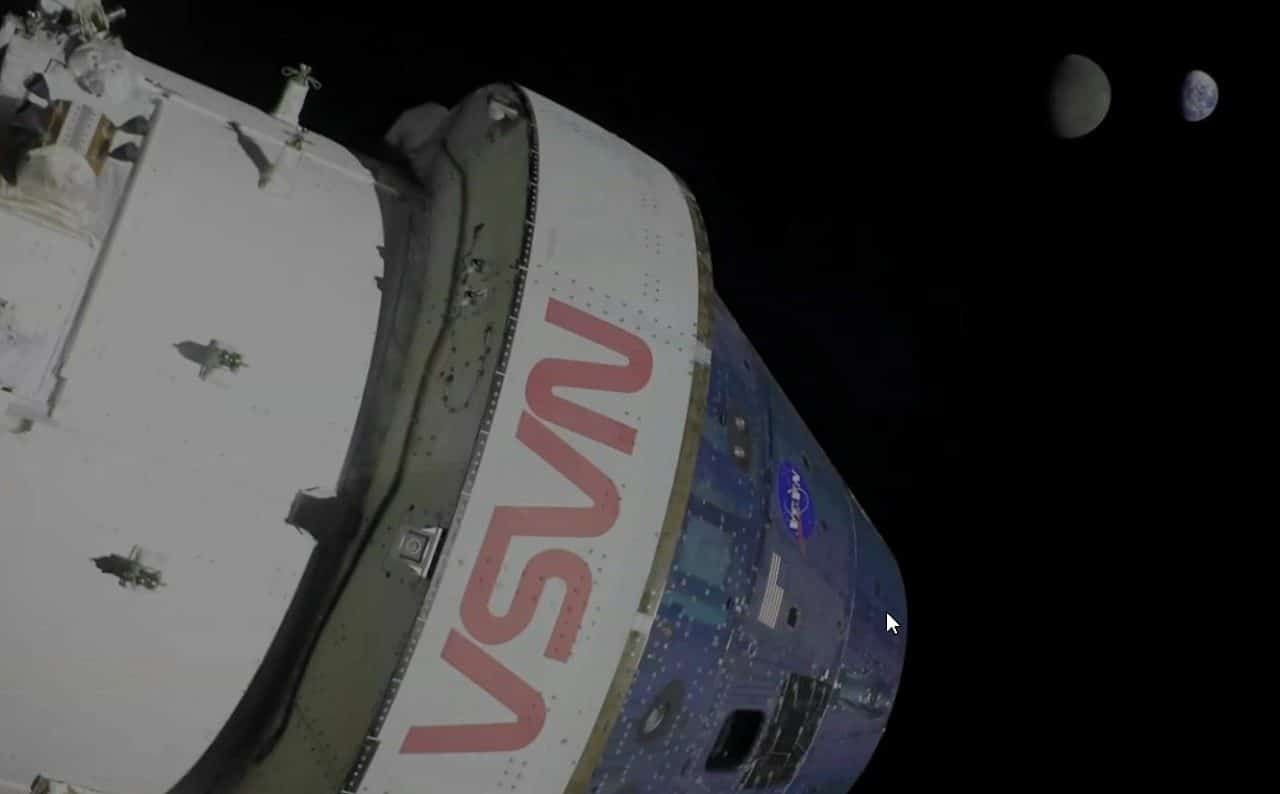
Spacecraft Orion from mission Artemis II re-entered the Earth’s atmosphere on the night of April 10, 2026. The capsule traveled at a speed about 30 times the speed of sound. The process generated a fireball around the structure due to intense friction with the air. The crew of four astronauts completed their return after a nearly ten-day journey that took them beyond the distance ever traveled by humans on manned flights. The landing occurred at Oceano Pacífico, off the coast of San Diego, at Califórnia. NASA rescue teams Equipes and Marinha of Estados Unidos worked to recover the capsule and crew.
Reentry began around 8:07 p.m. ET. The capsule reduced its speed in a controlled manner until it reached around 27 kilometers per hour at the moment of contact with the water. Durante the process, there was a period of six minutes without communication, known as a blackout, caused by the formation of a plasma envelope around the Orion. Esse phenomenon is expected in high-speed reentries and did not indicate failures. NASA had adjusted the descent trajectory based on data from the previous unmanned mission to reduce stress on the heat shield.
Critical phase of reentry
Orion entered the atmosphere at an altitude of approximately 120 kilometers. The initial speed exceeded 40 thousand kilometers per hour. The friction generated temperatures of thousands of degrees on the surface of the capsule. The heat shield, made from ablative materials, absorbed and dissipated heat to protect the internal structure and crew. In mission Artemis I, without a crew, the shield showed greater erosion than expected in some points. Para to Artemis II, engineers modified the reentry angle to minimize initial heating.
Astronauts on board included Commander Reid Wiseman, Pilot Victor Glover, Mission Specialist Christina Koch, all from NASA, and Mission Specialist Jeremy Hansen, from Agência Espacial Canadense. Eles underwent medical evaluations following the rescue. The capsule floated in the ocean until teams arrived at the scene. Imagens showed the moment the hatch was opened and the crew were greeted with celebrations. The recovery process involved helicopters and the ship USS John P. Murtha.
- The reentry speed generated a supersonic shock wave.
- The heat shield withstood the heat spike without significant material loss.
- The plasma period disrupted radio signals for six minutes.
- The adjusted trajectory avoided excessive overload on the shield.
- Rescue teams confirmed the crew’s health status shortly after the landing.
Heat Shield Concerns
Orion’s heat shield represents one of the main barriers against the extreme heat of reentry. Durante to Artemis I, fragments broke off in specific areas, which raised questions for the manned version. NASA carried out additional tests and opted for a descent with a smaller atmospheric jump. Isso Reduced initial exposure to maximum heat. Especialistas, including astrophysicist Avi Loeb, highlighted that the physics of the process involves the creation of ionized gas around the capsule, which temporarily blocks communications.
Loeb participated in an interview on Newsmax before the event. Ele explained that the fireball results from air being compressed at hypersonic speeds. Átomos lose electrons and form plasma. The shield must withstand these conditions without compromising the integrity of the capsule. Gabriel Sherman, former NASA chief of staff, reinforced that the agency only continued with the mission after detailed analyzes and adjustments. Confidence came from simulations and data collected in flight.
The communications blackout lasted as long as expected. Assim that ended, the teams on the ground reestablished contact. Paraquedas opened as planned to slow the capsule in the final minutes. The landing in the water occurred in a controlled manner, with no reports of serious anomalies. The crew remained inside Orion until complete rescue.
Data collected during the mission
The astronauts brought back high-resolution images of Lua and observations of micrometeorite impacts. Lua serves as a natural record of collisions over billions of years, with no atmosphere to disintegrate objects. The mission made it possible to capture flashes of six micrometeorites during observation. Esses Data helps better understand the lunar environment for future missions.
The Artemis II tested life support, propulsion and communications systems at depth. The crew performed activities that paved the way for Artemis III and subsequent flights landing on the lunar surface. Engenheiros now analyze the complete performance of the capsule, including the behavior of the heat shield under real manned flight conditions. Results inform improvements in materials and designs.
The maximum distance reached by the crew surpassed previous records for human flights. The journey lasted around ten days, passing through the far side of Lua. Imagens shared by the crew showed views of Terra and the lunar surface. The mission marked the first manned flight of the Artemis program, which aims to sustainably return to Lua.
Recovery and next steps
After landing, the capsule was stabilized in the ocean. Tripulantes underwent initial medical examinations on board the recovery ship. Eles returned to Centro Espacial Johnson, on Texas, the following day for more complete evaluations. NASA plans a press conference and detailed analysis of the data.
The successful reentry validates the Orion system for more complex missions. Futuras Improvements could include improved heat shields aided by artificial intelligence for material modeling. The plasma phase remains an unavoidable physical challenge in high-speed reentries.
The Artemis II has demonstrated the ability to safely bring humans back from lunar distances. The program moves forward with a focus on preparing for manned lunar exploration in the coming years.





