Australian stage of the surfing world championship begins with giant waves and strong action against sharks

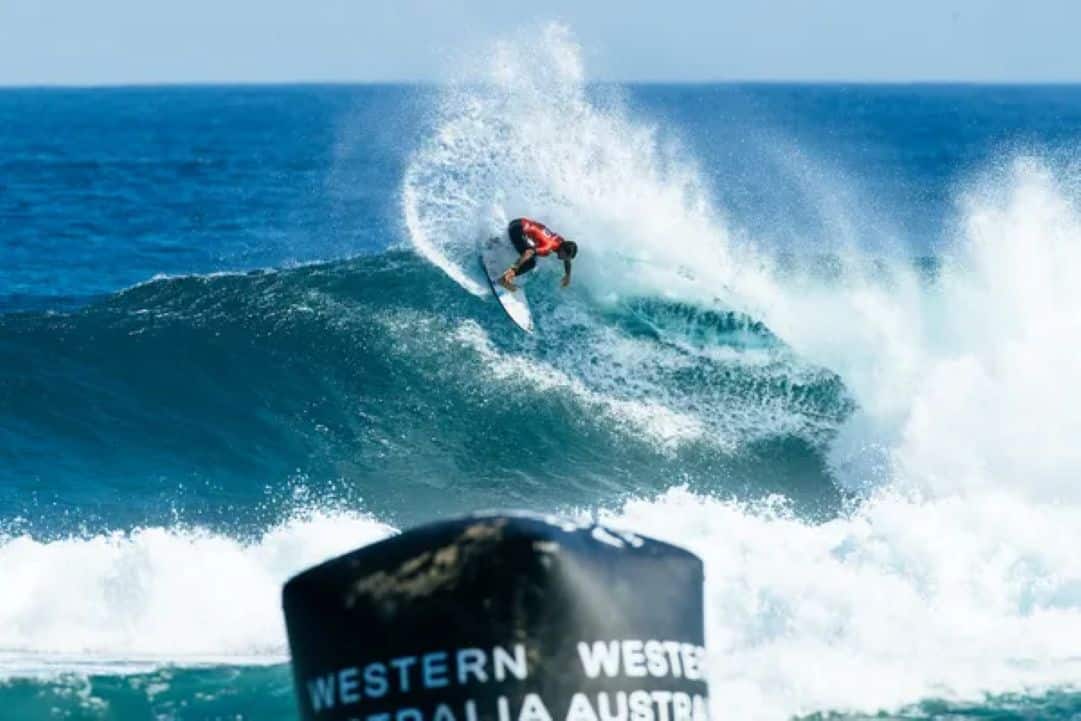
The organization of the world surfing circuit makes the first call for the stage Margaret River, on Austrália, at 8pm this Wednesday at Brasília. The event marks one of the most intense moments in the sporting calendar due to the extreme weather forecasts for the southwest coast of the country. Meteorologists indicate the arrival of strong waves that should generate walls of water more than three meters high on the opening day.
The scenario imposes a considerable physical challenge on competitors, who must deal with the brute force of the ocean crashing over shallow rock banks. The region also requires a strict safety protocol because of the constant presence of sharks in the local ecosystem. The stage brings together the sport’s elite, including ten representatives from Brasil who seek to maintain national hegemony at the top of the classification table.
Brasil has already been at the top five times in the CT stage in Margaret River! 🏆
🐬 Acompanhe live @westernaustralia#MargaretRiverPro, from 15/04 to 25/04 in the time zone Brasil, via our channel at Youtube, athttps://t.co/hRoBt09QSYor in@sportv 3#wslbrasil pic.twitter.com/pnuzBs5QP4
— WSL Brasil 🇧🇷 (@WSLBrasil)April 15, 2026
Impact of the force of nature on competition
The isolated geography of Margaret River creates a clear contrast with the urban stages that make up the rest of the professional circuit. The small town is home to around seven thousand inhabitants and attracts global attention both for its wine production and its extreme maritime conditions. The onshore wind predicted for the first hours of the day acts directly on the formation of waves, carving heavy tubes that require accurate technical reading. Surfers need to adapt their traditional equipment, choosing boards with greater volume and resistance to withstand the impact of falls. The strength of the water in this specific area of Austrália Ocidental surpasses the vast majority of peaks visited by the league during the year. The athletes’ physical fitness goes through severe tests, as the constant current makes it difficult to return to the ideal point where the waves begin to break. A positioning error results in severe punishment from nature itself, dragging competitors into dangerous impact zones. The series selection strategy becomes vital for survival in the knockout heats.
The race management monitors the progress of the low atmospheric pressure system that generates this massive swell. The main objective is to place athletes in the water during the height of the waves, ensuring the technical level required by the league. The visual spectacle draws thousands of viewers to the live broadcast, while tension builds behind the scenes among the technical teams.
Safety protocols and aerial monitoring
Coexistence with wild marine fauna represents a central logistical concern for the organizers of the Australian event. The competition’s history records temporary suspensions and even beach transfers after visual confirmation of large predators close to the competition area. The region’s preserved ecosystem attracts several species of sharks, forcing the implementation of a continuous surveillance system. Rescue teams use drones with high-resolution cameras to scan the perimeter before and during heats. Botes motorized vehicles remain strategically positioned around the main peak to ensure an immediate response in the event of an emergency.
The competitors themselves adopt individual protective measures during the free training sessions prior to the championship. The use of electronic devices attached to boards, designed to emit magnetic fields that repel animals, has become a common practice among professionals. Durante official disputes, however, the responsibility for physical integrity lies entirely with the scheme set up by the organization. The focus on sports performance needs to overcome the natural alert instinct that the environment imposes on anyone entering the sea in that region. Mental balance divides competitors who can perform risky maneuvers from those who adopt more conservative stances.
National hegemony and pressure on opponents
The Brazilian squad arrives at Austrália, maintaining a statistical leadership position that bothers local and North American athletes. The current configuration of the men’s world ranking shows four surfers from Brasil among the top five of the season. Essa technical dominance makes the country’s representatives the main targets to be beaten in the waters of Margaret River. The consistency presented by the group in voluminous and heavy sea conditions consolidates the team’s reputation on the international stage. Nomes Established players arrive motivated by impressive results in the previous stages and seek to increase their advantage in the race for the world title. The quick adaptation to Australian rock benches demonstrates the evolution of national surfing, which historically faced difficulties in this specific type of wave. The pressure now falls on the home team, who need to use local knowledge to try to stop the visitors’ advance. The clash of styles between Brazilian aggressiveness and the classic Australian line defines the main narrative of this phase of the circuit.
The athletes’ history of statements confirms their mutual respect for the extreme conditions of the place. Overcoming the natural fear of surfing in a hostile environment separates the contenders for the title from the other competitors. Absolute concentration on executing the maneuvers partially cancels out external distractions during the thirty minutes of each heat.
Initial clashes and location alternatives
The heat table for the first phase presents duels that require well-defined strategies from the sound of the initial horn. The confrontation between the Brazilian Miguel Pupo and the Australian Morgan Cibilic attracts the attention of sports analysts due to the difference in approaches to reading the waves. The patience to wait for the correct series sets success at Main Break, the main peak of the event. Intermediate waves often offer smoother walls conducive to edge maneuvers, while larger ones tend to close quickly. Each country’s technical committee works intensely to observe sea currents to guide the ideal positioning.
The championship structure provides for specific performance scenarios based on climate variation and the safety of those involved. The core data that guides the operation includes:
- Minimum estimated size of three meters facing the start of disputes.
- Ten athletes representing Brasil, divided between the male and female categories.
- Official call scheduled for early evening in the Brasília time zone.
- 24/7 aerial monitoring to detect dangerous marine life.
- Possibility of transferring batteries to the shallow bench of The Box.
The women’s category faces the challenge of overcoming the widespread dominance of Australian surfers, who grew up training in these specific conditions. The eliminatory format does not allow for errors in assessment, severely punishing falls in critical sections of the wave. If the forecast for a decrease in the sea level is confirmed in the following days, the event management has contingency plans activated. The change to alternative peaks guarantees the continuity of the competition without compromising the quality of the show required by sponsors and the public. The daily decision on the exact location of the batteries always takes place in the early hours of the morning at Austrália.
Broadcast and expectations for the season
The image capture and signal distribution infrastructure begins operating simultaneously with the judges’ morning assessment. Sports fans follow weather analyzes and preliminary interviews in real time before the athletes enter the water. Confirmation of the graphic predictions will transform this edition into one of the most challenging starts to the championship in the recent history of the professional league. The projected water volume favors competitors who have a solid base and a surfing style focused on large amplitude curves. The aggressiveness required to attack the edge of gigantic waves characterizes the current generation of surfers who lead the rankings. The result of this stage directly influences the classification for the circuit finals, increasing the weight of each successfully completed maneuver. The combination of environmental risks, extreme physical demands and pressure for results creates the perfect environment for high-performance sport. The season reaches its technical maturation point in the icy and dangerous waters of southwestern Australia.