

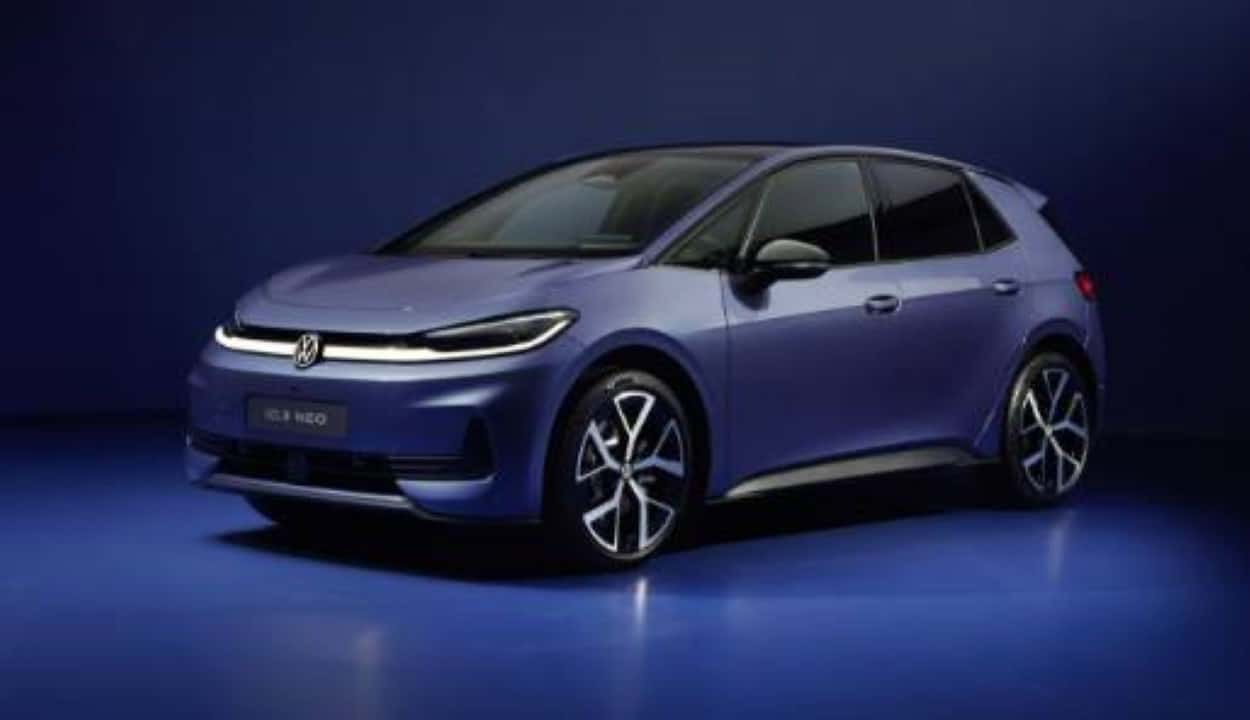
The German automaker officially revealed the latest update to its line of compact electric vehicles during a special event at Wolfsburg. The newly named model hits the European market with promises of greater energy efficiency and a completely revamped visual package. The manufacturer is betting on structural and software changes to win back demanding consumers in the zero-emission segment.
Advance sales of the hatchback begin in the second half of April 2026 in several Europa countries. The brand’s strategy involves offering three different battery and engine options, seeking to cover everything from daily urban use to longer road trips. The vehicle incorporates direct adjustments based on feedback from owners of previous generations, especially with regard to the interior finish and the usability of daily controls. The clear objective is to consolidate the company’s position in the global transition to sustainable mobility.
Renewed visual identity and exterior aesthetics
The manufacturer’s design department applied the so-called pure and positive aesthetic language to redefine the car’s external lines. The front end now features a continuous strip of light that crosses the grille and culminates in an illuminated central logo, providing an unmistakable nighttime signature on the streets. Elementos like the roof, rear spoiler and trunk lid abandoned the contrasting finish and started to sport the same color as the rest of the body. Essa color change creates an optical illusion that makes the car appear significantly longer and sitting on the asphalt. The designers sought to rescue the essence of the classic compacts that built the brand’s reputation over decades. The front update includes redesigned headlights that integrate more fluidly into the flared fenders. The body as a whole conveys a feeling of greater structural solidity, without losing the visual lightness necessary for a battery-powered model. The balance between futuristic appeal and timeless sobriety was the main guide during the development of this profound restyling.
Cabin redesign and return of physical controls
The internal environment underwent a complete transformation to increase the occupants’ perception of quality. Engineers replaced hard plastics with soft-touch materials and more refined textures in high-touch areas. The dashboard adopts clean horizontal lines that expand the feeling of space and organize the instruments in a logical way. The multifunctional steering wheel features an unprecedented design with flat top and bottom parts, making it easier to see the displays and input for the driver. The button groupings have been reorganized to ensure intuitive operation even when the vehicle is moving on the road.
One of the most celebrated changes is the return of physical controls for essential day-to-day functions. The decision responds to a long-standing demand from consumers who criticized the excessive dependence on touch screens for simple adjustments. The main multimedia system now operates on a 12.9-inch central display, while driving data is on a 10.25-inch digital screen behind the steering wheel. The graphical interface received faster processors to ensure fluid transitions between menus and immediate responses to user commands.
Advances in software and driving assistants
The hatch’s electronic architecture has been updated to support new driver assistance features and advanced connectivity. The semi-autonomous driving system now incorporates intelligent traffic light recognition, adjusting the car’s speed predictively on urban roads. One-pedal driving technology has been improved to allow the vehicle to come to a complete stop without the need to apply conventional mechanical brakes. Essa function maximizes kinetic energy regeneration during decelerations by sending extra charge directly to the lithium-ion cells. The standard safety package includes lane keeping, autonomous emergency braking with obstacle detection and trajectory correction in sharp curves.
The multimedia center has a native application store that allows you to download audio and video streaming services and even games for recharging at public stations. Owners can activate additional features on demand directly from the dashboard interface, personalizing the user experience. Equipamentos high-standard options include an information projector on the windshield with augmented reality, a large panoramic sunroof and a premium sound system signed by renowned brands.
Electrical performance and battery specifications
The mechanical set offers a wide range of options for different usage profiles and family budgets. The electric motor positioned on the rear axle delivers greater instantaneous torque and consumes less energy compared to the previous generation of the model. European buyers will be able to choose between three levels of power calibration, ensuring agility in urban traffic and breathability when overtaking on the highway. The thermal architecture of the batteries has been optimized to maintain energy delivery efficiency even in harsh winter climates. The fast charging system supports high powers, drastically reducing waiting times at public charging stations along highways.
The top-of-the-line configuration impresses with its ability to travel long distances without the need for frequent stops for electrical supplies. European homologation tests confirm impressive figures for maximum range under ideal driving conditions, eliminating the range anxiety that still keeps many buyers away. Bidirectional charging technology turns the car into a huge mobile battery capable of powering high-demand outdoor equipment.
- Batteries available with net capacity of 50 kWh, 58 kWh and 79 kWh.
- Engine power divided into variants of 170 hp, 190 hp and 231 hp.
- Maximum range estimated at up to 630 kilometers in the most efficient version.
- Support for ultra-fast charging of up to 183 kW on the highest capacity model.
- External power supply system with a limit of 3.6 kW for appliances.
Commercial strategy and market perspectives
The global presentation of the model reinforces the manufacturer’s commitment to the popularization of electric mobility on the European continent throughout this decade. The initial reserves include strategic markets where the charging infrastructure is already at an advanced stage of public and private consolidation. The company structured the catalog into three main finishing versions, called Trend, Life and Style, to simplify the selection process at dealerships. Embora official values have not yet been released for all regions, the expectation is for a competitive positioning against Asian rivals that are rapidly gaining ground in Europa. The product’s global expansion schedule remains confidential, and there are no confirmations about the possible import of the hatch to the Brazilian market in the short term. The automaker focuses its initial efforts on meeting domestic demand and meeting the strict emissions targets established by environmental legislation. The commercial success of this launch is considered essential to dilute the development costs of the group’s dedicated electric platform. The brand is betting that the combination of mature design, reliable technology and greater autonomy will be enough to convince traditional consumers to definitively migrate to alternative propulsion.