

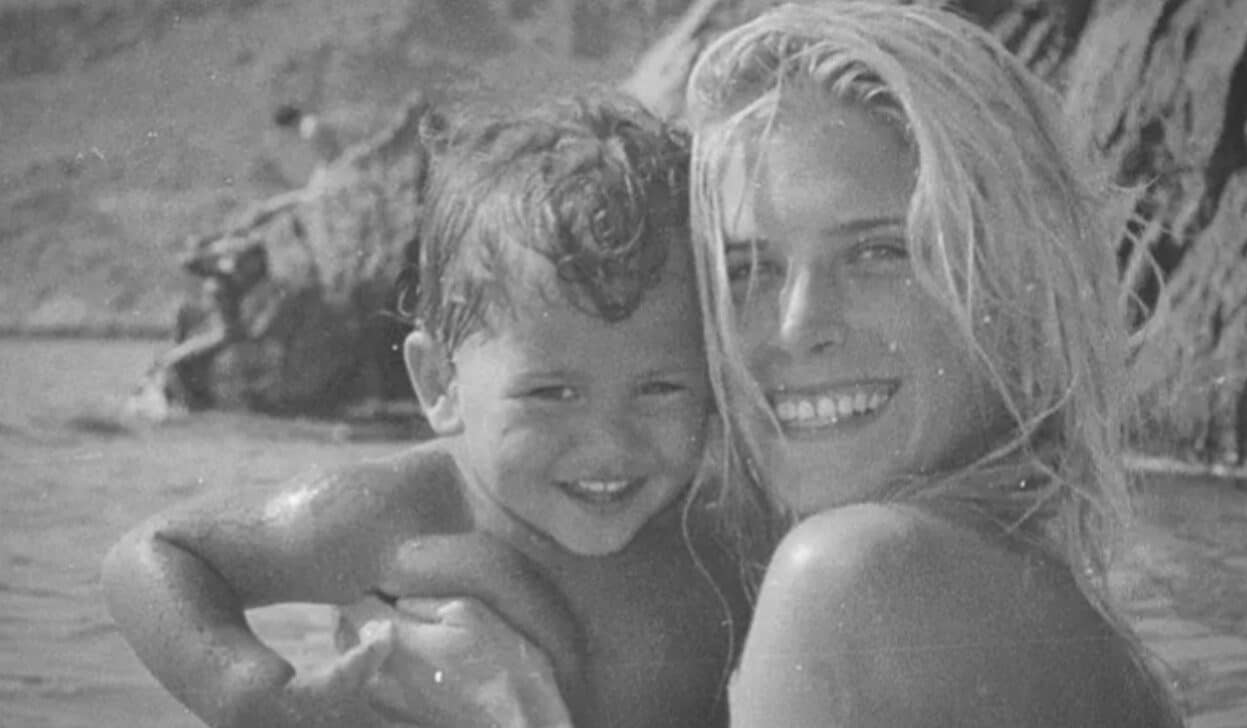
A morning walk through a wooded park turned into one of the darkest episodes in European police chronicle. In mid-1992, a young mother brutally lost her life in broad daylight. The crime left a two-year-old boy as the only eyewitness to an attack that would challenge authorities for more than a decade.
Agora, decades after Rachel Nickell’s murder in Wimbledon Common, in Londres, his partner, André Hanscombe, and the couple’s son, Alex, decided to speak publicly about the tragedy. The family’s demonstration comes at a time when the Netflix platform launches a dramatic series and a documentary about the case. The productions reveal the details of the troubled investigation and expose the deep emotional scars left on survivors over the years.
The attack on Wimbledon Common and the escape from media pressure
The crime occurred on July 15, 1992, when Rachel Nickell, then 23 years old, was walking with his young son and the family dog. The young woman, who worked as a part-time model, was surprised in a public area often visited by families and sports enthusiasts. The attacker delivered 49 knife blows to the victim. Alex, who was about to turn three years old, witnessed all the violent action just a few centimeters away.
The boy suffered minor injuries during the attack and ended up being dragged around the scene. In recent interviews, Alex revealed that he still has vivid memories of that day. Ele remembers the exact moment he realized that his mother would no longer react to his calls. The brutality of the act and the presence of the child generated an immediate national outcry in Reino Unido. The British press set up a siege around the family, seeking any details about the victims’ private lives and the developments of the police hunt.
Diante from the constant harassment from the newspapers and the recent trauma, André Hanscombe made a drastic decision to protect his son. Poucos months after the burial, the father chose to leave British territory. The family initially moved to França and, some time later, established permanent residence in Espanha. The main objective was to ensure that Alex could grow in a safe, anonymous environment and away from the sensationalist headlines that dominated the tabloids at the time.
Falhas in the investigation and the late conviction of Robert Napper
The pressure to find the person responsible for the murder led Polícia Metropolitana of Londres to make serious mistakes during the initial phase of the investigation. The urgency to present results to society resulted in one of the most controversial operations in the country’s criminal history. Investigators even focused their suspicions on an innocent man, who was the target of questionable psychological tactics and ended up formally accused, only to be later cleared due to a lack of concrete evidence.
The killer’s true identity remained hidden for sixteen years. Apenas in 2008, with the development of new technologies for analyzing genetic material, authorities were able to cross-reference crime scene data with the national database. The DNA pointed directly to Robert Napper. The criminal was already serving a sentence in a maximum security institution for other murders and crimes of sexual violence committed at the same time.
- The British police faced intense public pressure to solve the crime in record time.
- An innocent man was prosecuted before the true culprit was discovered.
- The definitive resolution required scientific advances in the field of forensic biology.
- The killer was already in prison for other crimes when he was finally identified.
Robert Napper’s conviction brought formal legal closure to the case. The outcome in the courts confirmed that the attacker was a serial killer with a long history of disturbances and violence. Confirmation of authorship alleviated some of the family’s anguish, but the police’s initial failures continued to be the subject of academic debates and protocol reviews within the security forces.
Participação direct in the new production of Netflix
Renewed interest in the case arose with the announcement of new Netflix productions. Diferente from other media approaches in the past, André and Alex decided to take an active role in developing the scripts. Ambos served as official consultants for both the drama series and documentary. The purpose of direct collaboration was to guarantee the historical accuracy of the facts and avoid romanticizing the tragedy.
The producers based much of the narrative on first-hand accounts provided by father and son. André Hanscombe had already documented his journey of grief and survival in an autobiographical book published years earlier. Alex also shared his unique perspective on the events, detailing how trauma shaped his childhood and adolescence. The duo demanded that Rachel Nickell’s memory be treated with respect, focusing on the person she was, and not just the tragic way she died.
Immersion in the audiovisual project forced the family to revisit difficult conversations about forgiveness and overcoming. Alex explained that the consultation process worked as an additional tool to process the accumulated pain. The father highlighted the importance of keeping his partner’s positive memories alive, conveying to the public the image of a dedicated mother full of plans for the future.
The healing process and current life at Espanha
Atualmente, André Hanscombe is 63 years old and Alex turned 36 years old. Life at Espanha allowed them both to build a peaceful routine, far from the stigma that accompanied them at Reino Unido. Contact with the press and the general public remains highly selective. Eles choose to speak out only when the topic involves specific projects that they consider relevant to the victim’s memory or to the debate on mental health.
Especialistas in criminal psychology often cite the case as an extreme example of the impacts of violence on child witnesses. Exposure to an event of such brutality at such an early age requires continuous monitoring. Apesar from the pessimistic predictions of some professionals at the time, Alex demonstrated a remarkable resilience. Today’s adults can articulate their feelings clearly and use their experience to demystify the weight of prolonged trauma.
One of the most symbolic moments of this healing journey occurred when father and son decided to return to Wimbledon Common. The visit to the exact location of the crime, carried out decades after the murder, represented a milestone in the acceptance process. Eles described the experience not as an act of reliving the terror, but as a way to reclaim space and honor Rachel’s life in the place where she took her last steps. The case continues to be studied in police academies as a watershed in the investigation of complex crimes.