
Programadores apply advanced reverse engineering methods to run the catalog of the seventh generation of consoles directly on the computer operating system. The innovative process completely eliminates the use of traditional emulation software. Technical conversion translates the original binary files into a native language understood by current graphics cards and processors. Essa’s straightforward approach eliminates intermediate layers of processing that have historically caused slowdowns.
The movement gains unprecedented strength in the technology market in 2026. Estúdios commercial and independent communities seek to overcome the physical barriers imposed by the aging of old hardware. The practice guarantees the technical stability of interactive works and ensures the historical preservation of thousands of digital media. The executable format restores useful life to projects that were limited to physical disks.
The historical obstacle of the Cell processor
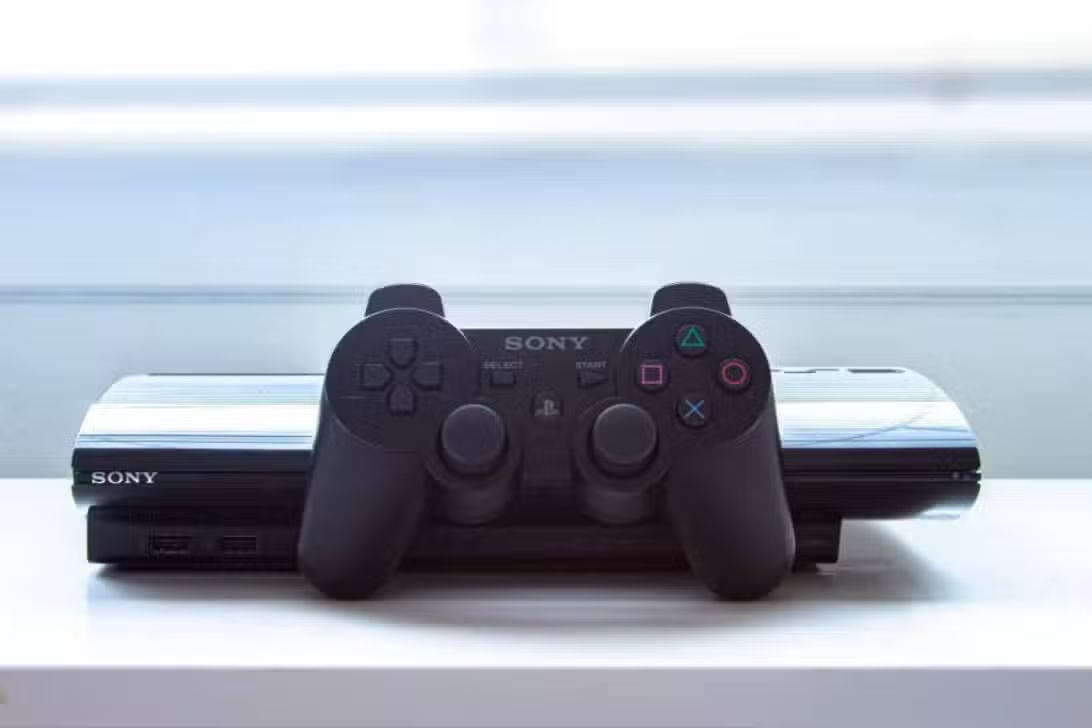
The equipment manufactured by Sony hit stores in 2006 with a highly asymmetric and complex processing structure. The video game operated with a central core coordinating eight unique synergistic units for parallel tasks. Software creators at that time needed to program rigorous manual routines to extract maximum performance from the device. Essa’s deep dependence on the original silicon has always made it difficult to adapt the collection to machines with different architectures. Conventional emulation tries to imitate this asymmetry in real time during gameplay. The old method requires an immense amount of raw processing even on high-cost computers. Static recompilation changes this dynamic by mapping instructions from disk and redirecting tasks to the multiple cores of modern chips. Engineers extract game logic and generate readable code in computer industry standard languages. The system translates particle physics and audio decoding in a parallel and optimized way. Automated Compiladores takes over the heavy lifting of creating a standalone executable file. Esse new software communicates without intermediaries with the user’s RAM memory and graphics chip. Testes exhaustive fixes sync failures during raw data conversion.
Ganhos fluidity and texture integration
Native execution drastically reduces the hardware requirements needed to run classic titles flawlessly. Máquinas intermediaries equipped with 16 gigabytes of RAM memory process adventures with much greater stability than the original video game. Users access 4K resolutions and 120 frames per second refresh rates without having to install external modifications. Visual enhancement occurs organically during the compilation of binary files. High definition textures integrate into the code base immediately after extraction. The field of view of virtual cameras is automatically enlarged to fill ultrawide monitors.
Programming teams apply additional visual improvements shortly after the structural conversion is complete. Shaders support selective ray tracing on graphics cards that support lighting technology. Positional audio receives precise adjustments to work clearly in modern headphones. Anisotropic filtering eliminates the blurry appearance of distant scenes. The end result delivers unthinkable graphic fidelity by the standards of the decade before last.
Redução of costs attracts large companies in the sector
The corporate market sees recompilation as a highly profitable way to rescue dormant franchises. Large Produtoras use the technique in the preparation of official commercial collections. The production cost drops by half compared to a traditional remaster made from scratch. Reduced Equipes can adapt entire catalogs with very limited budgets. The strategy reaches an audience of over one billion active players on computers.
The technical independence between the generated code and the console manufacturer’s intellectual property resolves long-standing legal impasses. Studios re-release their libraries on digital stores without facing the legal risks associated with third-party emulators. Requiring legitimate copying during conversion inhibits illegal distribution of protected files. The method ensures that profits return to the original copyright holders. The practice establishes a safe and sustainable business model for long-term commercial preservation. Companies monetize the past while financing the development of future projects.
Collaborative Esforço accelerates collection transition
Programming independents Comunidades build open source tools alongside major corporate initiatives. Repositórios public hosts projects focused exclusively on mapping Japanese video game architecture. The RPCS3 emulator serves as a robust testing platform to validate the accuracy of new internal recompilers. Frequent updates to these systems increase the overall stability of the development ecosystem. Profissionais freelancers prioritize the urgent rescue of rare works that have disappeared from shelves and digital stores. Global collaboration accelerates the creation of definitive compatibility bridges between disparate systems.
Direct conversion delivers immediate practical benefits for the end consumer looking to revive the classics. The native format radically transforms the way audiences interact with digital entertainment.
- Acesso continues gaming without relying on obsolete or worn-out electronic equipment.
- Fast Integração of executables with modern cloud computing platforms.
- Expansão from the catalog for high-end smart televisions and mobile devices.
- Queda expressive power consumption during intense graphics processing.
- Carregamento snapshot of scenarios through the use of solid state storage drives.
Barreiras security and manual fault debugging
Data extraction runs into severe obstacles when proprietary code remains completely closed. Falhas in memory synchronization requires detailed manual corrections right after the automated step of the compilers. Jogos protected by aggressive anti-piracy systems offer extreme resistance to initial reverse engineering processes. Programmers perform deep analysis of static memory to bypass security locks built into disks. Longas iterative debugging sessions resolve remaining frame rate performance bottlenecks.
The tools currently available can automate most of the adaptation workflow. Conversion definitively eliminates the risk of historical loss caused by the inevitable physical degradation of the original optical discs. The vast collection of more than three thousand titles gains a real perspective of permanent accessibility. The technical method consolidates a vital bridge between the interactive media past and the hardware of the present.