Iran x US war: Pakistani mediators arrive in Tehran to strengthen ceasefire

Mediadores High-ranking Pakistanis arrived at Teerã in recent days for a series of intense trades. The main objective is the strengthening of a crucial ceasefire between Estados Unidos and Irã, before its imminent expiration next week. Diplomacy operates in a highly complex scenario.
Apesar of the continuous exchange of messages through Paquistão, a spokesperson for Ministério of the Iranian Relações Exteriores indicated that the two nations have not yet reached a consensus for a new formal round of dialogues. Conforme reports from American officials, the Trump government negotiating team, which includes Vice President JD Vance, Steve Witkoff and Jared Kushner, held an exchange of preliminary proposals with Iranian representatives and mediators until last Tuesday, with one of the officials stating that the parties were “getting closer to an agreement.”
Mediação diplomat seeks extension of ceasefire
Paquistão’s initiative in Teerã highlights the urgency of avoiding an escalation of tensions in Oriente Médio. The current ceasefire represents a fragile balance that both nations seek to preserve, albeit with different expectations and methods. The permanence of the communication channel, even if indirect, is seen as a sign that diplomacy still has room for action.
Funcionários Americans, directly involved in the talks, describe a process of exchanging proposals that, despite the obstacles, suggests gradual progress. The composition of the US negotiating team, with prominent government figures, highlights the strategic importance that Washington attaches to these discussions. The expectation for a positive outcome, however, is tempered by caution due to the geopolitical sensitivity of the region.
Casa Branca’s press secretary, Karoline Leavitt, issued a statement denying reports circulating about an alleged formal request by Estados Unidos for a two-week extension of the ceasefire. Essa denial adds a layer of complexity to the available information, suggesting that the public narrative does not always reflect the entirety of ongoing diplomatic moves. The situation requires a careful analysis of official communications.
Irã, in turn, maintains a stance of openness to dialogue, but without showing signs of unilateral concessions. The exchange of messages mediated by Paquistão is a method already used in previous crises, which allows the maintenance of a channel without the need for direct meetings that could be seen as a loss of prestige for one side. The complexity of the scenario requires behind-the-scenes diplomacy.
The dynamics of negotiations are influenced not only by the direct agendas between Irã and the USA, but also by a series of regional and global factors, including the situation in Líbano and the internal politics of both countries. The quest for an extension of the ceasefire is a significant test of the conflict resolution capacity in one of the world’s most volatile regions, directly impacting global stability.

Pentágono reinforces military presence in Oriente Médio
In a move that contrasts with diplomatic efforts, Pentágono announced the deployment of thousands of additional troops to Oriente Médio in the coming days. Essa decision was communicated by American authorities, who also warned of the possibility of new attacks or ground operations by the Trump government. The condition for these actions would be the non-compliance or failure to maintain the current ceasefire, indicating a strategy of “armed peace”.
The mobilized forces include approximately 6,000 troops aboard the aircraft carrier USS George H.W. Bush, accompanied by its escort ships. Além In addition, another 4,200 members of Grupo Anfíbio and Prontidão Boxer are also being deployed to the region, considerably expanding US military capacity. Essa’s move is a clear sign of the seriousness with which Washington views the situation and his readiness for a military response.
The move serves as a stark reminder of the persistent military tension in Oriente Médio, despite efforts to extend the ceasefire. The deployment of additional troops could be interpreted both as a safeguard in case negotiations fail and as a show of force, seeking to pressure Irã into accepting the terms of a new agreement. The overt presence of military personnel is a key element.
Funcionários from the American government emphasized that the option for new military operations is not ruled out. Esse scenario is particularly worrying for regional stability, as any miscalculation could precipitate a major conflict with significant global implications. Caution, therefore, is the watchword.
The arrival of these new forces at Oriente Médio is expected to be completed in the coming days, changing the balance of power and deterrence dynamics in the region. Large-scale mobilization reflects a risk assessment that considers the real possibility of a deterioration of the security environment, requiring a robust presence capable of responding to various contingencies. The strategic complexity is enormous.
Estreito of Ormuz in focus: blockade and Iranian threats
The block imposed by Estados Unidos on Estreito of Ormuz seemed to be having an effect. American Autoridades and vessel tracking companies reported that no ships with known links to Irã were able to leave the region on Tuesday. Este data reinforces the American ability to control one of the most important maritime crossing points in the world.
US Comando Central confirmed that a total of ten ships complied with orders to return to an Iranian port or coastal area. Kpler, a maritime data analysis company, corroborated this information based on its own satellites, indicating that two specifically identified ships with ties to Irã and subject to US sanctions apparently made the return maneuver. Além In addition, eight other ships, known to historically carry Iranian cargo, were observed stopped at Golfo of Omã or sailing at reduced speed, highlighting the impact of the measure.
Contrariando this information, the Iranian news agency Fars reported that an Iranian supertanker had crossed the strait towards the port Imam Khomeini, in Irã, despite the blockade in force. Essa divergence of reports points to an information war, where each side tries to control the narrative about the effectiveness of actions. The truth of the facts, in this scenario, is disputed by official statements.
In a warning tone, Iranian Major General Ali Abdollahi stated that if the American blockade on Estreito of Ormuz persists, “the powerful armed forces of Irã will not allow any exports or imports to proceed on Golfo Pérsico, Mar of Omã and Mar Vermelho.” Esta’s statement suggests a potential escalation, where Irã could attempt to retaliate with its own browsing restrictions. Contudo, the true extent of Iran’s ability to control shipping in such a vast area vital to global trade still remains unknown.
The rhetoric surrounding Ormuz’s Estreito was intensified by statements from president Trump, who, on his social media, stated that “China is very happy that I am permanently opening Ormuz’s Estreito.” Ele added that he was doing this “for them too — for the world,” and that China “agreed not to send weapons to Irã.” Trump predicted a “big hug” from President Xi in a few weeks, mentioning that they were “working together smartly.” China’s Embaixada at Washington, asked about Trump’s publication, declined to comment directly, other than to say that Pequim maintains an “objective and impartial” stance on the conflict.



Israel and Líbano: debate on truce and attacks on rescuers
Israel’s security cabinet recently met for an in-depth discussion about a possible ceasefire at Líbano, a senior Israeli official revealed. The meeting came at a time of intense diplomatic pressure, with another senior official from Israel’s government indicating that Prime Minister Benjamin Netanyahu is under strong influence from Washington to reach a truce. The situation on Israel’s northern border with Líbano has been a constant source of concern.
Outros officials, who preferred to remain anonymous, informed Financial Times that a truce agreement could be implemented as soon as this week. Essa possibility would be conditional on the completion of operations by Israeli forces in the city of Bint Jbeil, located in the south of Líbano. The capture of this location is seen as a strategic military objective before any ceasefire.
In a serious incident that drew international condemnation, the Israeli army was accused of killing four Lebanese rescuers and wounding six others in three consecutive, targeted attacks. The attacks took place in the village of Mayfadoun, south of Líbano, and reportedly targeted the first group of paramedics as they responded to a call for help from injured civilians. Then, a second group that was trying to help their colleagues was shot, and, finally, a third group that was running to help the first two teams was also targeted.
Lebanese Saúde’s Ministério issued a strong condemnation of the attacks, calling them a “flagrant violation” of international humanitarian law, which guarantees the protection of medical personnel in conflict zones. The international community awaits a clear and transparent response to what happened. The Israeli army, for its part, did not immediately respond to a request for comment on the attacks, limiting itself to stating that it was “investigating” the events.
Impasses U.S. politicians and administration actions Trump
On the American domestic political stage, Republican senators blocked, for the fourth time since the start of the Irã war, a war powers resolution that sought to limit President Trump’s authority to continue military operations in the country. The proposal was rejected by a margin of 52 votes to 47. The vote revealed a deep partisan divide, with most Republicans and Senator John Fetterman (D-PA) voting against, while Democrats and Senator Rand Paul (R-KY) voted in favor.
On another legislative front, 36 Democratic senators voted in favor of a measure to block the sale of 1,000-pound bombs to Israel. Além In addition, 40 Democratic senators supported a measure that aimed to prevent the sale of tractors, used by Israel to demolish entire neighborhoods in Gaza and Líbano. The number of Democrats who voted in favor of these measures was significantly higher than in previous votes on similar bills, indicating growing concern within the party. Republicans, for the most part, were opposed, arguing that such actions would weaken an ally and embolden Irã, highlighting the polarization over support for Israel.
The Trump administration has also found itself embroiled in other controversies. The president threatened to fire the president of Federal Reserve, Jerome Powell, if he did not step down at the end of his term, an action that generated concern in the markets. Trump still refused to order Justiça’s Departamento to suspend an investigation into the $2.5 billion renovation of Fed’s office. Senator Thom Tillis (Carolina Republican from Norte) is blocking the nomination of Kevin Warsh to Fed until the investigation is closed, showing the interconnection of powers and interests.
In a strategic move for defense industries, the Trump administration is asking American manufacturers to increase their participation in military production. Altos Defesa employees have had conversations with executives from large companies, such as General Motors and Ford Motor, about the production of weapons and other military supplies. Pentágono expresses interest in relying on these companies as ordnance stocks are being reduced due to the ongoing wars in Ucrânia and Irã, indicating an urgent need for resupply.
Comissão of Belas Artes has on its agenda the analysis of Trump’s plan to build a 76-meter (250-foot) arch on the other side of Rio Potomac, in front of Lincoln Memorial. The proposal for a giant arch, more than quadrupling the size of the original plans, drew disapproval from early proponents of the project, classical architects, and veterans groups. Eles argue that the structure would diminish the importance of nearby Cemitério and Arlington, compromising the capital’s historic landscape.
Global Crises Spotlight: Ucrânia, Commuting and Immigration
Além of the conflicts in Oriente Médio, the global scenario continues to be marked by other significant crises. Russian Ataques against Kiev and several other Ukrainian cities overnight resulted in the deaths of 16 people, as Ukrainian authorities announced last Tuesday. The continued aggression demonstrates the persistence of the conflict in Eastern Europe and its daily human cost.
A growing humanitarian concern was highlighted by Conselho Dinamarquês to Refugiados (DRC), which reported that more than 4 million people are expected to be displaced worldwide by the end of this year. Charlotte Slente, Secretary-General of the DRC, expressed alarm: “For families fleeing war with nothing but the clothes on their backs, there is little hope: the international safety net that once existed is showing huge gaps as humanitarian assistance dwindles.” The report points out that Sudão, where 13.5 million people are already displaced, will record the biggest increase, with an additional 670,000 people fleeing this year and next, highlighting the severity of the Sudanese crisis.
In the context of American foreign policy, a cable from Departamento of Estado, signed by Secretário of Estado Marco Rubio, instructs US diplomats to pressure other countries to support a UN declaration that prioritizes trade over humanitarian aid. The document guides the use of formal approaches before a planned signing event at the UN. The initiative is presented as advancing “Primeiro America” priorities, emphasizing private sector-led development rather than direct humanitarian assistance. Diplomats are also instructed to argue that traditional foreign assistance has created dependence, while encouraging governments to endorse the US-backed statement.
Paralelamente, the Estados Unidos are involved in military operations in other regions. A military raid on an alleged drug trafficking boat in Caribe resulted in the deaths of three people, marking the third such incident in just three days. Além Furthermore, military planning for a possible operation led by Pentágono in Cuba is being quietly intensified, as revealed by two sources to USA Today. Pentágono declared that it carries out planning for various contingencies and is prepared to execute presidential orders as determined, indicating a posture of readiness.
In US immigration policy, Câmara of Representantes approved a bill that aims to restore the legal status of thousands of Haitian immigrants in the country. A small group of Republicans joined all Democrats in voting in favor of the bill, introduced by Representative Ayanna Pressley (D-MA), who used a procedural maneuver to force a vote on the legislation. Contudo, the expectation is that Senado will not approve the project, which could dash the hopes of affected Haitian immigrants.
Para finalize US internal developments, Republican leaders postponed a debate and a procedural vote on Lei of Vigilância of Inteligência Estrangeira (FISA), in the face of a threat from a bloc of conservatives to derail the bill. FISA is controversial legislation, and its fate demonstrates the internal difficulties in party cohesion.
Veja Tambem em Latest News (EN)

Italian Supreme Court confirms legality of hotel that offered only mineral water to customer

National Geographic Traveler Announces Travel Photography Contest Winners

Ferrari presents Luce, the first electric car, and receives harsh criticism from fans and the market

Yuki Yamada posts photo with beard and grimace on Instagram and surprises fans

Costco sees record demand at U.S. gas stations with lower prices

Passenger tries to enter cockpit and forces diversion of United Airlines flight to Madison
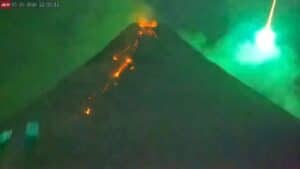
Astronomer explains white light recorded after meteor falls near volcano in Philippines

Comedian Sakamoto-chan reveals type 2 diabetes remission after lifestyle changes

Avi Loeb says discovery of alien intelligence can unite humanity amid global crises

Police investigate death of Hilde Ann Lynn Helphenstein in room at Rosewood São Paulo

Avi Loeb suggests that dark comet 1998 KY26 could be Soviet probe Phobos 1