NBA exempts Doncic, Cunningham from 65-game rule for season awards
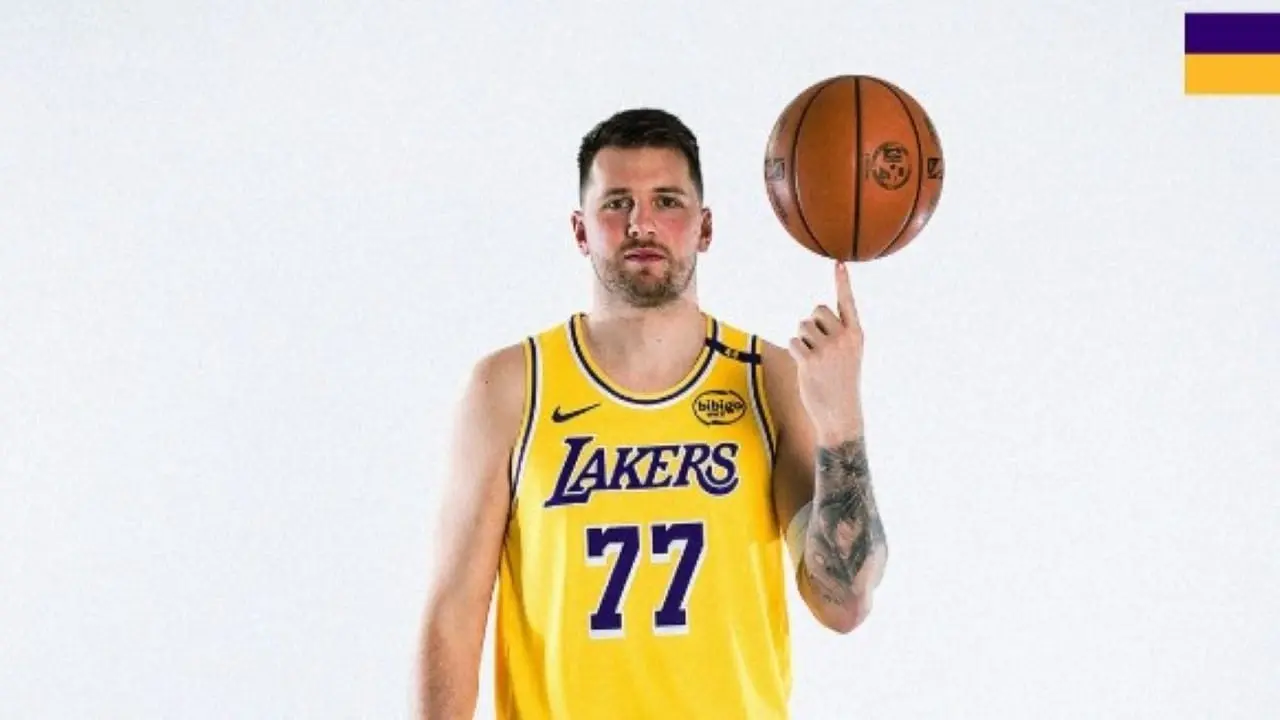
The NBA and Associação Nacional of Jogadores of Basquete (NBPA) announced a significant agreement that will allow point guards Luka Doncic of Los Angeles Lakers and Cade Cunningham of Detroit Pistons to be eligible for end-of-season awards. The decision, taken on Thursday, exempts both athletes from the minimum requirement of 65 games played to compete for individual honors. Este notable move sidesteps one of the most debated clauses of the league’s current collective bargaining agreement.
The exemption was granted based on the “extraordinary circumstances” clause in the contract. Esta allows a player to request an exception to appear on the voting ballot if they do not reach the match limit. The particularities of the cases of Doncic and Cunningham were evaluated by the league and the players’ union, resulting in a consensus that both met the criteria for exceptionality. Deliberation avoids sending cases to an independent arbitrator, speeding up the process.
Exceção to minimum games rule
The 65-game rule, introduced to encourage athlete participation and combat load management, has been a point of controversy throughout the season. Ela states that a player must have played in at least 65 regular phase matches to be eligible for major individual awards, such as MVP, Jogador Defensivo of Ano, and the All-NBA Teams. The league’s main intention was to ensure that stars were on the court more often, benefiting fans and broadcasters.
However, the flexibility for Doncic and Cunningham shows that the league is open to considering situations that are beyond the players’ control, recognizing the legitimacy of their absences. Isso is crucial to the integrity of the competition. The “extraordinary circumstances” clause is a mechanism that aims to provide some room for maneuver in specific and justifiable cases. Este agreement reinforces the importance of a continuous dialogue between the NBA and the NBPA to adapt the rules to the realities of high-performance sports. The validation of this clause for the two athletes creates a relevant precedent, although each case is evaluated individually by the commission.
The cases of Doncic and Cunningham
Luka Doncic, who is part of the Los Angeles Lakers squad, played 64 games in the regular season, falling just one game below the minimum required. Sua’s absence was justified by a trip abroad to attend the birth of his daughter in December, a family event of great importance. In a post on Platform Ele said he was honored for the opportunity to be considered for the awards after a special season with his teammates, demonstrating his commitment to the team.
Cade Cunningham, of Detroit Pistons, participated in 63 matches before being sidelined due to a health complication. Ele missed 12 games in mid-March after suffering a collapsed lung, a medical condition that prevented him from continuing on the court. The unforeseen and serious nature of Cunningham’s injury was a determining factor in his case being classified as an extraordinary circumstance. Ambas the situations demonstrate that the players’ absences were due to events beyond their direct control, and not to strategic “load management” decisions. The league and union considered the totality of the circumstances before reaching a mutual agreement.
Decisão impacts voting and Edwards is denied
The decision on Doncic and Cunningham’s eligibility was crucial to the continuation of the NBA’s end-of-season awards voting process. The uncertainty regarding the final list of eligible players had delayed the sending of ballots to voters for several days. With the agreement, ballots must be distributed on Thursday and the deadline for returns will be on Friday. The award finalists and individual honor winners, including teams All-NBA, All-Defense and All-Rookie, will be announced later during the start of the playoffs, generating great anticipation among fans.
Leia Também

First World Cup knockout stage today: where to watch, time and lineups

Microsoft algorithm cuts Xbox Series X price in half directly at the console store

Apple surprises the market by launching an ultra-thin 5.5 mm smartphone with a liquid glass screen
However, not all exception requests were approved. Anthony Edwards, Minnesota Timberwolves’s point guard, who played in 60 games this season, attempted to challenge the rule through an independent referee. Seu’s case was denied by the referee, and he will not be eligible for end-of-season prizes.
- Luka Doncic (Lakers):64 games, absent due to the birth of his daughter. Considerado eligible.
- Cade Cunningham (Pistons):63 games, absent due to lung collapse. Considerado eligible.
- Anthony Edwards (Timberwolves):60 games, exception request denied. Não is eligible.
Outros Notable players who fell under the 65-game limit and are therefore ineligible include Giannis Antetokounmpo, Stephen Curry, LeBron James, and Devin Booker. The absence of these big names from the eligible list highlights the impact of the new rule and the rigidity of its application in some specific cases.
The NBA’s 65-game rule controversy
The 65-game rule has been one of the hottest topics of discussion in the NBA since its recent implementation. Muitos coaches and players have expressed concerns about its excessive rigidity and the potential to penalize athletes for unavoidable injuries or personal circumstances, as seen in the cases of Doncic and Cunningham. The discussion intensified when stars like Victor Wembanyama and Nikola Jokic flirted with ineligibility in the final weeks of the regular season, although both managed to reach the threshold.
David Adelman, Denver Nuggets’s assistant coach, expressed hope that the rule will be changed next summer. Ele argued that if players of Jokic’s caliber, who rarely want to leave the court, can be prevented from competing for prizes by just one or two games apart, something is fundamentally wrong with the “spirit” of the rule. Sua’s criticism reflects a sentiment shared by a significant portion of the basketball community, who view the rule as overly punitive in certain unforeseen situations.
Impacto’s rule in the league and Silver’s vision
Apesar From criticism and recent relaxation, the NBA has consistently defended the effectiveness of the 65-game rule. Commissioner Adam Silver stated during a board of governors press conference on Nova York that the rule is fulfilling its main objective. Silver highlighted that prior to the rule’s implementation, participation numbers were declining, with nearly a third of All-NBA players not having played in 80% of games over the previous three years. Essa situation created a big problem for the league in terms of consistency and star presence.
Segundo Silver, there was general agreement between the NBA and NBPA on the urgent need to act. The result was the implementation of the 65-game rule. Ele acknowledged that the exact number could be 68 or 62, being a product of negotiation between the parties involved. The commissioner believes that, overall, the rule worked, and that, in conjunction with the player participation policy, discussion of “load management” has significantly decreased across the league. Equipes and athletes responded positively, resulting in a greater star presence on the court. The flexibility for Doncic and Cunningham, therefore, is a specific exception that does not invalidate the league’s general perception of the success of the measure in its main objective.