

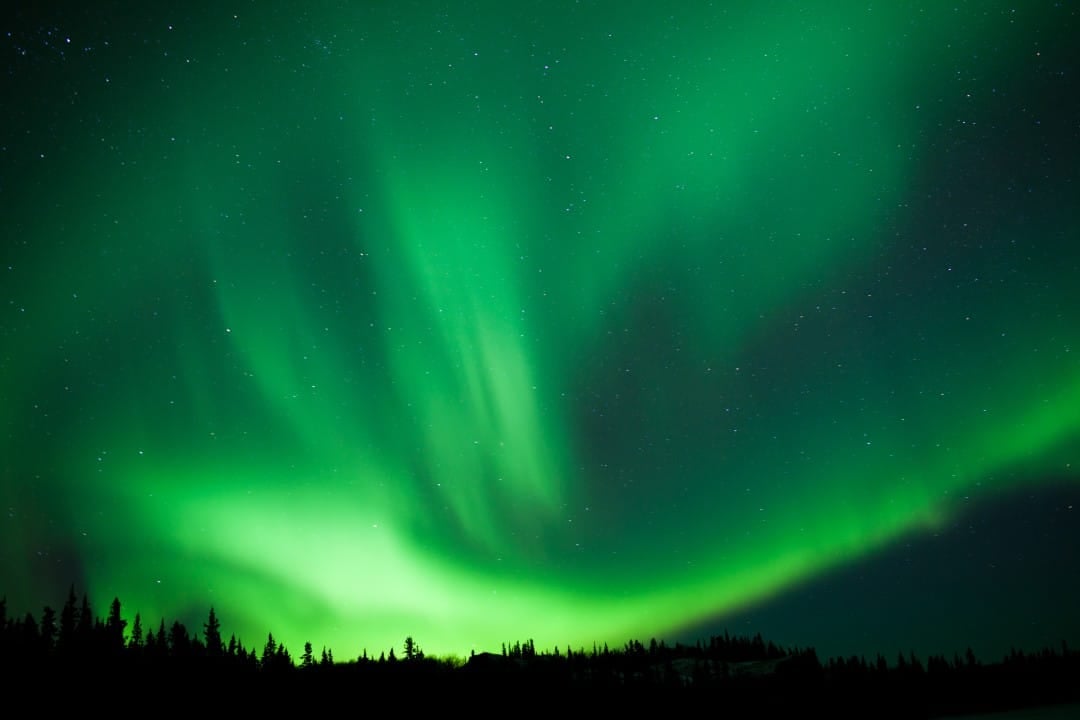
The sky should remain calm this Thursday, April 16, 2026, in relation to the Northern Lights. Previsões point to low geomagnetic activity throughout the day and night. A faster solar wind stream is expected to arrive on Friday, April 17th and could lift conditions for the weekend.
Observadores at high latitudes track space alerts. The combination of charged particles from Sol with the Earth’s atmosphere generates the colored lights. Especialistas monitor indicators in real time to adjust expectations.

Condições current space
Geomagnetic activity records low levels this Thursday. The Kp index remains at levels that limit the display of aurora to regions far to the north. Current solar Ventos travel at moderate speeds and do not produce strong disturbances in Terra’s magnetic field.
Agências like NOAA tracks data from satellites and ground stations. Nenhum intense solar event occurred in the last few hours. Monitoring includes measurements of solar wind speed and density, as well as the orientation of the interplanetary magnetic field.
What drives the aurora borealis
Partículas charges released by Sol interact with gases in the upper atmosphere. Oxygen produces greens and reds, while nitrogen generates blues and purples. Quando the solar wind gains speed or intensity, the auroral oval expands to lower latitudes.
In the current solar cycle, periods of greater activity increase the frequency of displays. Coronal holes in Sol emit constant streams of particles. Previsores evaluate the arrival of these flows one to three days in advance.
- Fluxos from fast solar wind could lift Kp index
- Tempestades G1 level geomagnetics allow visibility on northern horizons of regions such as Canadá and Alasca
- Dark and cloudless Céus improve observation chances
- Horários between 10 pm and 2 am local concentrates the highest probability
- Alertas from official apps and websites help plan viewing
Expectativa for the next few days
A more intense solar wind flow is expected to reach Terra on Friday. Isso may generate minor geomagnetic storm conditions over the weekend. Regiões as north of Canadá, Alasca and parts of Escandinávia register the best initial prospects.
Modelos forecast indicates possibility of gradual expansion of the auroral oval. Observadores in mid-latitudes should check for frequent updates. Visibility also depends on local factors such as light pollution and cloud cover.
Dicas for observation
Escolha locations away from cities to reduce interference from artificial light. Aparelhos photography with long exposure settings captures details that the human eye might miss. Carregue extra batteries and configure spatial alert notifications.
Pacientes wait for the busiest windows. Movimentos flashes in lights occur at peak times. Grupos of enthusiasts share photos and real-time reports during events.
Monitoramento continuous by agencies
Centros forecast updates data several times a day. Satélites measure conditions in the space near Terra. Modelos computational designs project the intensity and location of the auroral oval up to 30 minutes in advance in some cases.
The scientific community combines ground-based observations with orbital information. Esse effort allows you to refine alerts and avoid false positives. Usuários access free tools to check the status in your specific regions.
The Northern Lights remain a natural phenomenon that attracts worldwide interest. Quem planning observations should prioritize official sources and favorable meteorological conditions. Atualizações throughout the week will indicate whether solar flux will bring greater movement to the night skies.