

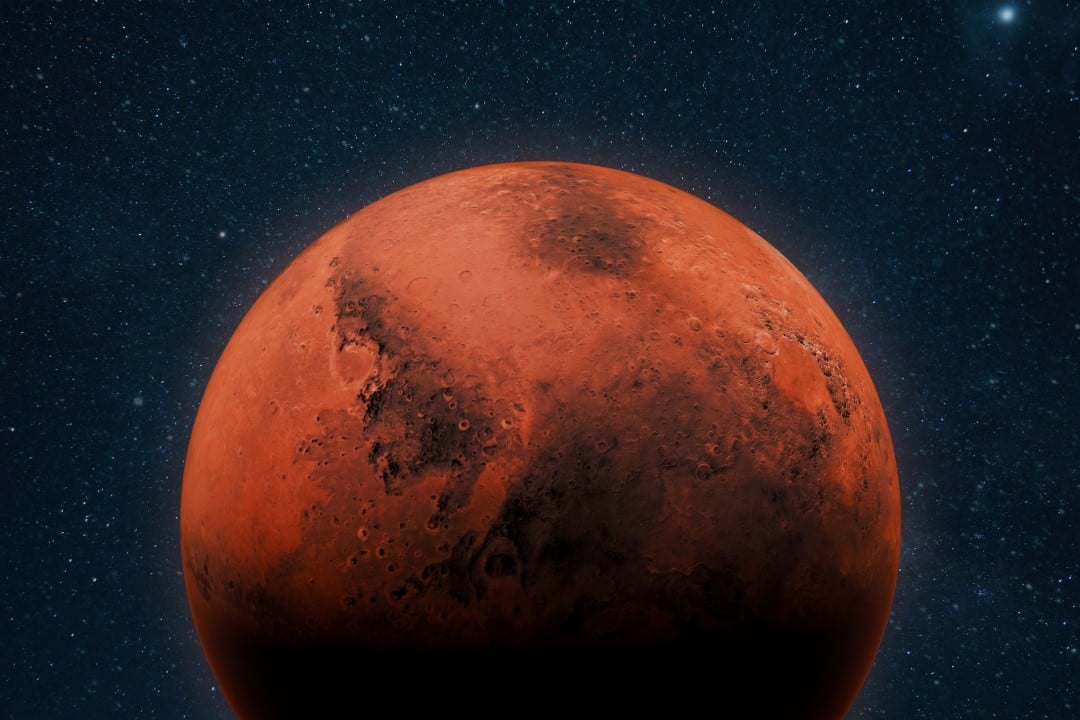
NASA’s Curiosity rover identified more than 20 organic molecules in rock samples collected from the Gale crater. The discovery occurred in a clay-rich region within Glen Torridon. The experiment used a chemical substance called TMAH for the first time on another planet.
The results were published this Tuesday in the magazine Nature Communications. Eles indicate that Marte has preserved organic compounds for about 3.5 billion years. The science team led the work with the SAM instrument aboard the rover.
Unpublished Experimento breaks down larger molecules for analysis
The instrument Sample Analysis at Mars performed the test in 2020. Ele applied tetramethylammonium hydroxide to the drilled samples. Essa reaction released smaller fragments of larger compounds preserved in the rocks.
The sensors detected a variety of substances. In Entre they appeared a compound with nitrogen that had never been seen before in Marte. Sua structure resembles precursors used in the formation of DNA in Terra.
Outra identified molecule was benzothiophene, a two-ring sulfur compound. Ele usually reaches planets via meteorites.
- Clays from the Glen Torridon region helped preserve the compounds over time
- The chosen location concentrated minerals that retain organic matter better
- The team only had two doses of the TMAH reagent, which required precise planning
- The test confirmed the perforation of the capsules and the presence of recovery patterns
Análise points out preservation in ancient rocks
The Gale crater holds sediments from an environment that had liquid water billions of years ago. Samples came from clayey sandstones in unit Knockfarrill Hill.
The diagenesis process and exposure to Martian radiation did not completely erase the compounds. SAM released more than 20 aromatic, cyclic and sulfur, oxygen or nitrogen molecules.
Amy Williams, professor at Universidade at Flórida and member of the Curiosity and Perseverance rover teams, coordinated the study. Ela highlighted that the organic material has survived for 3.5 billion years.
Scientists noticed that the same type of organic matter that fell into Marte also found its way into Terra. Isso provided basic elements for life here.
Discovery’s Limites avoids conclusion about life
The experiment does not distinguish whether the molecules came from biological or geological processes. Reações between rocks and hot water or meteorites explain part of the findings.
Nenhuma direct evidence of life appears in the data. The presence of organic matter is a necessary but not sufficient condition to prove that organisms existed.
Curiosity landed on Marte in 2012 and has traveled more than 30 kilometers. Ele continues to collect information on its current journey.
Impacto on future mission plans
The results influence the design of future explorations. The European probe Rosalind Franklin and Dragonfly, destined for the moon Titã of Saturno, will carry versions of the test with TMAH.
Trazer samples Martian rock back to Terra remains the primary objective of the Mars Sample Return program. The partnership between NASA and ESA seeks to analyze material in terrestrial laboratories with greater precision.
Detalhes SAM instrument technicians
The set of instruments on board the rover performed analyzes using gas evolution and chromatography coupled to mass spectrometry.
TMAH reacted with organic matter and produced methyl esters. One of them, methyl benzoate, confirmed that the reaction occurred as expected.
Scientists targeted the Glen Torridon area precisely because of the clays’ ability to protect sensitive compounds. The choice of location was decisive given the reagent limitations.
The rover still has the capacity for new sampling. Futuros tests could reveal more details about the planet’s ancient chemistry.
The discovery expands the catalog of organic compounds confirmed in Marte. Ela reinforces that the planet maintained conditions capable of preserving complex molecules for billions of years.