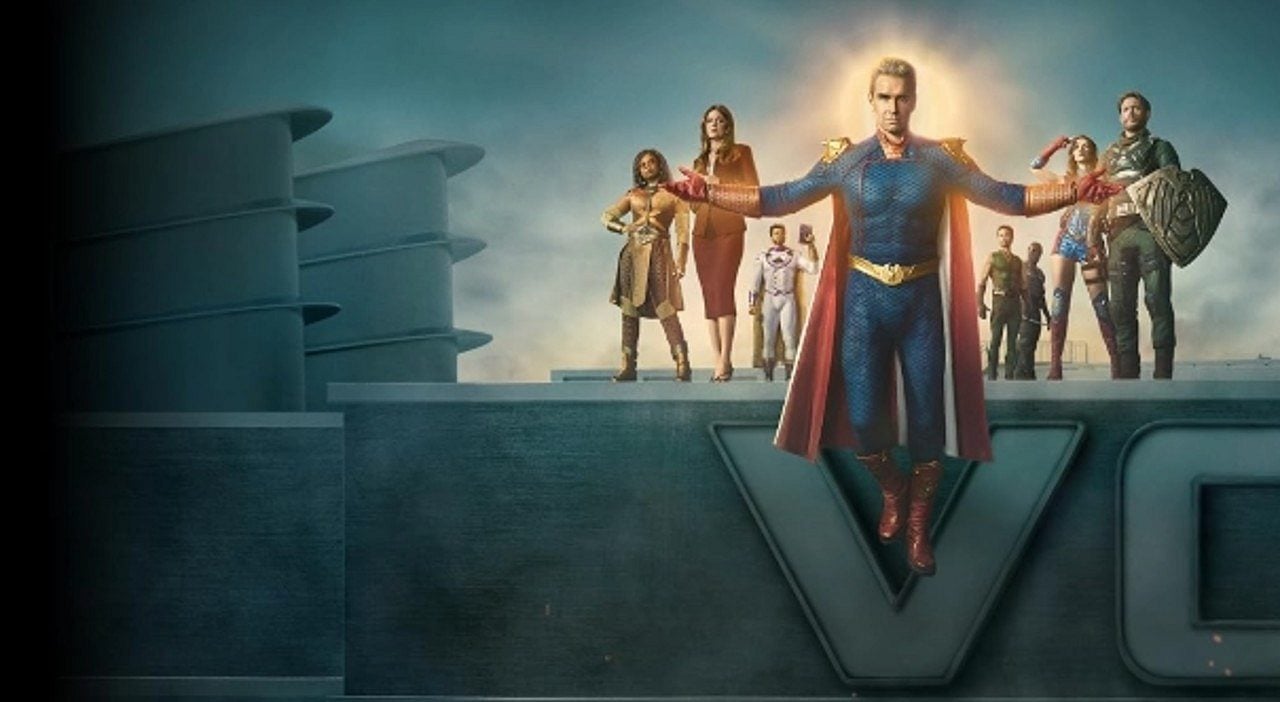
The fifth season of the series ‘The Boys’, in its fourth episode, deepens the narrative of the character Capitão Pátria. Ele emerges with a deity status in the plot. Este development takes place in a scenario where the influence of the Vought corporation and Capitão Pátria himself permeates the fictional society. The plot explores the implications of this rise in power and control.
The series portrays the Estados Unidos as a progressively fascist state, saturated by the Capitão Pátria brand. The idea of the character proclaiming himself a god is presented as a natural escalation within the production universe. Este dramatic context is the central point of the episode, which focuses on reality distortion and manipulation.
Capitão Pátria raises his power to divine level
The fourth episode of ‘The Boys’ season five solidifies Capitão Pátria’s position as a limitless figure. Seus powers and influence reach a level of almost omnipotence. Essa Evolution chronicles a nation increasingly under the sway of Vought propaganda. Events in the plot suggest that the only progression for the character would actually be to assume a divine role.
The narrative unfolds in an environment where Capitão Pátria sees his image as unquestionable. His rise to the status of “god” is explored as an unprecedented milestone in the series’ universe. Este development occurs at a crucial time, where the ability to manipulate and control over the masses are central themes. The series addresses how absolute power can corrupt and shape the reality perceived by the population.

Busca by V1 and team dynamics
Paralelamente to the rise of Capitão Pátria, the plot follows The Boys’s mission to find and destroy V1. Este virus was created by Sameer and poses a significant threat. Capitão Pátria, meanwhile, aims for V1 in hopes of becoming immortal, adding a layer of urgency to the protagonists’ quest.
The episode focuses on a tense trip to Fort Harmony, a diversion from the main mission. Esta’s journey offers a new perspective on the team’s central characters. Their interaction during the trip reveals latent tensions and unexpressed feelings between them. Hughie, known for his peaceful nature, openly expresses his frustrations, something unusual for the character. Essa’s trip becomes a clear breaking point for relationships within the group, exposing friction and mutual dislike.
The challenges faced along the way are intensified by the presence of floating pores in the air. Esses pores emanate from a superhero with a past linked to Soldier Boy. Exposure to this substance intensifies the worst in everyone involved, bringing out hatred and anger. Tal situation makes each person’s true feelings come to the surface.
The distortion of reality and the use of faith
Capitão Pátria and his aides demonstrate a remarkable ability to distort facts to the public. The villain’s team even holds strategic meetings. The goal is to soften the message and make it acceptable to the general population. Essa manipulation of the truth is a pillar of the episode’s narrative, which criticizes the power of propaganda.
The series explores how religion is used as a tool of control. Pastors are portrayed as agents on the front line of this manipulation of the masses. The plot suggests that faith can be exploited for political and domination purposes.
- Reuniões strategy: Discutir the best way to present Capitão Pátria’s image to the public.
- Narrative Controle: Alterar events and statements to favor the figure of the leader.
- Exploração of religion: Usar dogmas and religious leaders to solidify the divine image of Capitão Pátria.
- Disseminação propaganda: Garantir that the official version of the facts is widely accepted.
- Influência media: Dominar the media to shape public opinion.
The episode critically reflects on the ease with which information can be distorted. Ele also addresses the impact of a leader who stands above any moral or ethical questioning. The representation of American society resembles an authoritarian regime, as Capitão Pátria consolidates its power.
Revelações personal and group breaks
The journey to Fort Harmony is crucial for revealing hidden aspects of the characters. The hatred and anger that emerges among the group members exposes their true feelings. The dynamic between Frenchie and Kimiko, for example, reaches an end point in their codependency. The mission, which is approaching its end, is the only factor that keeps the group together. The deterioration of relations suggests that after the final confrontation with Capitão Pátria, the group’s members are unlikely to see each other again.
The episode’s narrative highlights the irony that many of The Boys are becoming the things they hate most. The fight against Vought’s corrupt system and Capitão Pátria’s tyranny comes at a high personal cost. Este cost is the internal transformation of the protagonists themselves. Essa situation is described as detestable. The urgency of the imminent mission is what prevents the group from immediately dissolving.
Conselhos paternal and uncertain future
In a subplot, Annie receives important advice from his father. Ela gets clarity on certain issues and is told to keep the people she loves close. Esta parental guidance serves as a counterpoint to the increasing dehumanization and isolation experienced by the other characters. The episode therefore ends with a glimmer of hope and humanity.
The series continues to explore the limits of power and morality, with Capitão Pátria increasingly detached from any compassion. Seu’s father will never love or respect him, and this knowledge pushes him further towards tyranny. Capitão Pátria’s rise to godlike status threatens to transform Estados Unidos into a truly totalitarian nation within fiction.