
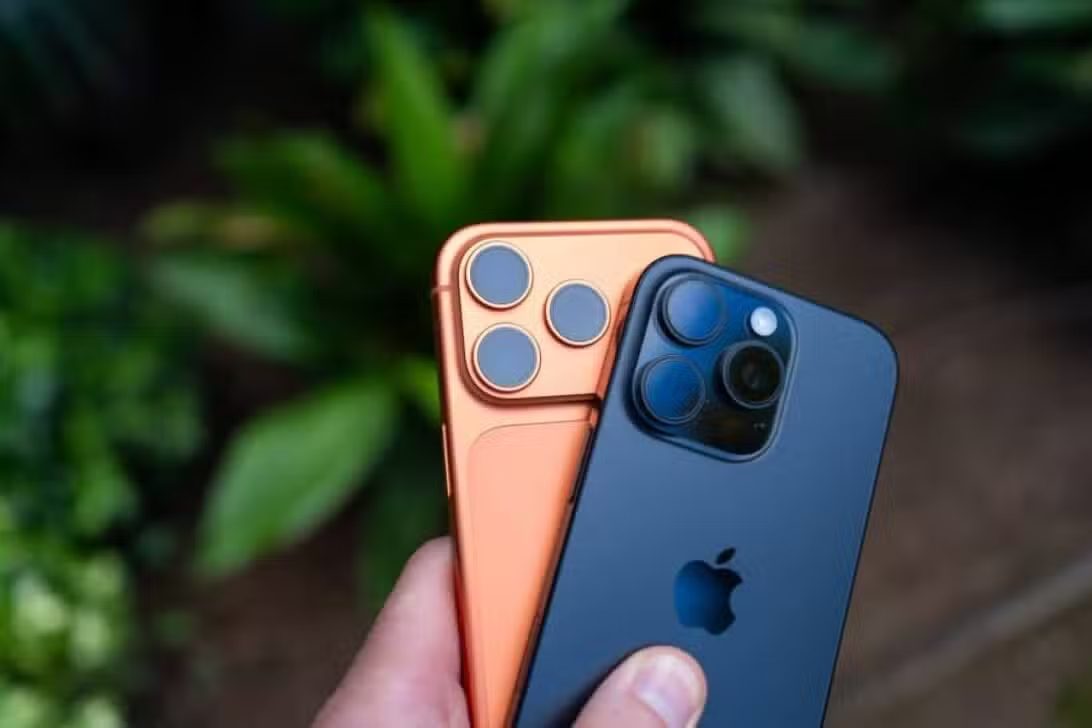
Apple develops a robust package of updates for the photographic system of its next premium smartphones. The main innovation involves the implementation of a lens with variable aperture in models scheduled for the year 2026. The project seeks to raise the standard of image capture on mobile devices. The North American manufacturer organizes a long-term schedule to integrate new components.
The technology allows physical control over the amount of light that reaches the device’s internal sensor. The mechanism works in a similar way to professional photography equipment. The change alters the exposure dynamics and offers new possibilities for depth of field. The market is also projecting the arrival of very high resolution telephoto lenses for the following generations.

Advanced light Controle arrives on the brand’s smartphones
The introduction of variable aperture represents the most immediate step in the evolution of the company’s photographic hardware. The production of the first components for 2026 devices is already moving the Asian supply chain. The mechanical system adjusts the lens diaphragm automatically or manually. The user gains flexibility in different lighting scenarios.
Ambientes with high contrast often challenges the traditional fixed lenses of today’s cell phones. The new piece solves the problem by closing the opening in very bright places and opening it to the maximum in dark situations. The smooth transition prevents loss of detail in shadow areas. The feature also makes it easier to create natural blurred backgrounds without relying exclusively on digital processing.
The development of this technology requires extreme miniaturization of moving parts. Engenheiros work to ensure the durability of the mechanism inside the phone’s slim body. The accuracy of the adjustment directly affects the final sharpness of the generated file. The technology industry is following the movement closely.
Top Componente Receives Significant Physical Boost
The manufacturer’s strategic planning includes the adoption of a considerably larger main sensor in future production lines. The component must reach the 1/1.12 inch mark in optical format. The diagonal measurement reaches approximately 14.5 millimeters of capture area. The physical size easily surpasses the 1/1.28 inch sensors used in the most recent versions on the market.
Expanding the light collection area transforms the raw image quality before any interference from the operating system. Larger Sensores houses wider, more efficient individual pixels. The structural change delivers measurable technical advantages to the final result of the photographic archive.
- Desempenho superior in night or low light environments.
- Dynamic Alcance scaled up to balance extreme lights and shadows.
- Relação optimized signal-to-noise for cleaner, sharper images.
- Enhanced color Fidelidade in artificial lighting situations.
The architecture of the new component has technical similarities with the most advanced models produced by Japanese suppliers. The exact date for the debut of this giant sensor remains under internal analysis. The hardware requires a redesign of the rear camera module to accommodate the extra thickness. The practical gain justifies the design change.
Enhanced Estabilização and ultra-high resolution zoom
The ultra-wide camera module will also undergo a complete engineering overhaul. The expanded field of view lens will receive a new generation optical image stabilization system. The mechanism compensates for involuntary hand tremors when recording moving videos. Landscape photography gains more defined contours.
Advanced stabilization already works on the main lenses, but its arrival on the ultra-wide-angle lens corrects common distortions at the edges of images. The optical assembly works in sync with the phone’s internal gyroscopes. The processor calculates the vibration and moves the lens in the opposite direction in fractions of a second. The result displays a cinematic fluidity.
The most ambitious project involves a periscope-format telephoto lens with a 200-megapixel sensor. The technology uses prisms to bend light inside the device and achieve unprecedented levels of optical zoom. Laboratory tests have already begun. The complexity of the piece pushes the commercial launch to the period between 2027 and 2028. The high pixel count allows for deep digital cutouts without noticeable loss of quality.
Impacto straight into everyday photography experience
The combination of all these hardware upgrades redefines audiovisual production capabilities on portable devices. The focus on physical augmentation of parts lessens the historical reliance on algorithms to correct capture failures. The light enters the system more clearly. The final file carries more actual scene information.
Content creators and image professionals find more versatile equipment for unpredictable situations. The variable aperture adapts the phone to a sunny day at the beach or a dark studio. The giant sensor guarantees skin texture and clothing details in night portraits. Firm stabilization eliminates the need for heavy external equipment.
The constant evolution of internal components reflects consumer demand for increasingly powerful cameras. The smartphone consolidates its position as the main visual recording tool of modern society. The innovation schedule ensures gradual advances with each new launch cycle.
Integração between robust hardware and fast processing
The success of new mechanical parts directly depends on the processing capacity of the internal chips. Reading from a 200-megapixel sensor generates a massive amount of data in milliseconds. The phone needs to interpret this information without causing it to crash or overheat. The silicon architecture evolves in parallel with the camera modules.
Computational photography continues to work behind the scenes to refine the raw file captured by the larger lens. The software identifies faces, adjusts white balance and reduces chromatic noise instantly. Superior hardware delivers a cleaner blank canvas for the system to work on. The synergy between the two fronts sets the market standard.
The electronic components industry adapts its factories to meet these stringent new specifications. Global Fornecedores compete for billion-dollar contracts to produce variable aperture lenses and periscopic prisms. The movement boosts the economy of the semiconductor and precision optics sector. The technological advancement of premium smartphones dictates the trends of the entire mobile ecosystem.