Chimpanzees in Uganda divide and enter into lethal conflict after years of peaceful coexistence
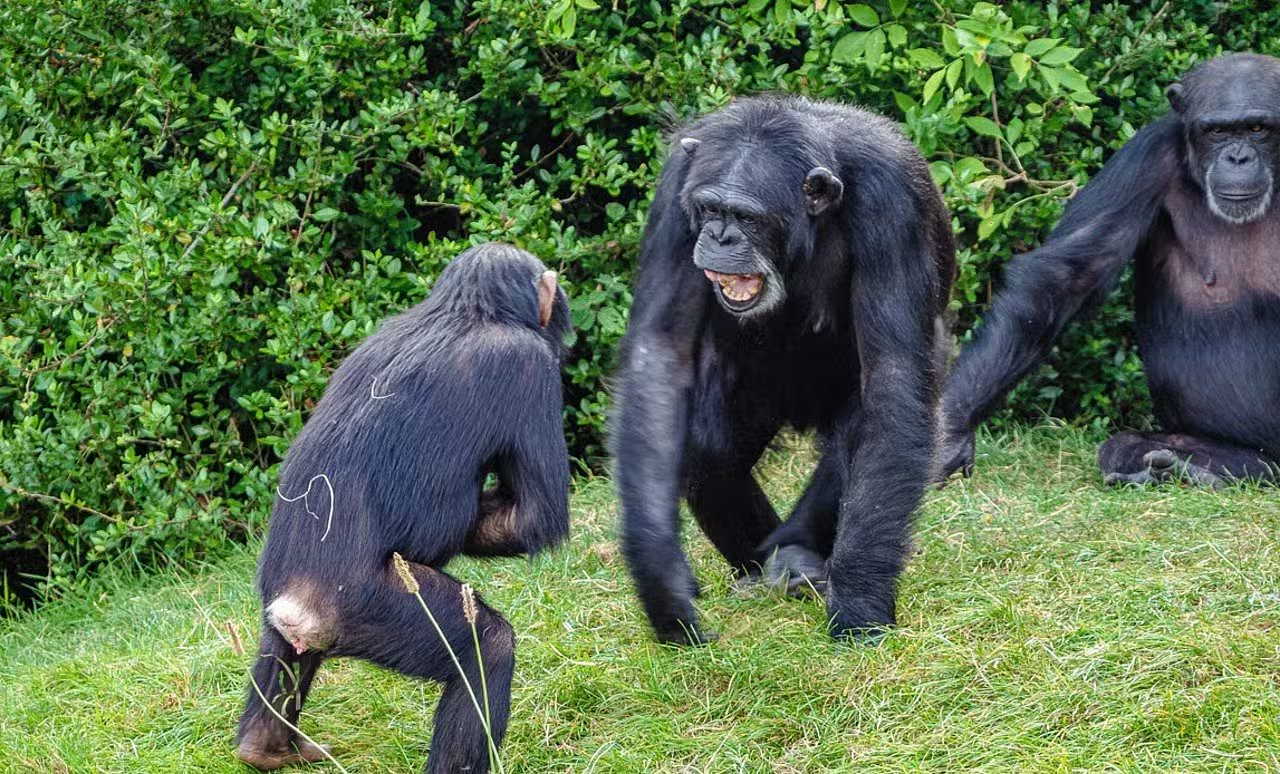
Chimpanzés from Ngogo goes from a united group to rival factions with violence recorded by researchers (102 characters without spaces) Divisão from a chimpanzee community in Uganda leads a series of lethal attacks between former allies (96 characters without spaces)
A large group of chimpanzees in Parque Nacional from Kibale, in Uganda, lived in harmony for decades. The number of individuals reached more than 200 at its peak. In June 2015, researchers noticed a sudden change in behavior during a subgroup meeting. The animals stopped socializing as before and began to avoid each other.
From then on, the community known as Ngogo permanently split into two main factions. One of them began carrying out coordinated attacks against the other. The phenomenon is rare and was documented in detail by a team that has been following the site for around 30 years.
Mudança behavior observed in 2015
Primatologists Aaron Sandel and John Mitani were accompanying the group when they noticed the unusual silence between the animals. Vários chimpanzees frowned and sought physical contact with each other, a sign of anxiety. Instead of approaching with their usual vocalizations and touches, some fled.
Esse episode marked the beginning of the fragmentation. Researchers analyzed social networks, GPS location data and demographic records over decades. Antes from 2015, chimpanzees formed a single cohesive group, with frequent interactions between central and western subgroups.
- The animals shared territory and reproduced between the clusters.
- Machos alpha and other individuals connected the different parts of the group.
- Peaceful coexistence lasted at least 20 years until the turning point.
Após the initial incident, interactions quickly decreased. Até 2018, the division was consolidated into two distinct groups: Ocidental, with around 83 individuals, and Central, with around 107. Cada one occupied separate areas in the forest.
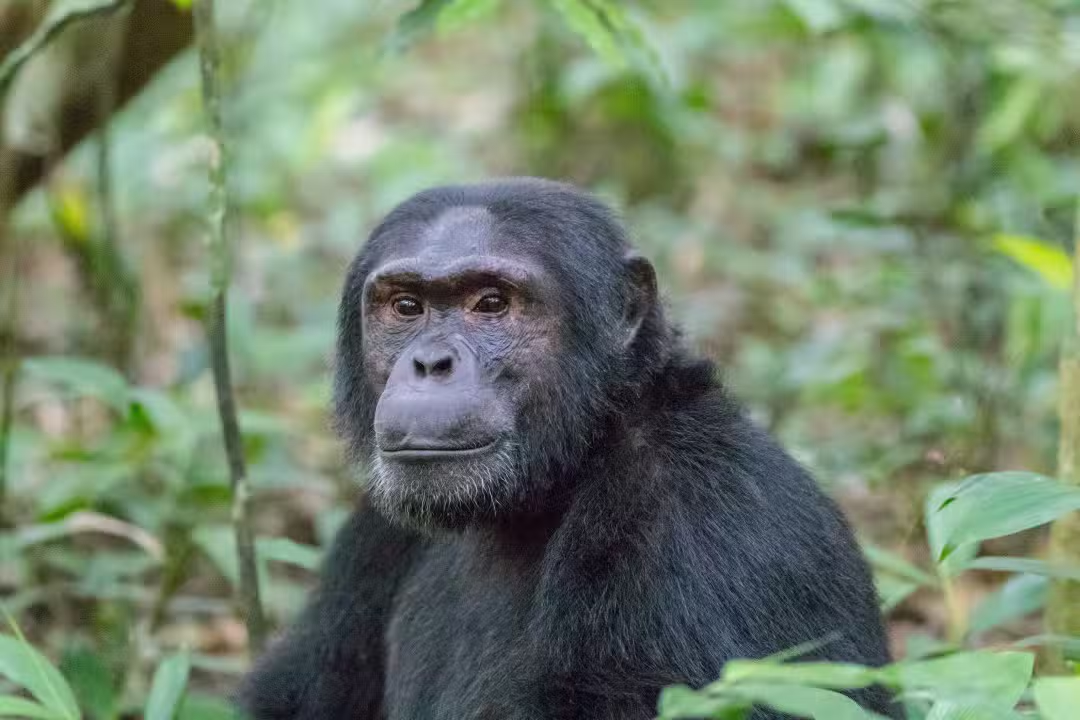
Ataques registered coordinates from 2018
Starting in 2018, members of the Ocidental group began a series of raids against the Central group. Pesquisadores documented 24 attacks over seven years. Esses clashes resulted in deaths of adults and cubs.
The attackers used tactics such as biting, punching, dragging and kicking. Targets included adult males and infants. The Ocidental group, smaller in size, expanded its territory at the cost of the other. The conflict continues with no sign of immediate resolution.
A longer paragraph helps contextualize the rarity of the case. The permanent fission of a community of wild chimpanzees occurs, on average, once every 500 years, according to scientists’ estimates. Apenas a similar episode had been recorded before, in the 1970s, in Gombe, in Tanzânia. Diferente from that case, Ngogo did not involve food provision by humans, which makes the observation more representative of natural behavior. The accumulated data includes 24 years of social media, 10 years of GPS tracking and 30 years of demographic information. Essa base allowed mapping how social ties gradually weakened before total rupture.
Fatores that preceded the split
Vários events coincided with the start of polarization. Houve alpha male change in 2015. A respiratory epidemic in 2017 killed 25 individuals. The death of key males that connected the subgroups also weighed heavily. Mesmo With abundant food in the forest, interpersonal relationships changed.



The chimpanzees stopped breeding between groups. Patrulhas from the Ocidental group began to invade Central’s areas. What was a society with flexible fusion and fission became two isolated blocks. The researchers highlight that new group identities superimposed old ties of cooperation.
Implicações for understanding conflicts in social animals
The study, published in the journal Science on April 9, 2026, offers data on how changes in social connections can trigger collective violence. The authors avoid directly equating the case with the human concept of civil war, but point out parallels in the way group identities influence lethal aggression.
In chimpanzees, conflicts between neighboring communities are known. What draws attention here is that the targets are former members of the same group. The attacks mainly affected the Central side, with at least seven adult males and 17 infants killed. The Ocidental group did not record equivalent casualties.
Outro short paragraph closes the data angle. Observations occurred without dietary interference. The team included researchers from Universidade of Texas in Austin, Universidade of Michigan and other Ugandan collaborators. The site, at Kibale, is home to the largest community of wild chimpanzees ever studied on an ongoing basis.
Detalhes of research and continued observations
The analysis used algorithms to identify clusters on social networks. Imagens satellite and field data helped map the separate territories. Attacks were confirmed by direct observation or physical evidence such as injuries.
Mesmo after the split, the conflict shows no signs of ending. Patrulhas and raids continue. Scientists continue to monitor the site to understand possible developments. The work reinforces the importance of long-term studies in primates to map complex social dynamics.
- Machos adults were the main targets in the clashes.
- Infantes also suffered systematic attacks.
- The Ocidental group expanded their space in the forest.
- Relações of grooming and old alliances were broken.
- The polarization was consolidated in a few years.
Contexto largest in the Ngogo community
Parque Nacional of Kibale is known for its primate diversity. The research project on Ngogo began in the 1990s and generated documentaries and publications over time. The local population was stable and large, which made the fission even more notable.
Pesquisadores like Sandel and Mitani have accumulated decades of direct contact with animals. Eles recorded daily foraging, resting, and social interaction behaviors before the move. The transition from cohesion to hostility offers a rare glimpse into processes that, on a human scale, involve loyalties and ruptures.
The text ends here, without projections or conclusive summary. Observation continues in the field
See Also em Latest News (EN)

Microsoft cuts Xbox Series X price in half in exclusive offers on the console store
02/05/2026
Japanese manufacturer upgrades G-Shock watches with steel armor to withstand heavy industrial work
02/05/2026
South Korean manufacturer reduces price of titanium Galaxy Watch Ultra by 40% to dominate wearables market
02/05/2026
Samsung cuts the value of the Galaxy Watch Ultra by 40 percent and intensifies competition in the global market
02/05/2026
PlayStation 5 receives two major free titles and storage-focused update
02/05/2026
Subscribers to the PlayStation Plus service receive four new major titles for definitive redemption in the store
02/05/2026
Gemini, Virgo, Sagittarius and Pisces overcome obstacles and achieve financial stability in 2026
02/05/2026
German manufacturer unveils sub-hundred-gram elite running shoes with carbon plate
02/05/2026
Epic Games Store releases automation game and premium RPG package for free for PC
02/05/2026
PlayStation 5 receives official release of two major free digital games for permanent redemption
02/05/2026
New Sony Xperia 1 VIII leak confirms hole-punch screen and unprecedented square camera module
02/05/2026