Discovery reveals 132-million-year-old dinosaur footprints off the coast of South Africa
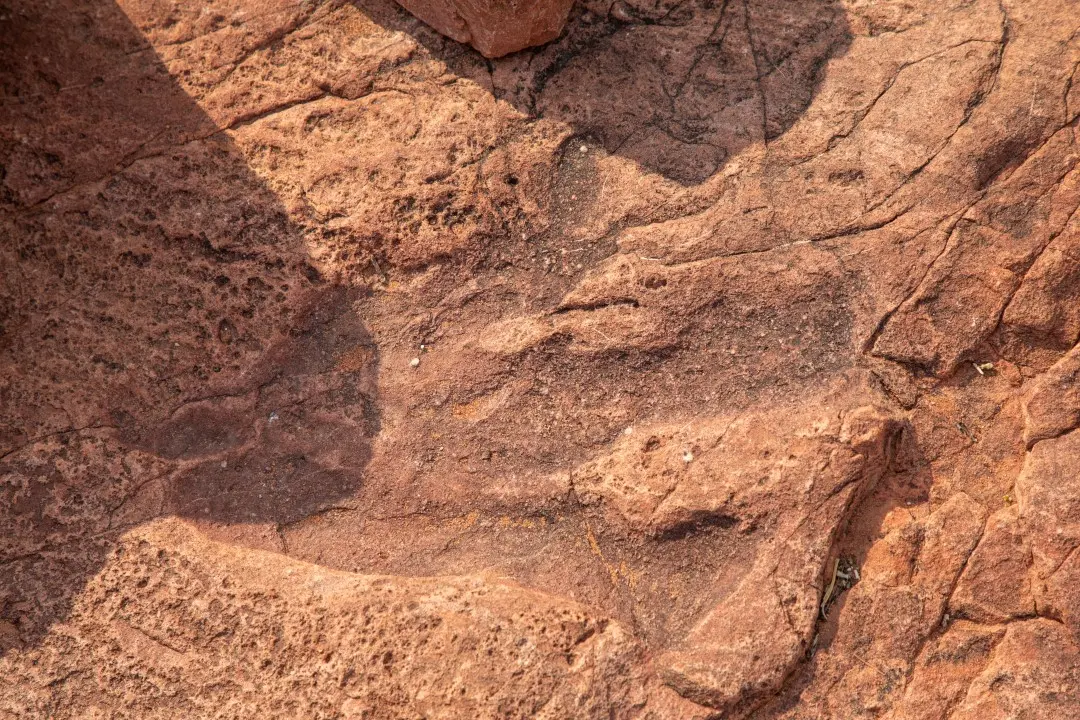
Cientistas identified dozens of dinosaur footprints about 132 million years old in a small patch of rock on the coast of Cabo Ocidental, in África of Sul. The discovery occurred during fieldwork in 2025 near Knysna. Ela fills a gap of nearly 50 million years in the region’s fossil record following major volcanic eruptions at Karoo.
The outcrop belongs to Formação Brenton and is in the intertidal zone. Parte of the site is submerged at high tide. The team of ichnologists was exploring the area in search of teeth or bones when a member spotted the first marks. Closer inspection revealed more than two dozen possible footprints.
Pegadas appears on a small outcrop exposed by the tides
The site measures a maximum of 40 meters long by five meters wide. Penhascos low rises up to five meters above the beach. Algumas footprints appear on flat rock surfaces. Outras are shown in cross-section on the cliff walls.
The exhibition is the only Formação Brenton exhibition accessible in the neighborhood. The current environment contrasts with that of 132 million years ago. At the time, dinosaurs moved through tidal channels or river bars surrounded by vegetation different from that of today.
- Pegadas preserved in flat rock or in profile on the cliffs
- Local submerged twice a day by high tide
- Afloramento limited to 40 meters in length
- Marcas suggests relatively common presence of dinosaurs in the area
- Algumas footprints in silty or muddy sandstone
Erupções volcanics left silence in Karoo’s record
Há About 182 million years ago, massive lava flows covered much of Bacia from Karoo, where many dinosaurs lived. Depois of this event, the fossil record in the region was quiet during Jurássico. Pegadas and bones of Triássico and Jurássico are common in Lesoto and neighboring parts of África of Sul.
Grupo Drakensberg’s volcanic activity buried fossil-rich layers. Alguns dinosaurs may have survived the initial eruptions. The Gondwana supercontinent began to fragment at the end of Jurássico and the beginning of Cretáceo. Smaller Bacias formed into what is today Cabo Ocidental and Oriental.
Essas basins hold limited deposits of Cretáceo. Fósseis bodies in this range include a stegosaurus, sauropods, a coelurosaur, and young iguanodontids, mainly in Cabo Oriental. No Cabo Ocidental, remains are rare. Incluem isolated sauropod teeth, scattered bones, and finds near Knysna, such as a theropod tooth found by a boy in 2017.
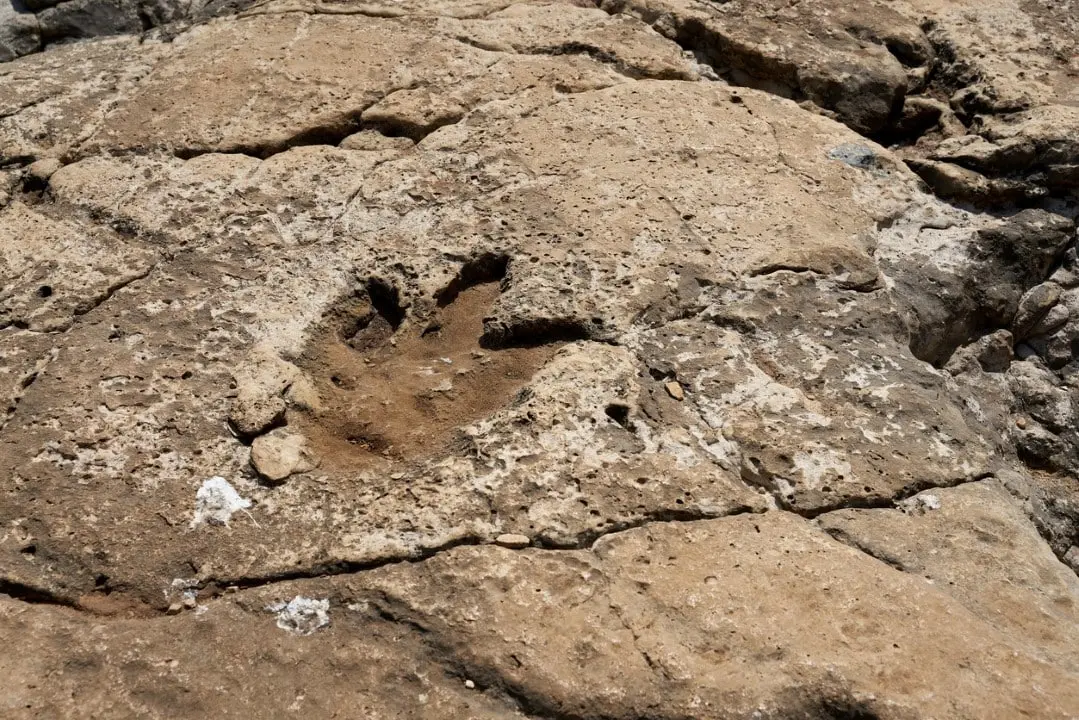
2025 Descoberta paved the way for new coastal runways
In 2025, researchers reported footprints about 140 million years old at another remote point on Cabo Ocidental’s coastline. Aquelas were the first brands of Cretáceo in the region. The new series of footprints, dating back 132 million years, is even more recent. Ela represents the second record of dinosaur tracks from Cretáceo in África from Sul and the second in Cabo Ocidental.
Researchers estimate the age at 132 million years based on Formação Brenton’s geology. Isso makes these footprints the youngest known in southern África. Elas is 50 million years younger than the last reported Bacia of Karoo.
The team usually works with footprints in coastal aeolianites that are 50,000 to 400,000 years old. The visit to the initial Cretáceo outcrop was aimed at possible dental material. Instead, the footprints caught attention. Linda Helm was the first to notice the prints.
Marcas indicate different groups of bipedal and quadrupedal dinosaurs
The footprints appear to have been made by theropods and possibly ornithopods, both bipeds. Há also indicates sauropods, which were quadrupeds with long necks and tails. Terópodes were carnivores. Ornitópodes and sauropods fed on plants.
Identificar the exact type of dinosaur just by footprints brings challenges. Marcas of theropods and ornithopods may look alike. Pegadas of sauropods are larger but do not always show clear finger prints. Therefore, scientists avoided excessive interpretations. The focus of the study was to document the presence and abundance of footprints from this era at Formação Brenton.
The coastal environment of that time included tidal channels and wetlands. The vegetation differed greatly from the current landscape with estuary and human development.
Future Buscas may reveal more Cretáceo sites
The presence of early Cretáceo footprints in both Formação Robberg and Brenton suggests that other sites may still exist. Exposições of non-marine rocks from Cretáceo occurs in Cabo Ocidental and Oriental.
Pesquisas systematics in these areas could find additional bones, more footprints and possibly traces of other ancient animals. The work reinforces that dinosaurs continued to be present in the south of África long after the volcanic eruptions that affected the interior.
The team includes researchers from African Centre for Coastal Palaeoscience, at Nelson Mandela University. The study was published in South African Journal of Science.