
Caltech team tracks hypothetical Planet Nine in deep space

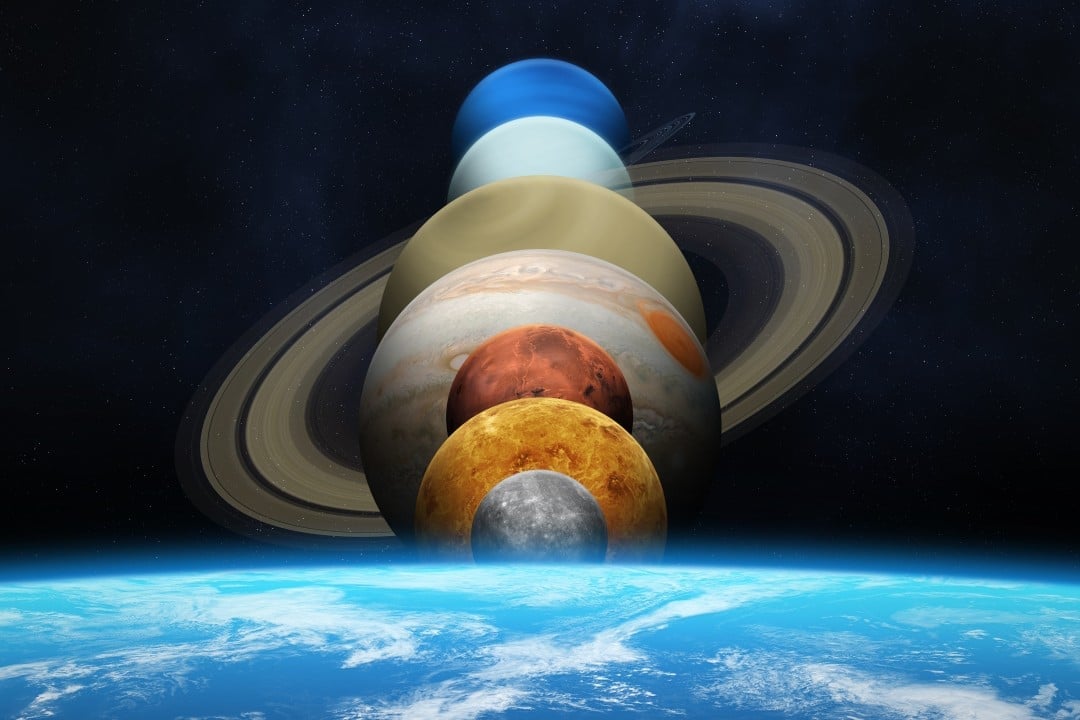
Astronomers continue tracking an unseen celestial body known as Planet Nine in the furthest reaches of the solar system. The search focuses on gravitational signatures detected beyond Neptune.
Telescopes first confirmed Neptune in 1846 after mathematical predictions identified gravitational anomalies affecting the orbit of Uranus. Astronomer Clyde W. Tombaugh later discovered Pluto in 1930 while hunting for an additional outer world. That finding appeared to complete the list of major planetary bodies.
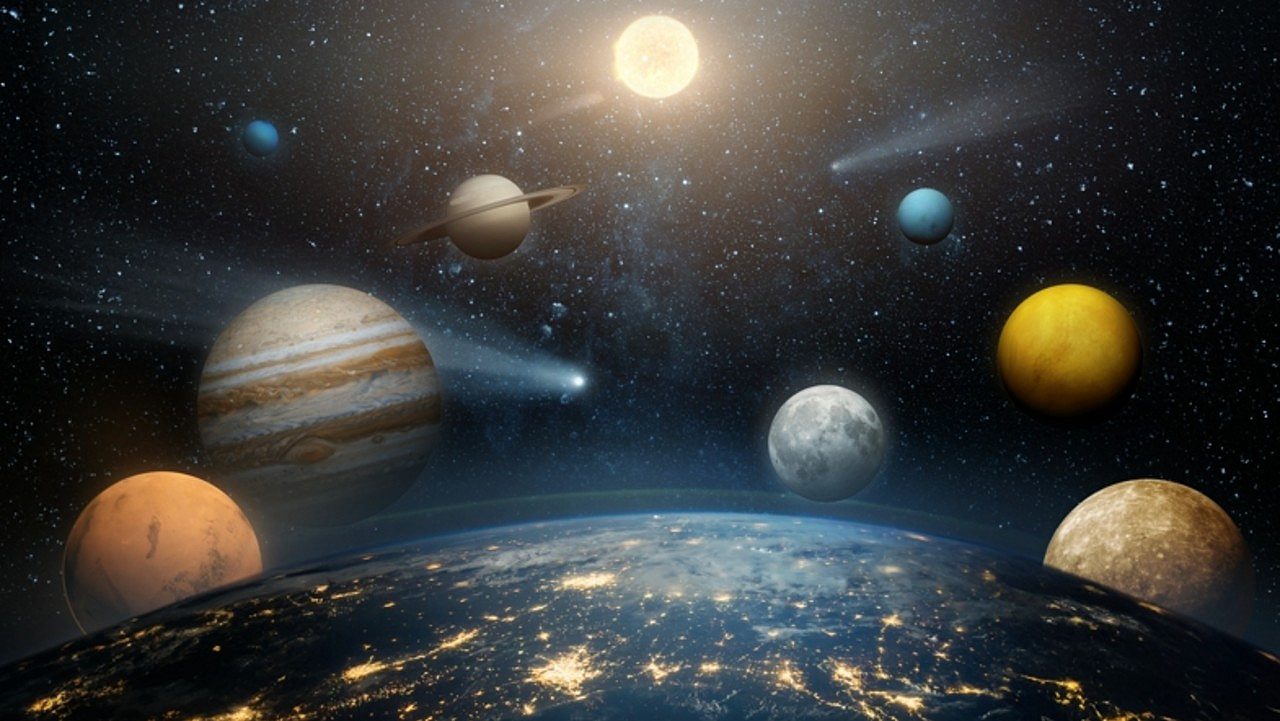
The International Astronomical Union reclassified Pluto as a dwarf planet in August 2006, shifting its identity within the Kuiper Belt. Researchers maintained searches for another full-sized world located further in deep space.
Early twentieth-century surveys attempted to identify orbital discrepancies in both Uranus and Neptune. American astronomer Percival Lowell proposed that an unseen body named Planet X caused those trajectory variations. His observatory subsequently spent years scanning target sectors.
Flyby data gathered by Voyager 2 in the 1980s recalculated planetary masses and dismissed the gravitational anomalies once attributed to Planet X. Modern astronomers distinguish that early concept from the current mathematical framework surrounding Planet Nine.
Caltech researchers Konstantin Batygin and Michael Brown proposed in 2016 that an undiscovered massive body shapes the clustered orbits of extreme trans-Neptunian objects.
The Caltech team published new calculations in 2024 regarding low-inclination objects that cross the path of Neptune. Their numerical models tracked the long-term survival of those trajectories.
“These objects are dynamically unstable, so the population has to be continuously replenished,” Batygin stated in an email regarding the study. “In our 2024 work, we found that Planet Nine naturally produces the observed population, whereas the model without Planet Nine is strongly inconsistent with the data once observational biases are accounted for.” His team eliminated observational biases during simulation runs.
The theoretical model accounts for retrograde orbital paths, large perihelion distances, orbital clustering, and highly tilted trajectories observed in the outer rim. Batygin noted that these distinct orbital anomalies align under one gravitational influence.
Direct detection remains elusive.
“If the observed dynamical structure is real, there is presently no comparably compelling alternative theoretical explanation,” Batygin stated in written correspondence. The Caltech researcher reiterated that indirect gravitational signatures currently dominate the evidentiary record.
The Vera C. Rubin Observatory in Chile will begin survey operations capable of capturing visual proof of distant planetary objects.
Astronomers cataloged additional trans-Neptunian bodies that reinforce statistical evidence for orbital clustering. These findings narrow the orbital range of a possible undiscovered mass.
Batygin urged caution when evaluating statistical clustering across these distant sky surveys.
“I would say the picture has become more complicated, rather than simply stronger or weaker,” Batygin explained in an email interview. “One has to be careful about quoting a single significance for clustering, because the theory does not predict that every distant object should be clustered.”
The detection of additional distant objects in the solar system offers non-imaging evidence regarding shared gravitational behavior.
“For me, the clearest non-imaging evidence would be for the dynamical patterns in the outer solar system to sharpen dramatically as the sample grows,” Batygin stated. He added that confidence will expand if multiple independent observations point to matching Planet Nine parameters.
“If a much larger, well-characterized sample simultaneously exhibited the predicted apsidal structure, orbital-plane structure, perihelion distribution, inclination distribution, and Neptune-crossing population, it would become very difficult to explain the observations without a common gravitational perturber,” Batygin said.
New optical instruments and sky surveys will determine whether a planetary perturber exists or if alternative gravitational mechanisms explain the patterns. Observatories plan deeper passes along the predicted path of Planet Nine.
The mathematical search for Planet Nine continues along the outer perimeter where astronomers once pursued Planet X.





