Ngogo chimpanzee civil war results in 28 deaths in Kibale National Park
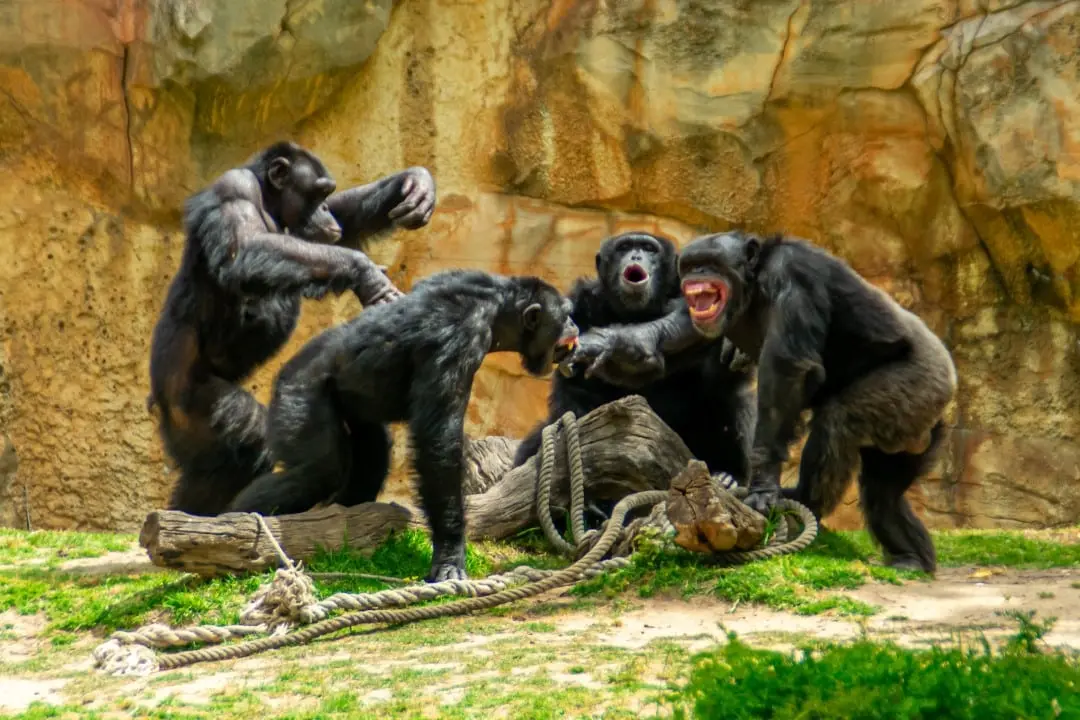
Cientistas followed one of the largest communities of wild chimpanzees in the world for three decades. The group of Ngogo, in Parque Nacional of Kibale, in Uganda, lived cohesively until the middle of the last decade. From 2015 onwards, signs of division emerged. What was a single community of around 200 individuals fragmented into two distinct factions.
The process began gradually. In 2014, five chimpanzees died. Eles acted as liaisons between different social subgroups. The cohesion of the group weakened. Dois years later, in 2015, researchers noticed clear polarization in the interactions. Machos on one side avoided contact with those on the other. Territórios, previously shared, became zones of tension.
Divisão social consolidates into western and central factions
Around 2018, the split became permanent. The chimpanzees formed the Ocidental group and the Central group. Eles stopped using the same areas routinely. Relações grooming and collective hunting have decreased drastically. What were once close allies now kept their distance.
The rupture occurred without direct human interference. The park preserves a remote forest habitat. The researchers recorded the phenomenon with field observations and social network analyses. The case is considered rare. Permanent Divisões in chimpanzee communities happens, on average, once every 500 years.
- Cinco chimpanzees died in 2014 and weakened social ties
- Polarização increased from 2015 with reduced mixed interactions
- Separação territorial consolidated in 2018 between Ocidental and Central factions
- Ataques coordinates initiated by the Ocidental group against Central
- Mortes includes adult males and infants in raids recorded since 2018
THE FIRST "CIVIL WAR" AMONG MONKEYS:
— Rida 🇦🇪 (@RidazLp2) April 18, 2026
Science has just confirmed a rare and terrifying event in Uganda: the first documented "civil war" among wild chimpanzees.
The historic Ngogo group suffered a sudden rupture in its social bonds that split the community into two enemy… pic.twitter.com/38TbC0TAY4
Ataques lethal marks phase of violence
Desde 2018, the Ocidental group carried out at least 24 attacks against members of the Central group. Sete adult males and 17 infants were killed by 2024. The total number of confirmed deaths reached 28, with new deaths recorded in 2025 and 2026, including one adult male, one adolescent male and two infants. The confrontations involved biting, punching and dragging.
Researchers observed or inferred incidents from physical evidence. Muitos attacks occurred in coordinated raids. The targets were mainly mature males from the opposite side. As of 2021, violence has frequently extended to children. The Ocidental group recorded no fatalities in the conflict.
The study details the pattern of collective aggression. Ele resembles known behaviors in chimpanzees against neighboring groups. Desta instead, the victims were former members of the same community. Primates shared previous ties of kinship and cooperation.
Leia Também

Messi reaches 19 goals in FIFA World Cups with great free kick for Argentina in clash with Jordan

Cristiano Ronaldo shines beyond the pitch at the 2026 World Cup with business empire and family luxury

At 41, Cristiano Ronaldo reaffirms his historic legacy and prepares to shine in the 2026 World Cup
Fatores that preceded the break
A respiratory epidemic in 2017 killed 25 chimpanzees. The event coincided with the period of social weakening. Mudanças in alpha leadership also influenced the dynamics. Scientists analyzed three decades of behavioral data. Eles have used direct observations since 1995.
Ngogo’s group was the largest ever documented in the wild. Tinha over 30 adult males in their prime. Population success may have contributed to internal tension. Espaço and resources in a finite territory required adjustments in relationships.
Pesquisadores of Universidade of Texas on Austin led the work. Aaron Sandel served as lead author. The article was published in the journal Science in April 2026. Ele is based on collaboration with experts from other institutions.
Observações remains on the field
The conflict is not over. Additional Ataques occurred in 2025 and early 2026. Equipes maintains continuous on-site monitoring. Chimpanzees still inhabit the same park. The factions, however, operate in isolation in practice.
The case offers rare data on group dynamics in primates. Ele allows you to compare patterns of cooperation and conflict. The observations took place in a natural environment, without significant external influence. Scientists avoid calling the episode a civil war in the strictest sense. Eles highlight parallels with processes of social polarization.
What the record reveals about primate behavior
Ngogo chimpanzees exhibited peaceful interactions for most of the initial three decades of study. Eles hunted together, shared food and formed alliances. The change occurred after the loss of key individuals who connected social clusters.
The study records 24 specific attacks between 2018 and 2024. The annual average included one adult male and two infants killed per year in that interval. Evidências include injuries observed and bodies recovered. Alguns infanticides were inferred by sudden disappearances of puppies accompanied by signs of aggression.
- Machos adults from the Ocidental group led most raids
- Infantes became frequent targets as of 2021
- Central Território became the main focus of attacks
- Relações reproduction between factions has almost completely ceased
- Field Monitoramento remains active to record developments
The work reinforces the value of long-term studies in primatology. Trinta years of data allowed us to capture the complete transition. From a unified community to two factions in open conflict.