
Scientists confirm hidden voids behind the polished facade of Menkaure’s pyramid


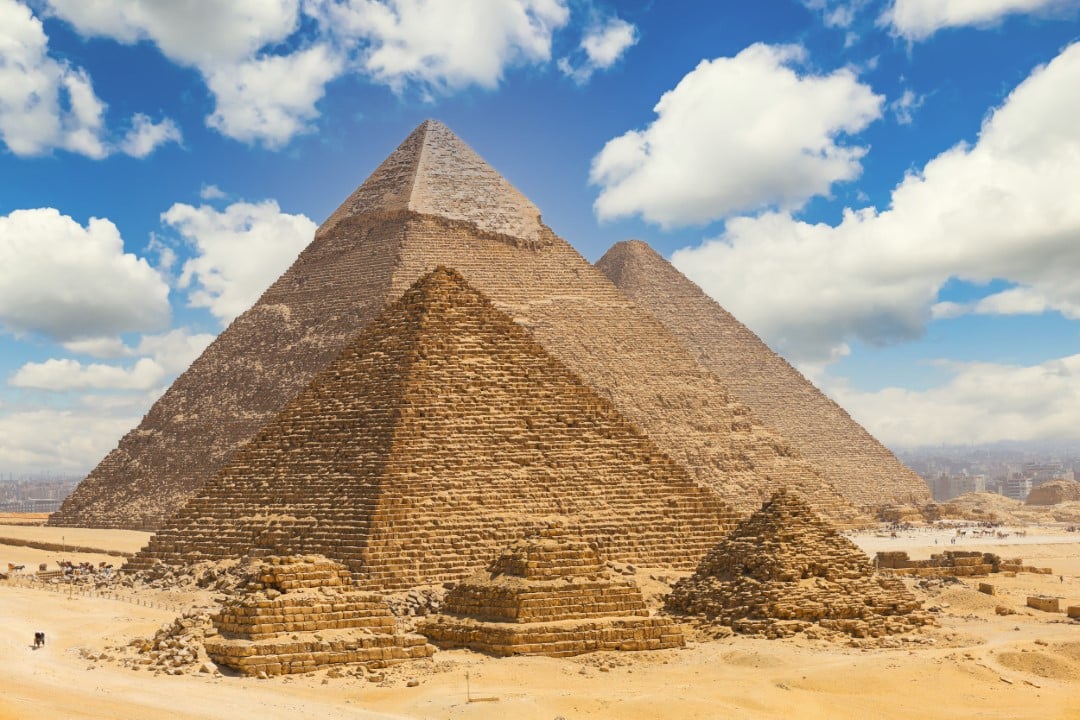
Pesquisadores of Universidade of Cairo and Universidade Técnica of Munique identified two air-filled cavities in Miquerinos’s pyramid. The structure is on the plateau of Gizé, in Egito, and is the smallest of the three main ones. The voids were detected behind a section of the east face that features granite blocks with an exceptionally smooth and polished surface. Essa feature has already attracted attention since 2019.
The discovery is part of the ScanPyramids project. Técnicas as penetrating radar, ultrasound and electrical resistivity tomography were combined to arrive at the results.
Seção polished on the east face has aroused suspicion for years
The east face of Miquerinos’s pyramid is over 60 meters tall. Nela, a specific area of granite blocks measures approximately four meters high by six meters wide. The researchers noted that the polished finish there is rare. Ele only appears at the known entrance, located on the north side of the building.
Essa similarity led researcher Stijn van den Hoven to suggest in 2019 that there could be a second entrance to the site. Até now lacked concrete evidence. The new data changes this picture.
The pyramid was built around 4,500 years ago. Ela integrates the funerary complex of Gizé along with the larger structures of Quéops and Quéfren.
Non-invasive Métodos confirms presence of voids
The team applied three main technologies in the investigation. Ground-penetrating radar, ultrasound, and electrical resistivity tomography generated independent data sets. The fusion of these images allowed the anomalies to be precisely delimited.
One of the cavities is approximately 1.4 meters behind the external wall. Ela measures approximately one meter high by 1.5 meters wide. The second is 1.13 meters deep and has smaller dimensions, 0.9 meters by 0.7 meters. Ambas contain air.
Simulações numerical tests were performed to test other possible explanations. Natural Rachaduras or variations in stone density do not fit the observed results. The researchers concluded that these are empty spaces within the limestone structure.
- Penetration Radar provided images at different frequencies
- Ultrassom detected acoustic variations behind the facade
- Electrical resistivity Tomografia mapped conductivity differences
- Fusão data integrated all measurements into a single model
- Simulações validated the interpretation of air-filled voids
Colaboração between Egyptian and German institutions
The work took place with the authorization and supervision of Conselho Supremo, Antiguidades, Egito and Ministério, Turismo and Antiguidades. Participaram still researchers of Universidade Estadual of Portland, Dassault Systèmes and Instituto of Inovação and Preservação of Patrimônio.
Christian Grosse, professor of Ensaios Não Destrutivos at Universidade Técnica of Munique, coordinated part of the analysis. Ele highlighted that the methodology allows accurate conclusions to be drawn about the interior of the pyramid without causing damage to the structure.
The ScanPyramids initiative had already recorded success in 2023 by validating a hidden corridor in the Quéops pyramid. The new finding in the Miquerinos pyramid expands the scope of the project.
Dimensões and location of anomalies
The two spaces are positioned directly behind the polished granite blocks. The depth varies between 1.13 meters and 1.4 meters. Approximate measurements were obtained after jointly processing the readings.
The largest anomaly has an estimated volume of around 1.5 cubic meters. The smallest is close to 0.63 cubic meters. Essas estimates consider the detected irregular shapes.
Nenhum physical access was performed. Todas information is derived from external examinations. The results were published in the journal NDT&E International.
Implicações for understanding the construction
Miquerinos’s pyramid retains much of its original coating in some areas. Isso makes it one of the best preserved monuments in the Gizé complex. The presence of a possible additional entrance may change views on the architectural design and access routes used in the Antiguidade.
The researchers avoid speculation about what might lie beyond the voids. Eles only indicate that the hypothesis of a second entry has gained strength with the current data.
Próximos steps include refinement of the models and possible integration of new imaging techniques. The focus remains on preserving the integrity of the structure.
The discovery reinforces the role of non-invasive technologies in modern archaeology. Elas allows you to explore the interior of ancient monuments without physical intervention.





